
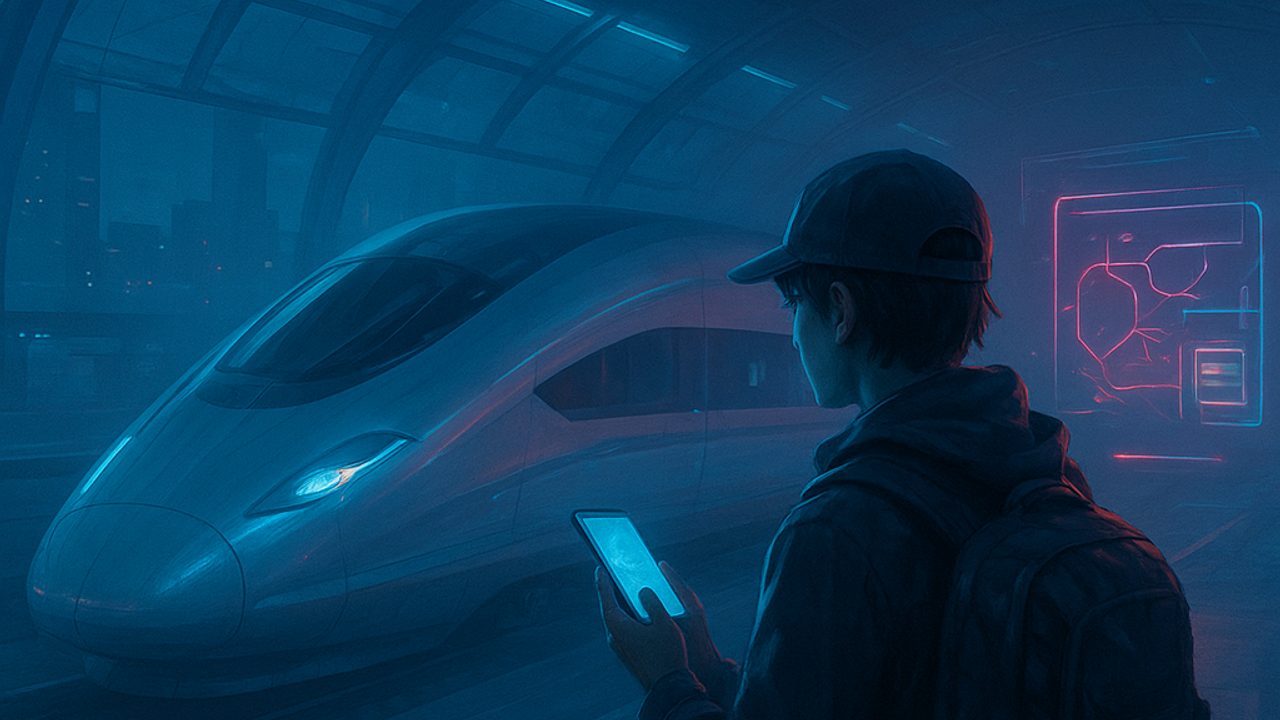
High-speed rail is one of the greatest allies for anyone traveling around China for the first time. It connects huge cities quickly, is comfortable, and is usually simpler than it seems — as long as planning is done calmly.
The biggest challenge isn’t boarding itself, but choosing routes, understanding schedules, and buying the right tickets. With a few expectation adjustments and attention to practical details, the bullet train becomes a smooth part of the trip, not an obstacle.
Understand when the bullet train is better than flying
For trips of up to 5 or 6 hours, high-speed rail is usually the most efficient option. Total door-to-door time is often shorter than flying, since stations are located within cities.
It works especially well on classic routes such as:
- Beijing ↔ Shanghai - Beijing ↔ Xi’an - Shanghai ↔ Hangzhou or Suzhou - Guangzhou ↔ Shenzhen
Beyond punctuality, comfort is a big plus: spacious seats, quiet cars, and freedom to move around. For those adjusting to jet lag and the local rhythm, this makes a real difference.
How to choose the right station (this avoids confusion)
Large cities often have more than one train station. Some are central, others are farther out. The station name almost always includes a cardinal direction or type, such as "South", "West", or "Hongqiao".
Before buying your ticket, check:
- Which station is closest to your hotel - How long it takes by metro or taxi to get there - Whether the arrival station connects well with urban transport
In Shanghai, for example, Hongqiao Station integrates high-speed rail, metro, and a domestic airport. This makes same-day connections much easier.
Seat classes: which one makes sense for you
Trains generally offer three options, depending on the route:
- **Second Class**: the most common. Comfortable, clean, and suitable for most trips. - **First Class**: more space between seats and fewer people per car. - **Business Class**: similar to airline business class, with a higher price.
For a first trip, Second Class is more than sufficient. First Class is worth it if you want more quiet or are traveling at peak times.
Buying tickets: what makes life easier for tourists
Today, buying tickets is easier than it was years ago, but it still requires attention. The key point: **your passport is your ticket**. There is no paper ticket to keep.
Some practical tips:
- Buy in advance, especially during Chinese holidays - Make sure your name matches your passport exactly - Save the train number, time, and station on your phone
At the station, simply scan your passport at the automatic gates or show it to a staff member. Even without speaking Mandarin, the process usually runs smoothly.
Strategic travel times to reduce fatigue
Avoiding extreme hours helps a lot on your first experience.
Prefer:
- Departures between 9 a.m. and 4 p.m. - Arrivals before 8 p.m.
This reduces lines, avoids overcrowded stations, and makes getting to your hotel easier. On longer trips, mid-morning trains are ideal to enjoy the day without waking up too early.
Arrive early at the station (but not too early)
Bullet train stations operate much like airports: security checks, gates, and waiting halls.
If you’re not used to it:
- Arrive about 40–60 minutes early - Keep your passport handy at all times - Watch the electronic boards closely for your train number
Gates usually open close to boarding time. Don’t be alarmed if everything seems calm until the last few minutes — that’s normal.
Luggage on the train: what to expect in practice
There is no formal baggage check like on airplanes. Each passenger handles their own luggage.
In practice:
- Medium suitcases fit in overhead racks - Large suitcases go in areas near the doors - There is no strict weight enforcement, but avoid excess
Traveling by train makes it easier to keep your belongings close and eliminates long waits after arrival.
Combine the bullet train with realistic itineraries
When planning your itinerary, think of the train as part of the day, not as wasted time. A 4-hour journey allows you to:
- Get better rest - Read, organize photos, or simply observe - Arrive refreshed and ready to explore
For a first trip, avoid changing cities every day. Using the bullet train every 2 or 3 days keeps the pace comfortable and predictable.
China’s railway system is efficient and designed for large volumes of people. With basic planning and practical choices, it stops being a challenge and becomes one of the highlights of traveling through China.
Comments
Comments are public and the sole responsibility of the author. Don’t share personal data. We may store technical signals (e.g. IP hash) to reduce spam and remove abusive, illegal, or off-topic content.