
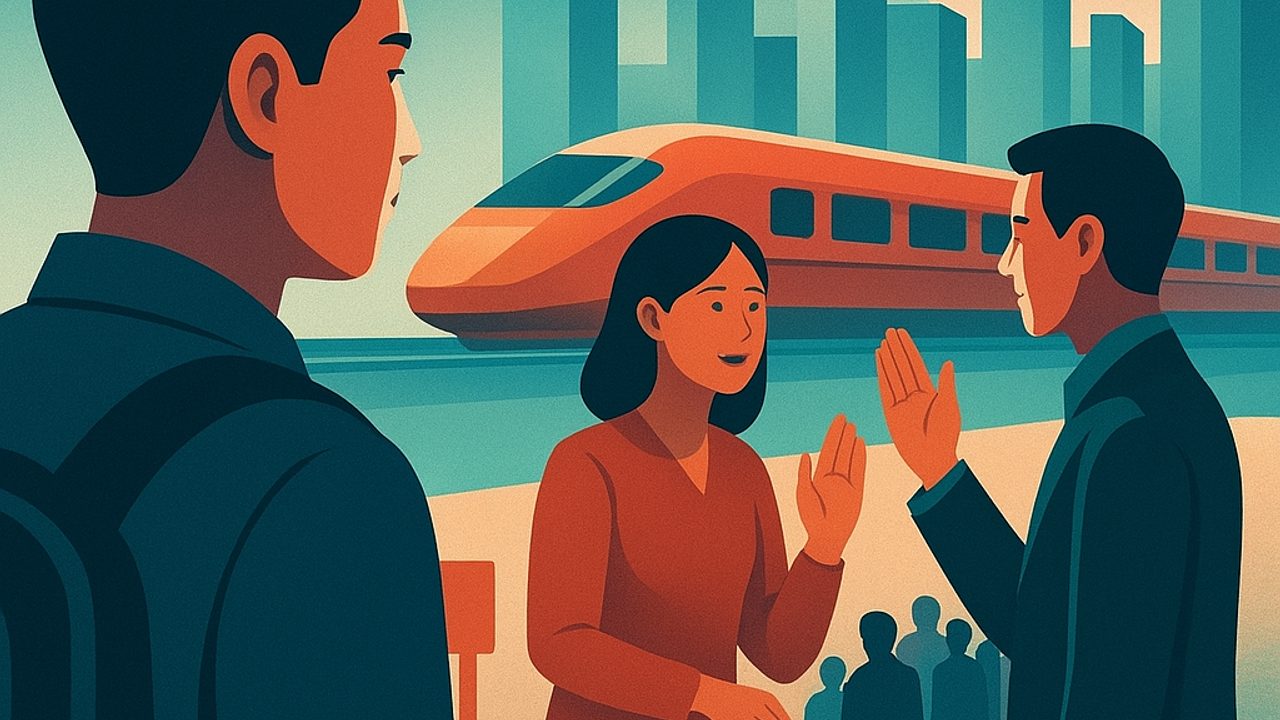
A first trip to China often surprises visitors with the scale of its cities and the intense pace. Much of the comfort comes from something simple: knowing how people organize themselves in everyday life.
Understanding etiquette and customs is not formality; it is practical planning. When you know how to act in queues, how to greet people, and what to avoid, getting around goes more smoothly and the atmosphere feels lighter.
Queues: where they exist and how they work
In large cities, queues are common, but not always obvious. In subway stations, ticket offices, and tourist attractions, the queue is usually organized by barriers, floor markings, or staff giving directions.
Some practical points: - **Subway**: wait for passengers to exit before entering. During peak hours, boarding is quick and direct. - **Popular attractions**: arrive early. The queue starts before opening and moves fast once the gates open. - **Busy restaurants**: your name may be written on a list or entered into a tablet. Asking "is there a queue?" with gestures works.
When there seems to be no queue
In very crowded places, it may look chaotic, but there is an implicit logic. People position themselves near the counter or entrance, moving forward little by little. Avoid confrontation; hold your place calmly and attentively.
Greetings: simple and discreet
Greeting in China is straightforward. A slight nod or a short "hello" is enough. Hugs and cheek kisses are not part of everyday life, especially with strangers.
Useful tips: - **Handshake**: common in more formal settings, always gentle. - **Eye contact**: moderate, without staring for too long. - **Tone of voice**: speaking softly helps in shops, hotels, and on transportation.
Good manners on public transportation
Transportation is efficient and crowded. Etiquette helps you move around without friction.
- **Escalators**: stand on the right, leave the left free for those who walk. - **Priority seats**: respect the signage; giving up your seat is well regarded. - **Mobile phones**: loud calls are not common inside train cars.
Planning that saves energy
Avoid peak hours (7–9 a.m. and 5–7 p.m.) when possible. This reduces pushing and makes the experience calmer, especially in the first few days.
Restaurants: sharing is the rule, not the exception
Group meals are usually shared. Dishes are placed in the center of the table and everyone serves themselves.
To stay organized: - **Order fewer dishes** and add more if needed; portions are generous. - **Wait for the host** to start the meal, when there is one. - **Chopsticks**: do not spear food and do not leave them stuck upright in rice.
Payments, change, and small courtesies
Digital payments dominate, but cash still appears in markets and small shops. Receiving change with both hands is common and a sign of respect.
Other useful courtesies: - **Thanking** with a nod and a smile works even without words. - **Patience** in simple negotiations helps more than insistence.
Plan with room for the unexpected
Customs vary between regions and situations. The most important thing is to observe, adapt, and follow the local flow.
When planning your day: - Set aside **extra time** for getting around in heavily visited areas. - Have **alternatives** for meal and attraction times. - Prefer a **discreet and observant** attitude in the first few days.
Understanding these informal rules does not require extra effort. They become part of the planning and help the trip go further, with less strain and more time to enjoy what really matters.
Comments
Comments are public and the sole responsibility of the author. Don’t share personal data. We may store technical signals (e.g. IP hash) to reduce spam and remove abusive, illegal, or off-topic content.