
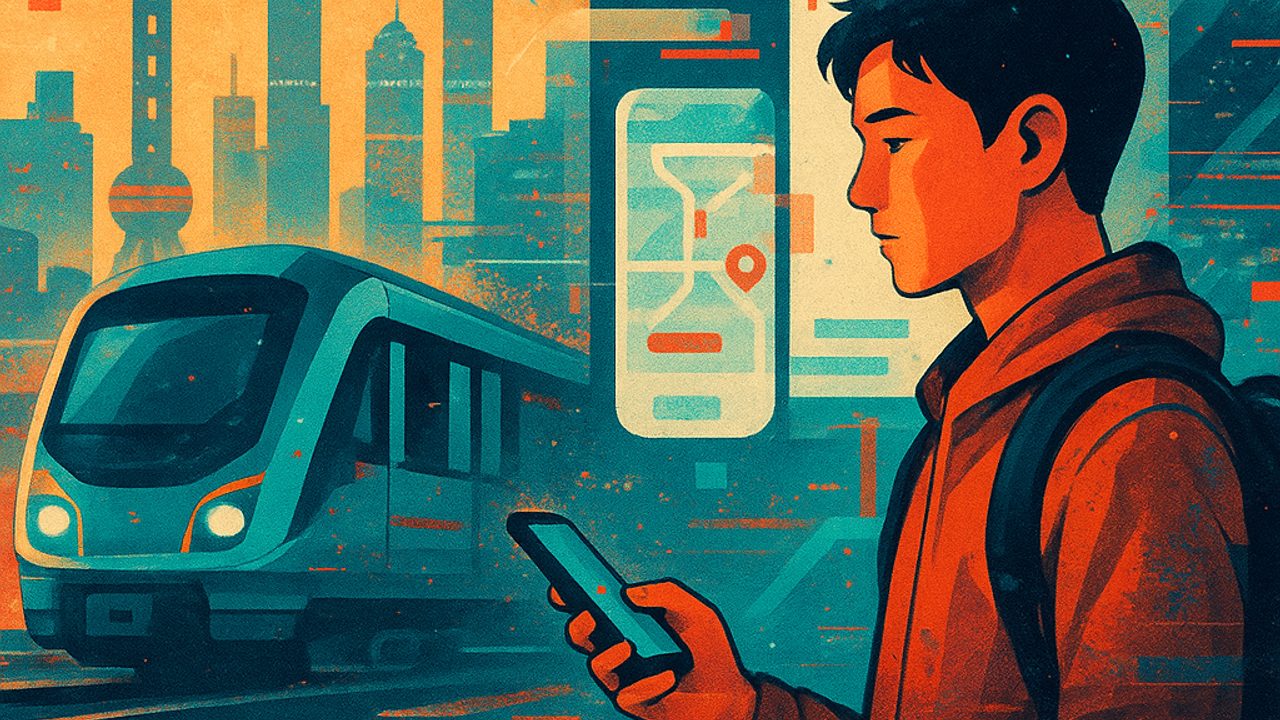
Arriving in a major Chinese city is impressive, but getting around doesn’t have to be complicated. Public transportation is efficient, affordable, and well signposted—and the right apps do the rest of the work.
This 3-day itinerary focuses on getting around. The idea is to build confidence quickly, understand the subway, test apps, and establish a rhythm that works for the rest of the trip.
Day 1 — Subway in practice: from the airport to downtown
Start with the basics: getting from the airport to the hotel using public transportation. In cities like Beijing, Shanghai, Guangzhou, and Shenzhen, the subway connects terminals to central areas with few transfers.
What to watch for on the first day: - **Ticket purchase**: machines accept cash and app payments. Choose the English option. - **Reading the map**: lines are identified by colors and numbers. Major stations also appear in pinyin. - **Line transfers**: follow the color and number, not the station name. - **Hours**: subways usually operate until around 11 p.m.
Take a short evening trip to have dinner near the hotel. It works as a low-pressure “dress rehearsal.”
Day 2 — Transportation apps: when the subway isn’t ideal
On the second day, it’s time to test the apps. They solve medium distances, rush hours, and places that aren’t convenient by subway.
Apps that make life easier
- **Map app**: calculates routes combining subway, bus, and walking, with realistic time estimates. - **Ride-hailing app**: the app-based taxi equivalent, with an option to automatically translate the destination. - **Payment app**: essential for paying for rides, tickets, and even buses.
Practical tip: save the hotel’s name in Chinese inside the app. It helps a lot on the way back.
Day 2 — City buses and smart walks
With maps on your phone, buses stop being a mystery. They cover areas the subway doesn’t reach and cost little.
How to use them without stress: - Check the **route number** and the **final stop** (shown in the app). - Board through the front door and pay when you get on. - Follow the route on the map to get off at the right stop.
Combine buses with short walks. Chinese neighborhoods offer great surprises on foot.
Day 3 — Rush hours, large stations, and local tricks
Now that you’re getting around well, it’s worth tackling busier times and larger stations.
What helps a lot: - Avoid the subway between **7:30–9:00 a.m.** and **5:30–7:00 p.m.** - Enter the carriages from the sides; the center gets more crowded. - In huge stations, follow the signs calmly—everything is signposted.
If you get tired, alternate with a ride-hailing car. The cost is worth the rest.
Payments and tickets: how not to get stuck at the turnstile
Almost everything can be paid for by phone. Still, it’s worth knowing the basics: - **QR codes** are standard on subways and buses. - Cash works, but it’s less practical. - Physical transit cards exist, but for 3 days the app is enough.
Keep your phone charged. A power bank is essential.
Quick tips to gain transportation independence
- Take a **screenshot of the city’s subway map**. - Save important addresses in Chinese. - Use discreet earbuds to listen to app instructions. - Always have a plan B: subway + ride-hailing app.
In three days, you go from beginner to independent. And that completely changes the experience of traveling around China.
Comments
Comments are public and the sole responsibility of the author. Don’t share personal data. We may store technical signals (e.g. IP hash) to reduce spam and remove abusive, illegal, or off-topic content.