
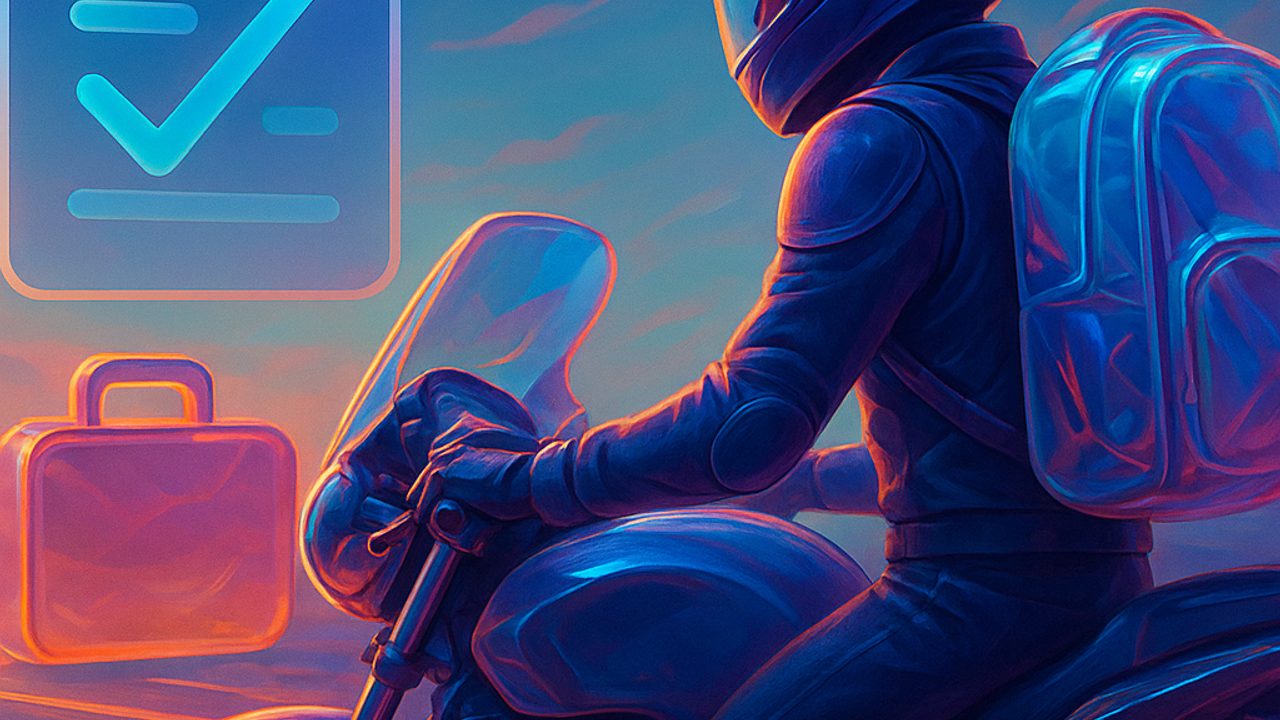
Traveling by motorcycle is freedom, but it is also planning. For those just starting out, advice piles up, and not all of it helps.
The safest path is usually the simplest: check the essentials and carry only what you can manage while riding.
Myth: “The more items on the checklist, the safer”
An overloaded checklist turns into noise. What truly protects you is checking a few critical points and knowing why each one matters. A practical example: checking tire pressure takes minutes and affects stability, braking, and fuel consumption. Spending time on irrelevant details, on the other hand, increases the chance of forgetting the basics.
Lean and effective checklist before leaving: - Tires: correct pressure and no bulges or cuts - Brakes: lever/pedal travel and immediate response - Lighting: headlight, tail light, and turn signals working - Chain: proper slack and visible lubrication - Controls: clutch, throttle, and mirrors adjusted
Truth: a daily visual inspection prevents surprises
On a trip, the motorcycle changes environments constantly. Dust, rain, and temperature variation take their toll. A quick look every morning identifies leaks, loose bolts, and abnormal wear. It requires no tools or advanced knowledge — it requires attention.
Myth: “Heavy luggage makes the motorcycle more stable”
Extra weight is not stability; it is inertia. The motorcycle takes longer to brake, changes direction with delay, and tires the rider. In long curves or quick evasive maneuvers, this becomes evident.
If you need to carry a load, prioritize proper distribution: - Heavier weight as low and as central as possible - Avoid hanging items behind the rear axle - Nothing loose or swinging
Truth: luggage organization is a safety item
Opening a saddlebag on the roadside to find a rain cover is not just inconvenient — it is risky. Organizing for quick access reduces decision-making under pressure.
How to pack without getting in your own way
- Frequently used items (rain cover, water) on top - Basic tools separated and easy to reach - Nothing rigid on the sides that could injure you in a fall
Myth: “Full protective gear replaces planning”
A reinforced jacket and proper helmet help, but they do not replace a well-chosen route and regular stops. Fatigue is one of the beginner’s greatest enemies, and it does not appear on the motorcycle checklist.
Plan short, frequent breaks. Stretching, hydrating, and breathing maintain attention better than insisting on “getting there fast.”
Truth: weather matters more than the schedule
Ignoring the weather forecast is common and costly. Rain changes how the asphalt behaves, increases braking distance, and reduces visibility.
Before leaving: - Keep a rain cover accessible - Adjust your pace at the first sign of a wet road - Increase following distance from vehicles ahead
Myth: “A full tool kit solves any unexpected issue”
Carrying half a workshop takes up space and is almost never used. What truly helps is the basics compatible with your motorcycle.
Realistic essentials: - The motorcycle’s original tool kit - A wrench for simple chain adjustment - A small flashlight
Truth: less is more for those who are just starting out
Every item you carry needs to “pay for itself” in usefulness and impact on riding. Less weight, fewer distractions, and more control. A safe trip is not the one that carries everything, but the one that keeps margin to react.
By separating myths from truths, beginners gain confidence without excess. And confidence on the road is born from what is simple, repeatable, and under control.
Comments
Comments are public and the sole responsibility of the author. Don’t share personal data. We may store technical signals (e.g. IP hash) to reduce spam and remove abusive, illegal, or off-topic content.