
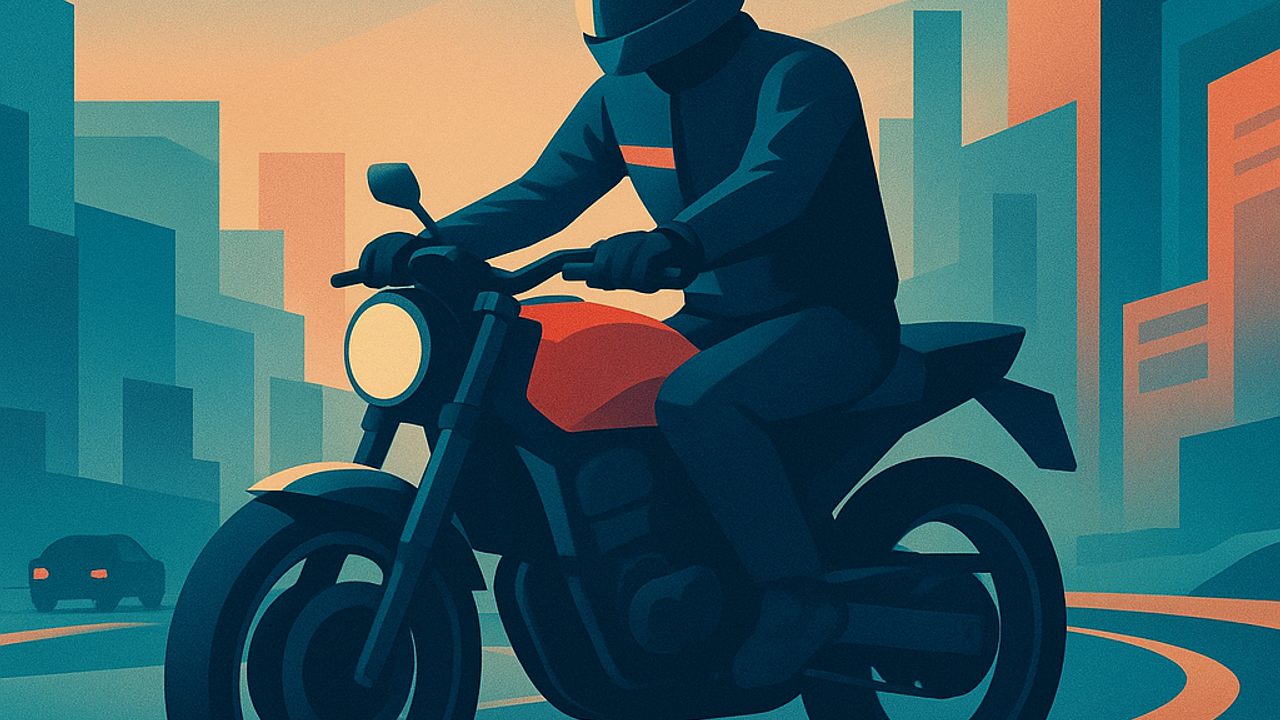
Defensive riding is the sum of small decisions made all the time. In the city, where everything changes fast, these habits prevent scares and also reduce spending on fuel, tires, and brakes.
For those who are just starting, it helps to think in layers: first see risks, then position yourself better, and only then refine techniques that save money day to day.
Traffic reading: the basics that avoid costly braking
Before accelerating, observe. The biggest savings start when you anticipate what will happen.
- Look two or three cars ahead, not just the bumper in front. - Pay attention to turning wheels, late turn signals, and hesitant pedestrians. - Buses and vans stop suddenly; anticipate and ease off the throttle.
When you roll off early, you reduce hard braking. Less heat in the brakes, less wear, and less fuel burned for nothing.
Lane positioning: see and be seen
In the city, the motorcycle’s place within the lane changes all the time. The goal is to escape blind spots and keep an escape route.
- Prefer lanes where cars don’t change as much. - Avoid riding next to mirrors; if you can’t see the driver, they can’t see you. - Keep lateral space to swerve without hard braking.
Correct positioning reduces emergency braking, which wears pads, tires, and concentration.
Acceleration and gear changes with a focus on consumption
This is where the “economic” part of defensive riding begins.
- Accelerate progressively, without opening wide only to close right after. - Shift earlier, keeping the engine pulling, not screaming. - Use engine braking to adjust speed before the traffic light.
Traffic lights and queues: the hidden gain
If the light has been red for a few seconds, ease off and let the bike roll. Many times it turns green without you fully stopping. Less takeoff, less consumption, and less stress.
Intersections: where risks multiply
Intersections are the most common point of urban collisions.
- Slow down beforehand, even when you have the right of way. - Cover the brakes as you pass. - Distrust those who are “looking, but not seeing.”
Preventive slowing avoids wheel lockups and keeps the bike stable, preserving tires and suspension.
Lane splitting with a cool head (from basic to intermediate)
For beginners, lane splitting should be the exception, not the rule.
- Constant speed and low speed difference relative to cars. - Watch front wheels, not just mirrors. - Avoid lane splitting near intersections and turning points.
Each avoided squeeze is money saved on mirrors, levers, and fairings.
Weather, road surface, and lighting: fine-tuning for survival
Rain, night, and rough asphalt demand a different riding style.
- Reduce everything: speed, lean angle, and expectations. - Be smoother with inputs; jerks are costly on wet surfaces. - Use lighting to be seen, not to go faster.
Defensive riding in these conditions reduces silly falls and unexpected expenses.
Advanced routine: consistency that protects your wallet
Once habits become automatic, the savings appear.
- Less consumption through predictable riding. - Less corrective maintenance by avoiding abuse. - Longer life for tires, brakes, and drivetrain.
Defensive riding is not about riding slow: it’s about riding consciously. In the city, awareness turns into safety — and safety, almost always, turns into savings.
Comments
Comments are public and the sole responsibility of the author. Don’t share personal data. We may store technical signals (e.g. IP hash) to reduce spam and remove abusive, illegal, or off-topic content.