
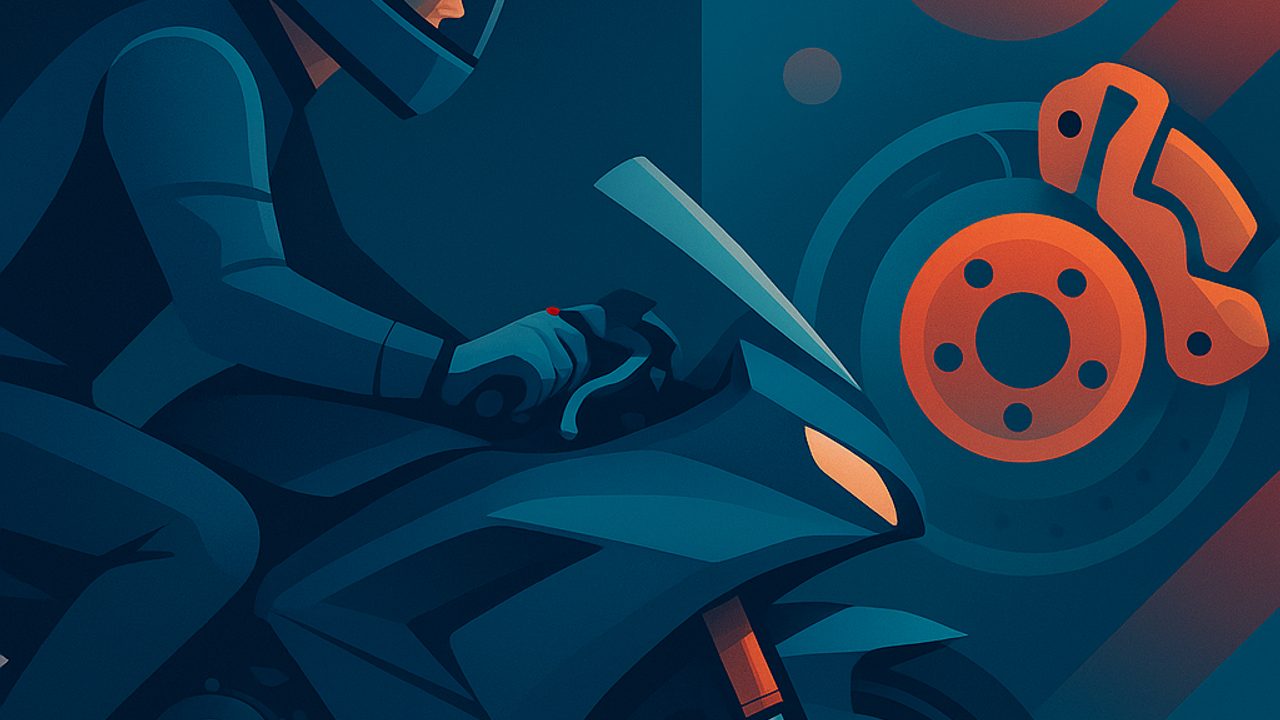
Braking well is not just about stopping the motorcycle safely. For those just starting out, understanding the basics of the braking system helps avoid premature wear, frequent maintenance, and expenses that could be postponed.
In this practical guide, the focus is on savings in real-world motorcycle use: how to take care of pads, fluid, and ABS with simple habits, observation, and basic maintenance — without complication.
How motorcycle brakes work (the essentials for beginners)
Most motorcycles use a disc brake at the front and, in many cases, also at the rear. When you pull the lever or press the pedal, the hydraulic system presses the pads against the disc, generating friction and reducing speed.
The three components that most influence cost and efficiency in daily use are:
- Brake pads - Brake fluid - ABS system (when present)
Taking good care of these items means replacing fewer parts and keeping braking predictable.
Brake pads: spending less starts with riding style
Pads are natural wear items, but the rate of wear varies greatly depending on use. Aggressive riding, late braking, and excessive reliance on the rear brake significantly shorten their lifespan.
Habits that make brake pads last longer
- Anticipate braking, gradually reducing speed - Use the front brake more progressively - Avoid dragging the brake on long descents - Downshift to help slow the motorcycle
These habits require no extra parts and reduce frequent pad replacements.
Signs of wear that deserve attention
Ignoring worn pads can damage the disc, which greatly increases maintenance costs. Watch out for:
- Metallic noise when braking - Lever getting closer to the handlebar - Vibration or a weak braking feel
A simple visual inspection already helps prevent greater expense.
Aftermarket or original pads: where the real savings are
For beginners, the temptation is always to look for the cheapest pad. The problem is that low-quality materials can wear out too quickly or transfer wear to the disc.
Savings usually lie in balance:
- Compatible pads from reputable brands - Proper use for the type of riding (urban, light) - Replacing at the right time, without letting them reach the limit
Pads that last longer and brake predictably reduce costs over time.
Brake fluid: cheap to replace, expensive to ignore
Brake fluid is one of the most neglected items by beginners, precisely because it shows no visible wear. Over time, it absorbs moisture and loses efficiency.
Expired fluid can cause:
- A spongy lever feel - Less efficient braking - Greater stress on pads and discs
Replacing the fluid at the recommended interval usually costs little and prevents premature wear of other components.
Which fluid to use and why
Always use the type specified in the motorcycle manual (DOT 3, DOT 4, etc.). Mixing specifications or using unsuitable fluid does not save money — on the contrary, it can lead to extra maintenance.
ABS on a motorcycle: how it helps you save without realizing it
ABS prevents wheel lock-up during hard braking. In addition to increasing stability, it indirectly contributes to savings.
With ABS working properly:
- The risk of uneven pad wear is reduced - The chance of falls due to lock-up decreases - Localized overload on the braking system is avoided
Keeping sensors clean and not ignoring the ABS warning light helps preserve the system and avoids more expensive repairs in the future.
Common mistakes that make motorcycle brakes more expensive
Some habits seem harmless but weigh on your wallet over time:
- Resting your foot on the rear brake pedal without noticing - Washing the motorcycle and riding off without drying the brake assembly - Using worn pads until the extreme limit - Ignoring small vibrations or noises
Correcting these points early is cheaper than replacing larger parts later.
Quick brake checklist with a focus on savings
Before heading out or at least once a week, it’s worth checking:
- Pad thickness (visual) - Lever and pedal travel - Fluid level and appearance in the reservoir - ABS light off after startup
This care takes only a few minutes and helps avoid unexpected expenses.
Braking well is saving in the long run
For beginners, saving on brakes doesn’t come from “shortcuts,” but from understanding and habit. Pads last longer with smooth riding, fluid preserves the system when changed on time, and ABS works better when it’s not ignored.
In the end, braking consciously protects the motorcycle, your wallet, and makes daily riding more relaxed.
Comments
Comments are public and the sole responsibility of the author. Don’t share personal data. We may store technical signals (e.g. IP hash) to reduce spam and remove abusive, illegal, or off-topic content.