
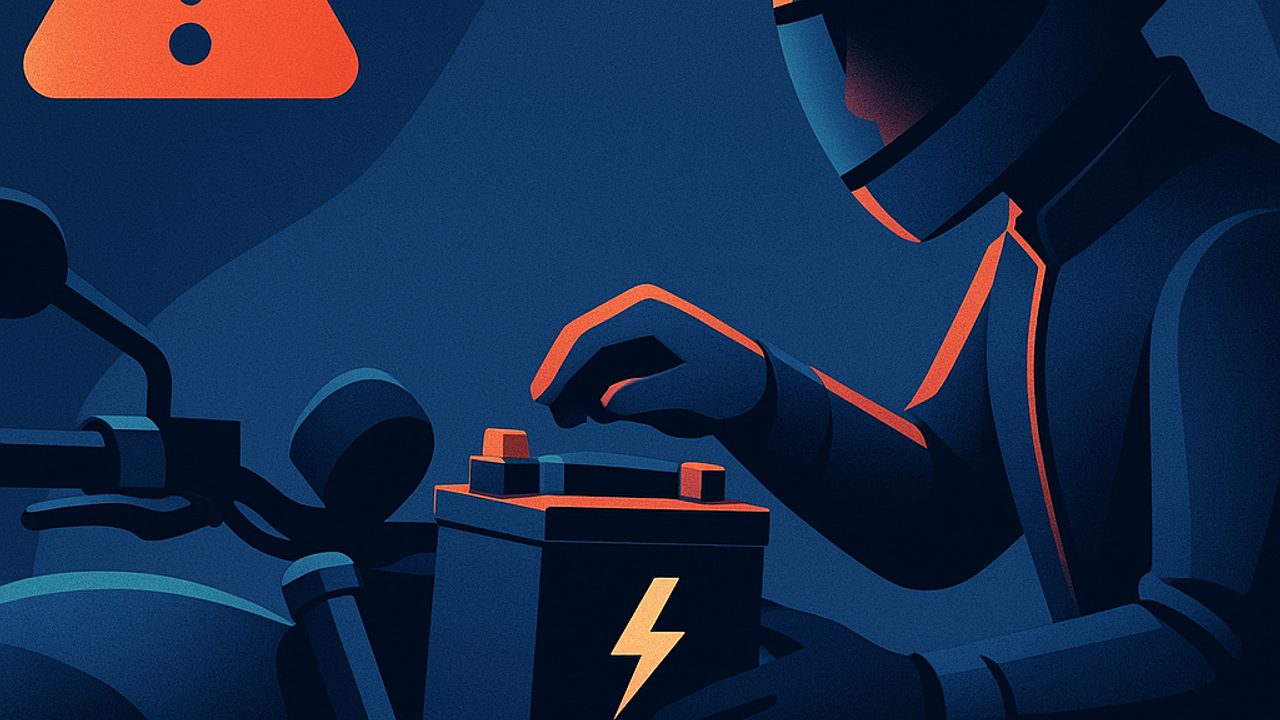
The battery is one of the simplest components of a motorcycle — and also one of the most likely to cause unexpected issues when it fails. For beginners, understanding how it behaves helps avoid breakdowns, push-starts, and unsafe situations in traffic.
More than just starting the engine, the battery powers important safety systems such as lighting and the instrument cluster. Knowing how to recognize signs of wear and adopting basic care makes a difference in daily use.
What the motorcycle battery is used for in practice
On most motorcycles, the battery is responsible for:
- Engaging the starter motor - Powering the headlight, tail light, turn signals, and instrument cluster - Stabilizing the electrical system’s energy
Even with the engine running, a weak battery can cause intermittent electrical failures, affecting your visibility and communication in traffic.
Common signs that the battery is failing
Some symptoms appear gradually and are often ignored by beginners:
- Difficulty starting, especially in the morning - Dim or flickering instrument cluster when turning the key - Headlight losing intensity at idle - Clicking sounds when pressing the starter button
Noticing these signs early reduces the risk of the motorcycle dying in dangerous places, such as intersections or fast roads.
What changes when the battery fails while riding
A very discharged battery can go beyond discomfort and affect safety:
- Lights may turn off at low RPM - Turn signals may fail or blink weakly - The instrument cluster may shut off momentarily
These situations reduce your visibility to other vehicles, increasing the risk of collisions, especially at night or on rainy days.
Simple habits that extend battery life
Some basic care helps keep the battery healthy:
- Avoid starting the motorcycle repeatedly in a short interval - Do not leave the headlight or accessories on with the engine off - Use the motorcycle regularly, even for short trips
These habits are especially important for those who use the motorcycle only a few days a week.
Extra attention if the motorcycle sits unused for days
Motorcycles that sit unused tend to drain the battery faster. If this is your usage:
- Start the motorcycle periodically and let the engine run for a few minutes - Check whether the instrument cluster maintains normal brightness when turning it on - Be wary of rapid charge drops after a few days without use
This care prevents surprises when you’re in a hurry.
Visual checks any beginner can do
Without tools, it’s already possible to observe:
- Terminals securely fastened and free of corrosion - Cables firm, without looseness - No strong odor or abnormal heating
Any visible irregularity deserves attention before riding.
When to investigate beyond the battery
Not every electrical failure is the battery’s fault. If problems persist, there may be:
- Poor contact at the terminals - A compromised fuse - An irregularly functioning charging system
Identifying issues early prevents an electrical failure from evolving into a risky situation in traffic.
Understanding the motorcycle battery is part of the learning process for beginners. With attention to the signs and simple care, you reduce surprises and ride with more peace of mind from day one.
Comments
Comments are public and the sole responsibility of the author. Don’t share personal data. We may store technical signals (e.g. IP hash) to reduce spam and remove abusive, illegal, or off-topic content.