
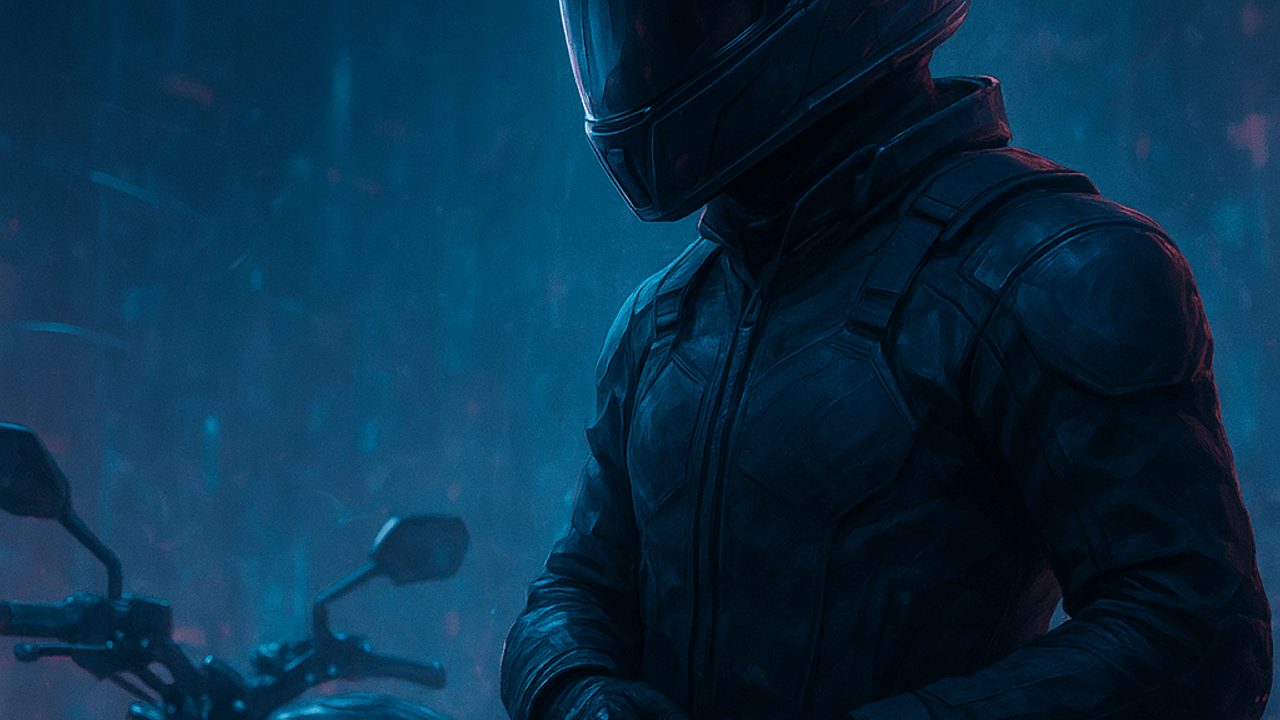
Those who start riding a motorcycle often hear that “the helmet is mandatory” — and it stops there. In practice, rider safety depends on a set of personal protective equipment (PPE) that work together to reduce common day-to-day risks.
Choosing PPE doesn’t need to be complicated or overly technical. The most important thing is to understand the function of each item, how it should fit on the body, and in which situations it makes a real difference, especially for those who are still gaining experience.
PPE on a motorcycle: protection isn’t only for serious crashes
A common mistake among beginners is thinking that PPE only matters at high speeds or on long trips. In urban use, the most frequent risks involve:
- Low-speed falls - Slips on wet or dirty surfaces - Impacts against the ground, curb, or parts of the motorcycle itself - Friction with asphalt
Protective equipment is designed precisely for these more common scenarios, helping to absorb impact, reduce abrasion, and protect joints.
Jacket and pants: protection against impact and abrasion
Motorcycle-specific clothing is not just “thicker.” It combines abrasion-resistant materials with internal protectors at the most vulnerable points.
When choosing, look for:
- Presence of protectors on shoulders, elbows, and knees - Resistant fabric (polyamide, reinforced polyester, or leather) - Snug fit to the body, without excessive looseness - Adequate ventilation for the climate in which you ride
For beginners, simpler models designed for motorcycling already offer a much higher level of safety than everyday clothing.
Fit matters more than appearance
Protectors only work if they are in the correct position. A jacket that is too loose can cause the protectors to shift on impact, reducing effectiveness.
Gloves: bike control and hand protection
Hands are often one of the first parts of the body to touch the ground in a fall. In addition, gloves improve handlebar control.
When choosing gloves, prioritize:
- Protection on knuckles and palms - Good sensitivity on the controls - Firm fit at the wrist - Material that offers grip even in light rain
Avoid gloves that are too loose or too rigid, as they can interfere with riding.
Boots and footwear: stability and foot protection
Regular sneakers offer little protection against twisting, impact, and abrasion. For those starting out, proper footwear helps with both safety and confidence when stopping and supporting the bike.
Important features:
- Non-slip sole - Ankle protection - Rigid heel structure - Secure closure (laces, zipper, or Velcro)
It’s not necessary to start with extreme-use boots, but the footwear should be specific for riding.
Extra protectors: when they make sense for beginners
Some additional PPE can be considered depending on the type of use:
- Back protector, integrated or standalone - Knee or elbow guards, for short trips or urban use - Thermal or waterproof base layer for comfort and concentration
Comfort directly influences rider attention. The fewer distractions, the greater the safety.
How to build your PPE kit gradually, without neglecting safety
For those just starting out, it makes sense to prioritize:
1. A well-fitted helmet within its validity period 2. Motorcycle-specific gloves 3. Footwear with at least minimal ankle protection 4. A jacket with protectors
Over time, and as motorcycle use increases, the kit can evolve. The important thing is to understand that each piece has a direct role in reducing risks — and that safety starts even before turning the key.
Comments
Comments are public and the sole responsibility of the author. Don’t share personal data. We may store technical signals (e.g. IP hash) to reduce spam and remove abusive, illegal, or off-topic content.