
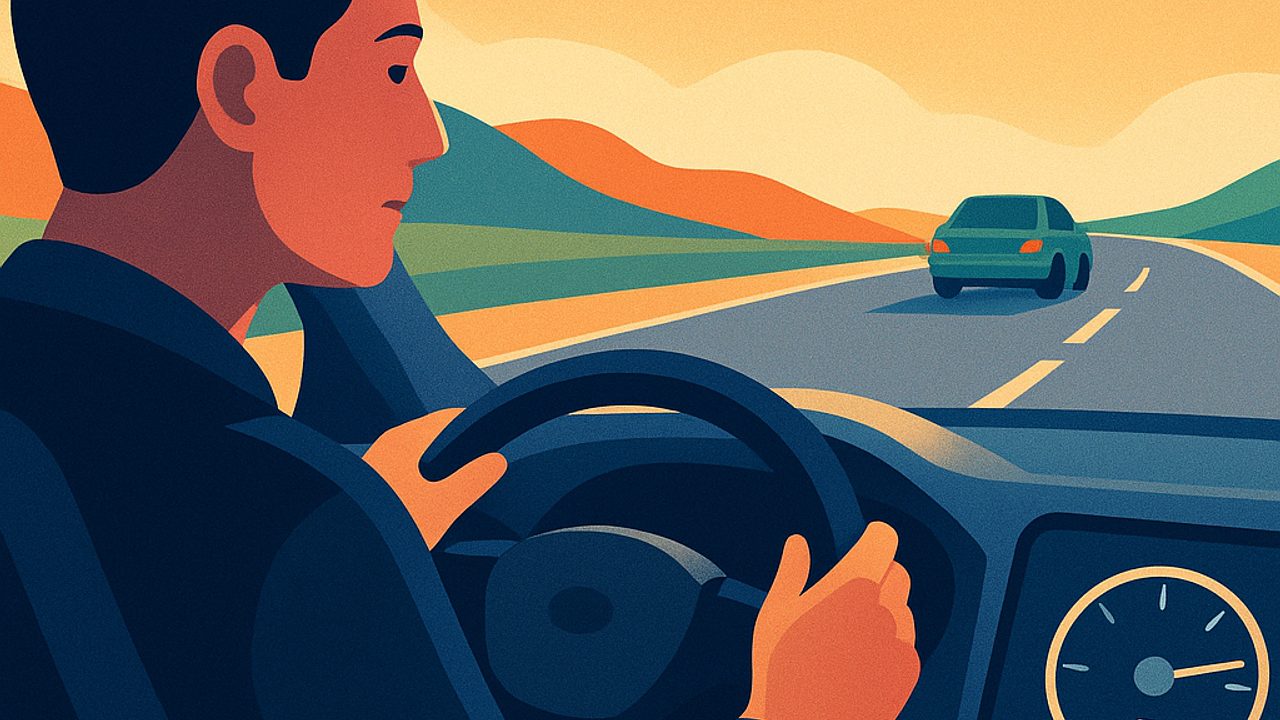
Saving fuel is not just about spending less. In everyday driving, efficient habits tend to make driving more predictable, which benefits safety — especially for beginners.
The good news is that it doesn’t require advanced techniques or radical changes. Three simple adjustments to the way you drive already make a noticeable difference.
1) Progressive acceleration and anticipating traffic
Rushing away from a traffic light or trying to “gain space” takes its toll on consumption and increases the risk of scares. Accelerating progressively keeps the engine in a stable range and gives you more time to react.
- Pull away smoothly and increase speed gradually. - Anticipate red lights and slowdowns; lifting off the pedal early avoids hard braking. - Keep distance from the car ahead to avoid alternating between accelerating and braking.
This style reduces consumption peaks and makes driving calmer — a direct gain for safety.
2) Constant speed, within the limit
Driving above the limit increases consumption disproportionately and shortens reaction time. On faster roads, maintaining a constant speed is one of the biggest allies of fuel economy.
How to apply it in practice
- Use the appropriate gear to keep engine revs stable. - On the highway, avoid speed “waves”: accelerate, brake, accelerate again. - If the car has cruise control, use it only when traffic allows and with full attention.
In addition to spending less, the car becomes more stable and predictable for those behind you.
3) Properly inflated tires and a car without excess weight
Underinflated tires increase friction with the asphalt and demand more from the engine. Excess weight does the same. Both raise consumption and impair braking.
- Inflate the tires with the car cold, following the pressure indicated in the manual or on the vehicle label. - Don’t “round” values: a few PSI make a difference. - Clear the trunk of items that are not for daily use.
With everything in order, the car responds better in maneuvers and stops.
Habits that seem economical but reduce safety
Some popular practices promise savings but bring risks — especially for those who are learning.
- Coasting downhill in neutral: you lose control and engine braking. - Driving with very low fuel: it can damage components and cause breakdowns. - Turning off the car during short traffic stops: it distracts and can delay reactions.
Sustainable economy goes hand in hand with full vehicle control.
Economy that becomes routine
When these three habits become part of the routine, consumption improves without conscious effort. The bonus is smoother, more predictable, and safer driving — exactly what beginners need to build confidence behind the wheel.
Comments
Comments are public and the sole responsibility of the author. Don’t share personal data. We may store technical signals (e.g. IP hash) to reduce spam and remove abusive, illegal, or off-topic content.