
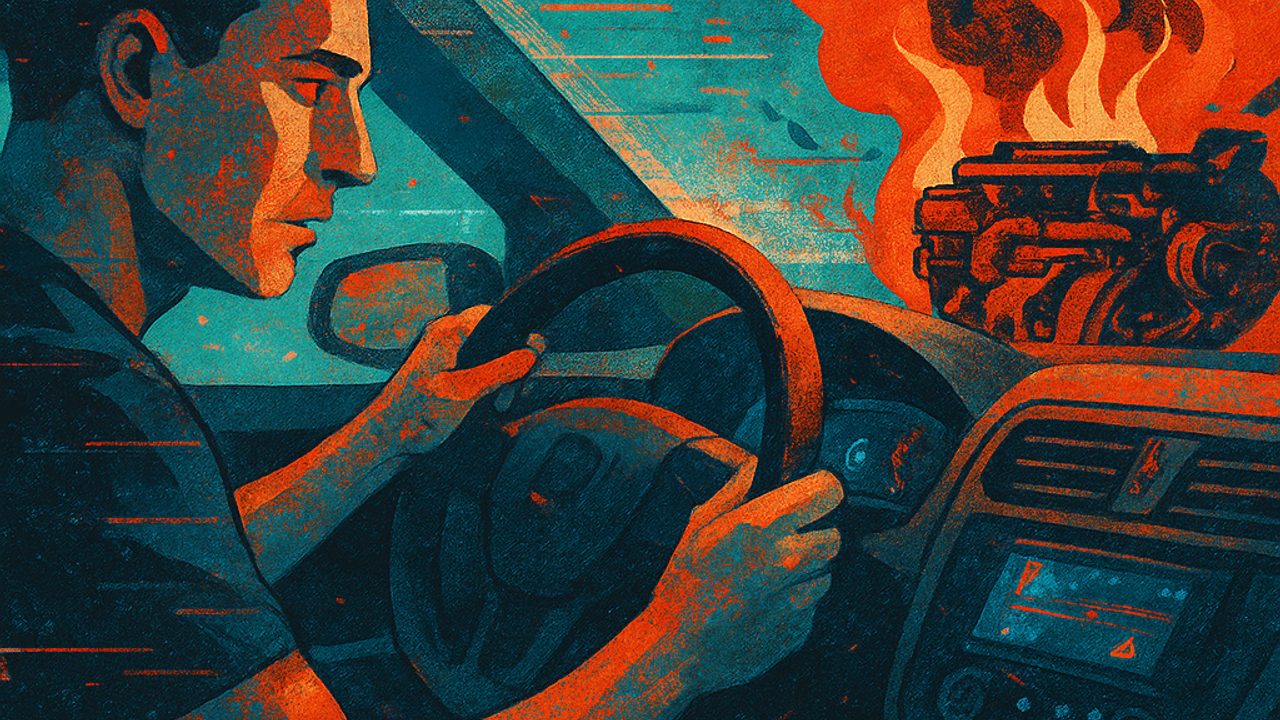
The gauge went up, the red light came on, or steam came out from under the hood. The scare is common, especially for those who are just starting to drive.
Acting correctly in the first minutes makes a difference for safety. The answers below are direct, designed for the real moment of the problem.
What should I do as soon as I notice overheating?
- Turn on the hazard lights. - Take your foot off the accelerator and look for a safe place to stop. - Turn off the air conditioning. - If moving slowly, turn the heater on to maximum (if available), with the windows open, to help dissipate heat.
Stopped safely? Move on to the next step.
Should I turn off the engine immediately?
In most cases, yes. With the car stopped in a safe place, turning off the engine prevents the temperature from continuing to rise.
Common exception: if you just pulled over after a heavy stretch (uphill, stop-and-go traffic), wait 30–60 seconds at idle before turning it off. This helps reduce thermal shock.
Can I open the hood right away?
You can, but with caution.
- Wait a few minutes before releasing it. - Open the hood slowly and stand to the side, never in front. - Do not put your hands near hoses or the reservoir.
If there is strong steam, keep your distance. Steam also burns.
Is it safe to top up water or coolant immediately?
No. Never with the system hot.
Opening the pressurized reservoir can cause a jet of boiling liquid. Wait until it cools completely. If in doubt, do not touch it.
If it is absolutely necessary to top up after it has cooled: - Use only clean water in an emergency. - Add it slowly, without filling to the brim.
Can I keep driving until I get home or to the mechanic?
Only if the temperature normalizes and there are no signs of leaks, strong smells, or strange noises.
If the gauge starts to rise again within a few minutes, stop again. Forcing the car can cause engine warping and total loss.
Is a temperature warning light always serious?
Yes. A red light indicates immediate risk.
Unlike the gauge rising gradually, an illuminated light calls for a safe stop as soon as possible. Do not ignore it thinking it will “hold on a bit longer.”
What should you never do with a hot engine?
- Never open the radiator reservoir. - Never pour cold water on the engine. - Never ignore steam, a sweet smell, or smoke. - Never rev the engine to “cool it faster.”
These actions increase the risk of burns and serious damage.
After the scare, what is worth checking calmly?
When everything is cold and safe: - Coolant level and color. - Brittle or swollen hoses. - Radiator fan working. - Presence of leaks on the ground.
Even if the car returns to normal, investigating the cause prevents the problem from happening again — and reduces risks on the next drive.
Comments
Comments are public and the sole responsibility of the author. Don’t share personal data. We may store technical signals (e.g. IP hash) to reduce spam and remove abusive, illegal, or off-topic content.