
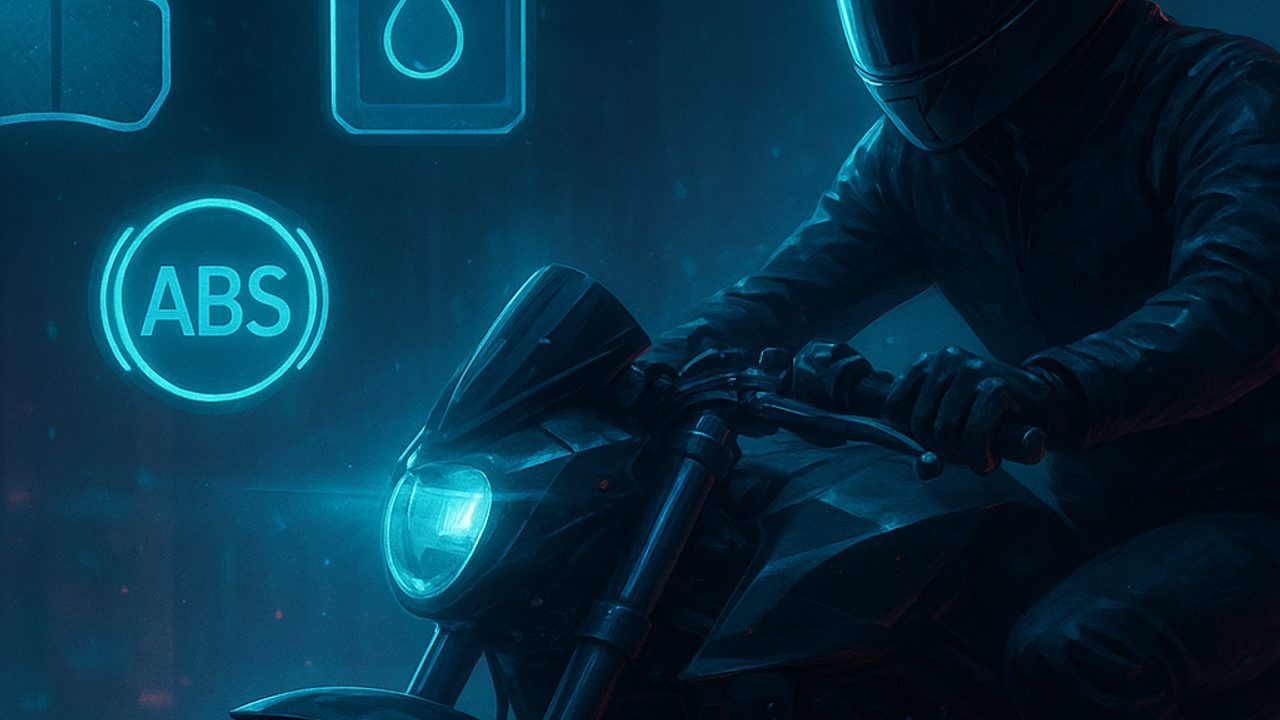
Braking well is the foundation of safety on two wheels. Even so, pads, fluid, and ABS still cause confusion — especially for those who are just starting out.
Below are short, objective answers to the questions that most often come up in daily riding, focusing on what really matters on the street.
Brake pads: when to replace them and how to identify wear
In normal urban use, brake pads usually last between 10,000 and 20,000 km, but this varies with riding style and pad type.
Clear signs it’s time to replace them: - Low thickness (less than 2–3 mm). - Metallic noise when braking. - Loss of efficiency even with a firm lever.
Ignoring worn pads can damage the disc, increasing maintenance costs and reducing safety.
Organic or metallic pads: which is safer?
For beginners and daily use, the choice is usually straightforward: - **Organic**: progressive braking, less noise, and less disc wear. Good for city riding. - **Metallic/sintered**: greater braking power and heat resistance. Requires more feel and can wear the disc more.
Safety comes from the whole system: pads suited to the use, a disc in good condition, and a well-adjusted lever.
Brake fluid: why it expires even without use
Brake fluid absorbs moisture from the air over time. Water in the system reduces efficiency and can cause failure during harder braking.
Practical rules: - Change every 1–2 years, according to the manual. - Dark or cloudy fluid is a warning sign. - Never mix specifications (DOT 3, DOT 4, DOT 5.1).
Expired fluid makes the lever feel “spongy” and increases stopping distance.
Hard or soft lever: what it indicates
The lever feel says a lot about the system: - **Too hard**: possible glazed pads or a disc issue. - **Soft/spongy**: air in the system or old fluid.
Any sudden change deserves a check before continuing to ride.
Front or rear brake: which should you use more?
On most motorcycles, the front brake accounts for about 70% of braking.
Safe everyday use: - Start by applying the front brake progressively. - Use the rear brake to stabilize the bike, not as the main brake. - Avoid stomping hard on the rear brake on slippery surfaces.
Practicing modulation helps prevent lockups and scares.
ABS on motorcycles: what it does (and what it doesn’t)
ABS prevents the wheels from locking during hard braking. It helps maintain control, especially in emergencies.
Important points: - It does not magically reduce stopping distance. - It works best on regular surfaces and with tires in good condition. - Vibration at the lever is normal when the system activates.
With or without ABS, technique and attention remain essential.
Can you combine brake maintenance with saving money?
Yes, without risky shortcuts: - Replacing pads on time avoids having to replace the disc. - Keeping fluid up to date preserves hoses and calipers. - Checking brakes during simple services prevents bigger expenses.
Well-maintained brakes don’t draw attention — and that’s exactly what you want from a safety item.
Comments
Comments are public and the sole responsibility of the author. Don’t share personal data. We may store technical signals (e.g. IP hash) to reduce spam and remove abusive, illegal, or off-topic content.