
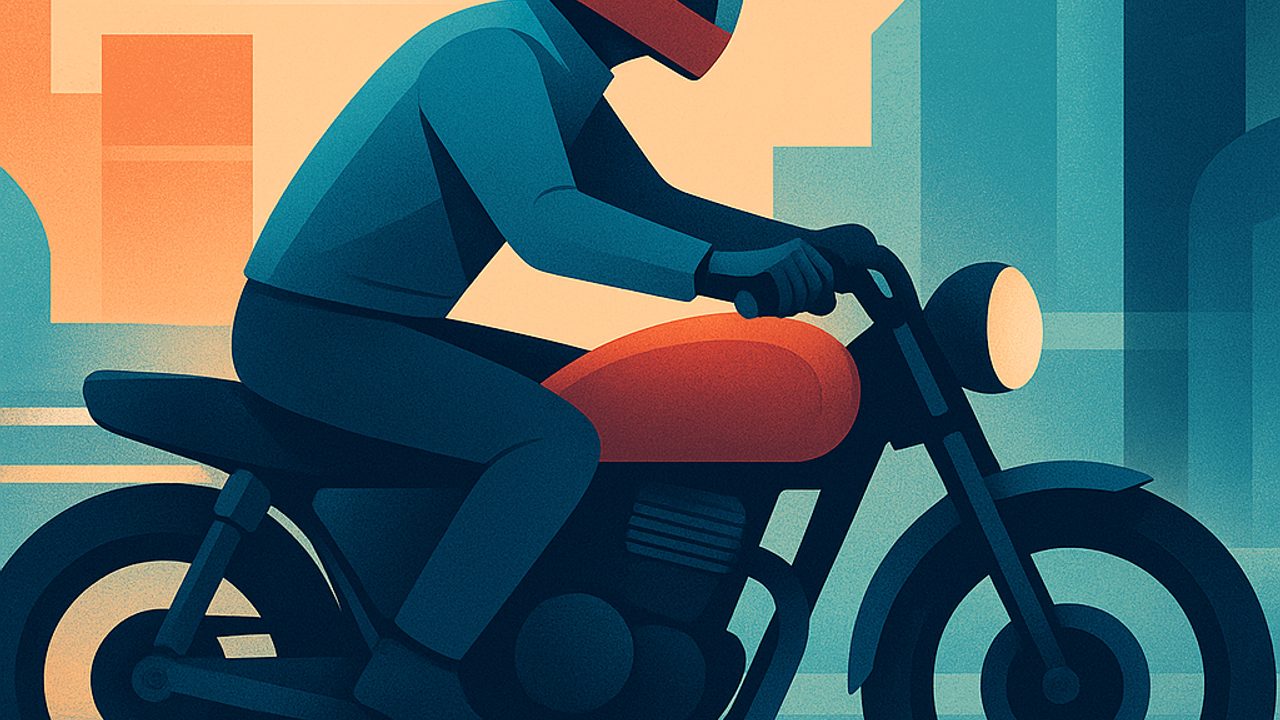
Economic riding, or eco-driving, is not about riding too slowly or disrupting traffic flow. It is about using the motorcycle more efficiently, anticipating situations and avoiding unnecessary strain on the engine and components.
In urban traffic, with frequent stops, traffic lights, and changing pace, riding style has a direct impact on consumption and motorcycle durability. Below are practical techniques that can be applied daily.
Progressive acceleration: lower revs, more efficiency
Hard acceleration right after leaving a traffic light increases consumption and puts extra load on the engine, chain, and tires. In urban use, progressive acceleration is usually more efficient.
Good practices: - Turn the throttle smoothly and continuously, without "jerks". - Build speed gently, following the flow of traffic. - Avoid accelerating beyond what is necessary for the engaged gear.
Shifting gears at the right time
Over-revving gears increases consumption; shifting too early demands more from the engine. Shifting at the proper range helps maintain efficiency and comfort.
Anticipating traffic: the secret of urban eco-driving
Looking further ahead reduces hard braking and repeated acceleration. Anticipating what will happen is one of the most effective techniques to save fuel.
In daily riding: - Observe traffic lights, pedestrian crossings, and slowdowns ahead. - Ease off the throttle early instead of braking hard later. - Use engine braking smoothly when possible.
Conscious use of brakes
Braking all the time does not directly consume fuel, but everything that was accelerated before will need to be recovered later — with more acceleration.
To reduce consumption and wear: - Combine progressive deceleration with light braking. - Avoid late braking followed by strong acceleration. - Maintain enough distance to modulate speed.
Constant pace even on short roads
On short urban stretches, many riders accelerate hard only to brake shortly after. Maintaining a more constant pace tends to be more economical.
Practical tips: - In congested roads, follow the average pace instead of "closing gaps". - Avoid accelerating just to get a few meters ahead. - Use higher gears when traffic allows.
Reducing weight and drag in daily use
Extra weight and poorly positioned accessories increase engine effort, especially during frequent starts.
Worth noting: - Top boxes always full when there is no need. - Loose objects that add unnecessary weight. - Accessories that increase air drag in urban use.
Eco-driving also reduces maintenance
Beyond fuel savings, economic riding helps preserve important motorcycle components, which is especially relevant in heavy urban use.
With smoother habits, it tends to reduce: - Wear on the chain, sprockets, and front sprocket. - Irregular tire wear. - Excessive engine heating in stop-and-go traffic.
Economic riding does not require radical changes. In urban traffic, small choices repeated daily make a difference in consumption, motorcycle wear, and the overall riding experience.
Comments
Comments are public and the sole responsibility of the author. Don’t share personal data. We may store technical signals (e.g. IP hash) to reduce spam and remove abusive, illegal, or off-topic content.