
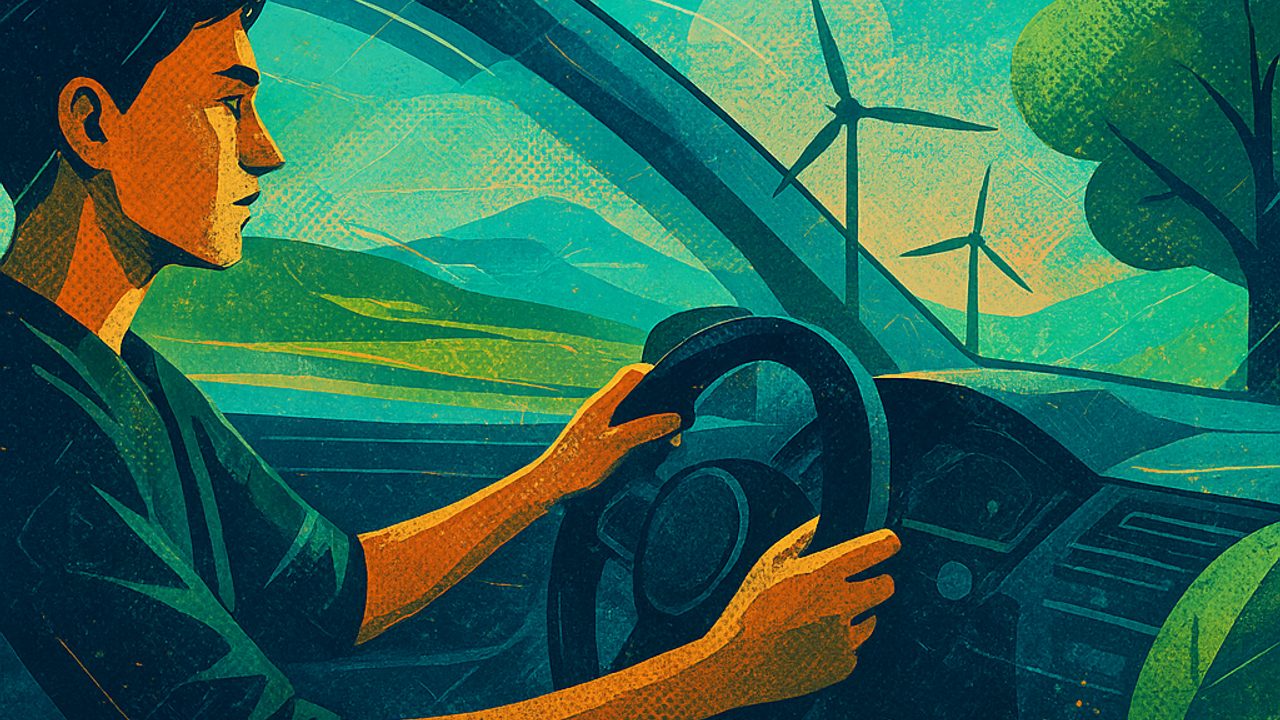
Eco-driving is not a set of radical tricks nor does it require a new car. It’s about how you drive, when you drive, and how you take care of the basics to avoid wasting fuel — which also reduces pollutants that affect air quality on the streets.
No alarmism: some habits make a real difference in daily life, others are overrated. It’s worth separating what works from what’s just reputation.
Myth: driving as slowly as possible always pollutes less
Driving at 30 km/h in the wrong gear or with the engine “screaming” can increase consumption and emissions. Engines have an efficiency range. Outside of it, fuel use goes up.
**What works better:** - Accelerate progressively and shift early, without over-revving. - Maintain a steady speed when traffic allows. - Avoid repeated, unnecessary acceleration and braking.
Truth: hard acceleration and braking dirty the local air more
Each heavy press on the accelerator injects more fuel. In urban areas, this translates into more pollutants near pedestrians, cyclists, and bus stops.
**In daily driving:** - Anticipate traffic lights and flows to reduce braking. - Use the engine’s natural deceleration. - Keep distance from the car ahead to avoid the “accordion effect.”
Myth: turning off the engine for a few seconds isn’t worth it
The idea comes from older cars. In modern models, turning off the engine during longer stops avoids unnecessary fuel burn.
When it makes sense to turn it off
- Predictable stops longer than 30–60 seconds. - Waiting in lines that don’t move. - Quick boarding or pickup when the car is already stopped.
Truth: basic maintenance is silent eco-driving
Underinflated tires, dirty filters, and poor alignment increase engine effort. The result is higher consumption and more emissions, even with good driving technique.
**Simple checks:** - Correct tire pressure. - Clean air filter. - Proper alignment and balancing.
Myth: air conditioning is always the villain
Air conditioning uses energy, but driving with windows open at higher speeds increases drag and can consume more fuel.
**Practical balance:** - At low speeds, open windows may be enough. - On faster roads, use the AC in moderation and keep maintenance up to date.
Truth: choosing the time and route matters as much as driving well
Traffic congestion raises emissions per kilometer. Less time stopped means fewer pollutants released along the same stretch.
**Possible adjustments:** - Avoid peak hours when there’s an alternative. - Prefer smoother-flowing routes, even if they’re a bit longer. - Combine errands to reduce short, repeated trips.
Myth: eco-driving solves everything by itself
It helps, but it doesn’t replace bigger choices. Carpooling, efficient public transport, and short walks remain important allies for air quality.
**Where eco-driving fits in:** - Reduces waste on trips that are going to happen anyway. - Lowers local emissions, especially in urban areas. - Makes car use less burdensome for the environment — and for your wallet.
Eco-driving works best when it’s a habit, not an exception. Small decisions, repeated every day, make a difference in the air we breathe on our streets.
Comments
Comments are public and the sole responsibility of the author. Don’t share personal data. We may store technical signals (e.g. IP hash) to reduce spam and remove abusive, illegal, or off-topic content.