
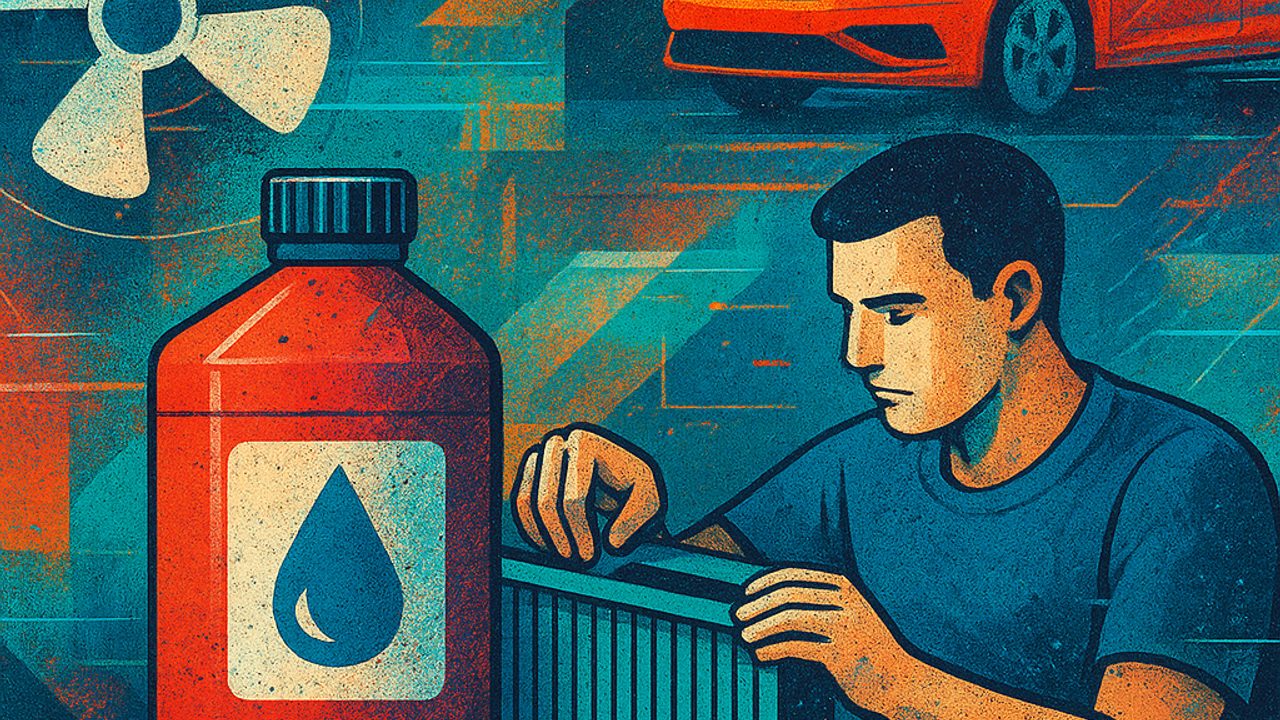
The cooling system stays off the radar for months for those who are just starting out. Until the day the light comes on, the needle rises, and the car cries for help.
With a few habits, you can reduce the risk of overheating, avoid costly damage, and still present a more reliable car at sale time.
Habit 1: check the coolant level with the engine cold
This is the basic step many people skip — and the most important for safety. Always check the level in the reservoir with the engine cold, on level ground.
- The level should be between the “min” and “max” marks. - If it is below the minimum, there is a risk of uneven heating. - If it keeps dropping, there may be a leak.
Never open the reservoir cap with the engine hot. Besides being dangerous, it can cause serious burns.
Visual safety tip
Very dark fluid, with an oily appearance or rust, indicates a problem. Do not top it up “in a panic” without investigating.
Habit 2: use the correct coolant — and avoid plain water
Water alone may work as a quick fix, but it charges the price later. The right coolant protects against corrosion, raises the boiling point, and helps keep the temperature stable.
- Follow the specification in the car’s manual. - Use the indicated ratio (usually coolant + demineralized water). - Do not mix brands or different types without technical guidance.
For those planning to sell the car, this matters: a clean, protected system inspires confidence during inspection.
Habit 3: pay attention to the radiator and hoses
The radiator works on the front line. Small leaks, bent fins, or dried-out hoses compromise heat exchange.
Common warning signs: - Sweet smell after driving. - Stains on the ground where the car usually sits. - Swollen or very hard hoses.
These signs call for inspection before they turn into a roadside breakdown.
What to watch on the dashboard while driving
The temperature gauge is not decorative. It warns when something is out of the ordinary.
- Needle rising beyond the usual: reduce engine load. - Temperature warning light on: look for a safe place to stop. - Steam from the hood: turn off the engine and wait for it to cool down.
Continuing to drive while overheating can cause serious damage and compromise safety.
Small details that help with resale
Used-car buyers usually look at the whole picture: cleanliness, maintenance, and consistency.
- Clean reservoir at the correct level. - Coolant with uniform color. - No makeshift fixes, wrong caps, or hoses held with improvised clamps.
These details show ongoing care and reduce objections during negotiation.
Simple routine, big effect
Creating the habit of checking the cooling system takes only a few minutes a month. In return, you gain predictability, safety, and a car that’s easier to sell.
For beginners, this makes all the difference: fewer day-to-day scares and more peace of mind when it’s time to list the car.
Comments
Comments are public and the sole responsibility of the author. Don’t share personal data. We may store technical signals (e.g. IP hash) to reduce spam and remove abusive, illegal, or off-topic content.