
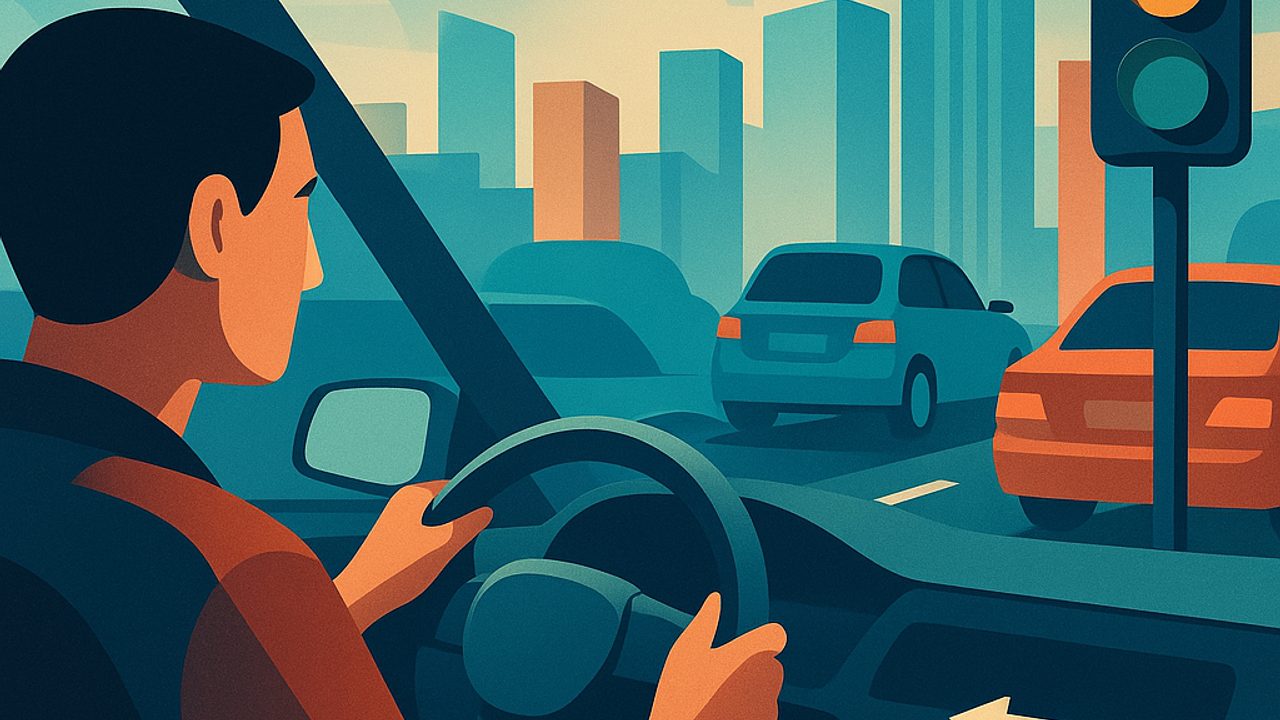
In urban traffic, conflicts cost time. An unnecessary brake, a quick argument, or a misinterpreted maneuver turn into lost minutes — and, when added up, recurring delays.
Traffic etiquette is not just about courtesy: it is a practical tool to keep flow, reduce interruptions, and make commutes more predictable. Below is a step-by-step set of habits, from basic to advanced, designed for daily city use.
Essential basics: predictability above all
Being predictable is one of the biggest shortcuts to saving time in urban traffic. When everyone can anticipate movements, flow improves.
- Use turn signals with real advance notice, not at the last second. - Maintain a stable trajectory within the lane, avoiding constant corrections. - Respect queues and order of arrival at turns and U-turns.
These behaviors reduce chain braking and eliminate micro-conflicts that clog traffic.
Silent communication that speeds up flow
Much of traffic communication happens without words. Knowing how to “speak” well with your vehicle makes a difference.
- Brake lights should indicate real deceleration, not small adjustments. - Avoid the horn as an emotional reaction; use it only as an objective alert. - At night or in the rain, keep headlights appropriate to be seen without dazzling.
When communication is clear, others’ decisions are faster — and that saves precious seconds at every intersection.
Space management: less dispute, more progress
Fighting for every meter usually delays more than it helps. Managing space is a key habit of urban etiquette.
- Keep functional distance, not the minimum. - Avoid blocking intersections if there is no space ahead. - Clear lanes quickly after turns or brief stops.
Why yielding can be faster
Yielding in critical points often unlocks overall flow. The time “given up” is usually less than the time lost in a standoff.
Efficient coexistence with pedestrians and cyclists
Urban environments are shared. Ignoring this creates conflicts and unexpected stops.
- Anticipate crossings in areas with heavy foot traffic. - Respect the lateral space of bicycles and scooters. - When turning, look beyond the traffic light: watch sidewalks and bike lanes.
Predictability in coexistence reduces abrupt braking and speeds up the resumption of movement.
Stops, pick-ups, and drop-offs without blocking the road
Poorly executed quick stops become bottlenecks. A bit of method prevents blockages.
- Plan the spot before stopping; avoid double parking even for “just a minute.” - In mobility apps, align on a meeting point that does not interrupt flow. - Resume movement promptly, signaling before pulling out.
These precautions save your time and that of those behind you.
Advanced level: flow reading and urban anticipation
With practice, etiquette evolves into active traffic reading.
- Observe signal cycles to adjust speed and avoid stops. - Identify congestion patterns at certain times and act preventively. - Prioritize decisions that keep movement going, even if they are not the “fastest” in the short term.
Etiquette as a time strategy
At the advanced level, etiquette stops being a reaction and becomes a strategy. Fewer conflicts mean fewer interruptions — and a more continuous, predictable, and efficient urban commute.
Comments
Comments are public and the sole responsibility of the author. Don’t share personal data. We may store technical signals (e.g. IP hash) to reduce spam and remove abusive, illegal, or off-topic content.