
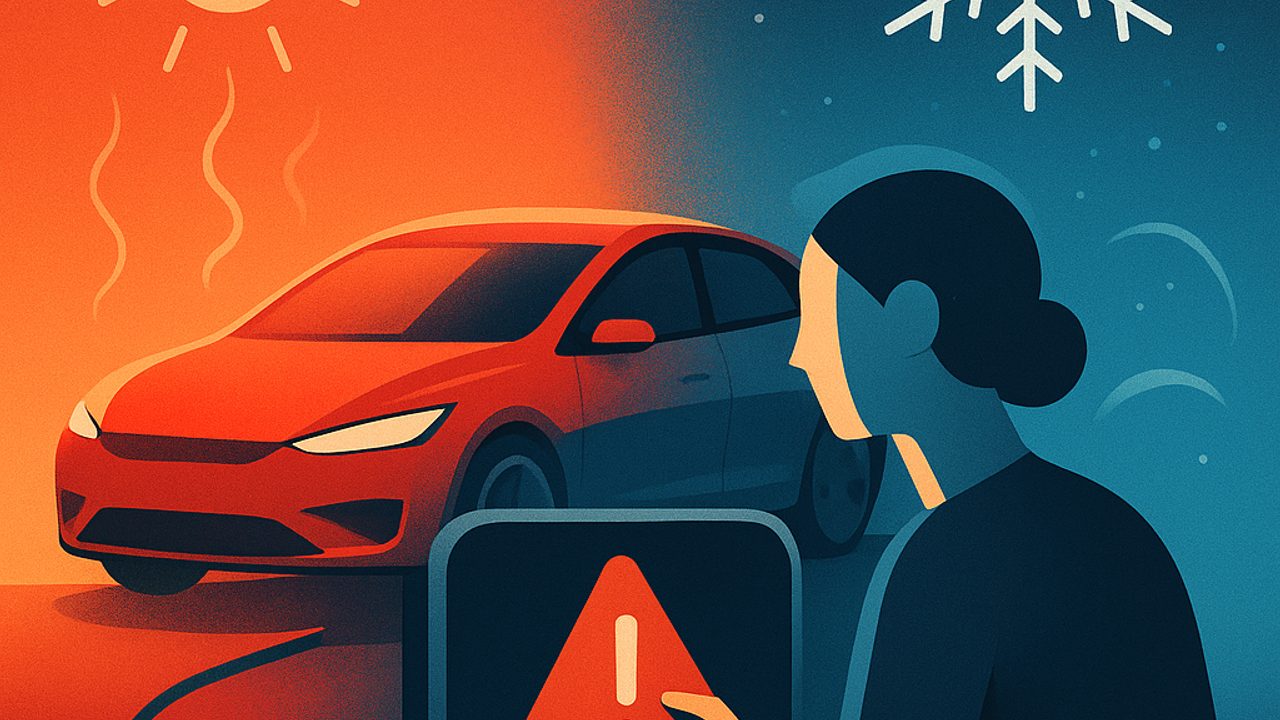
Heat and cold are part of everyday driving — and in electric vehicles, temperature plays a direct role in performance and protection systems. For beginners, recognizing simple signs prevents surprises and helps preserve safety.
Below are three frequent temperature-related alerts, what they indicate, and how to act in a practical way, without improvisation.
Sign 1: sudden drop in range (especially in cold weather)
In cold conditions, range can drop noticeably within the first few kilometers. This happens because the battery works best within a specific thermal range, and the system may use extra energy to warm it up.
What to watch on the dashboard
- Estimated range lower than usual - Higher instant consumption in the first minutes - Battery icon with a limited performance warning
What to do safely
- Plan routes with a larger charge margin on cold days - Avoid hard acceleration until the system reaches ideal temperature - If possible, pre-condition the car while still connected to the charger
Sign 2: reduced power or slower response in heat
On very hot days, the car may limit power to protect the battery and electronics. It feels like smoother responses when accelerating, even with a high charge level.
Why this happens
- The system prioritizes battery cooling - There is automatic protection against overheating - Components work to maintain thermal safety
How to act when you notice the sign
- Avoid aggressive driving on long climbs or in heavy traffic - Prefer routes with shade or better traffic flow - If the warning persists, take a break so the system can stabilize its temperature
Sign 3: temperature warnings or slower charging
Specific temperature alerts on the dashboard or longer-than-normal charging times are also important signs — common in both extreme heat and intense cold.
Common situations
- Message such as "battery cold" or "battery hot" - Charging power reduced automatically - Fans running for longer after shutdown
What not to do
- Do not force fast charging outside ideal conditions - Do not ignore repeated dashboard warnings - Do not cover ventilation or cooling intakes
Simple habits that help in any season
Some practices reduce temperature impacts and increase day-to-day safety:
- Park in the shade whenever possible - Avoid leaving the car for long periods in extreme heat with a very high charge - Keep the vehicle software updated for thermal management improvements
When extra attention is required
Seek technical evaluation if temperature warnings are frequent, appear even in mild weather, or come with a sudden loss of performance. Thermal systems are an essential part of electric vehicle safety.
Understanding how heat and cold affect the car helps beginner drivers drive with more predictability, respecting system limits and avoiding decisions that increase unnecessary risks.
Comments
Comments are public and the sole responsibility of the author. Don’t share personal data. We may store technical signals (e.g. IP hash) to reduce spam and remove abusive, illegal, or off-topic content.