
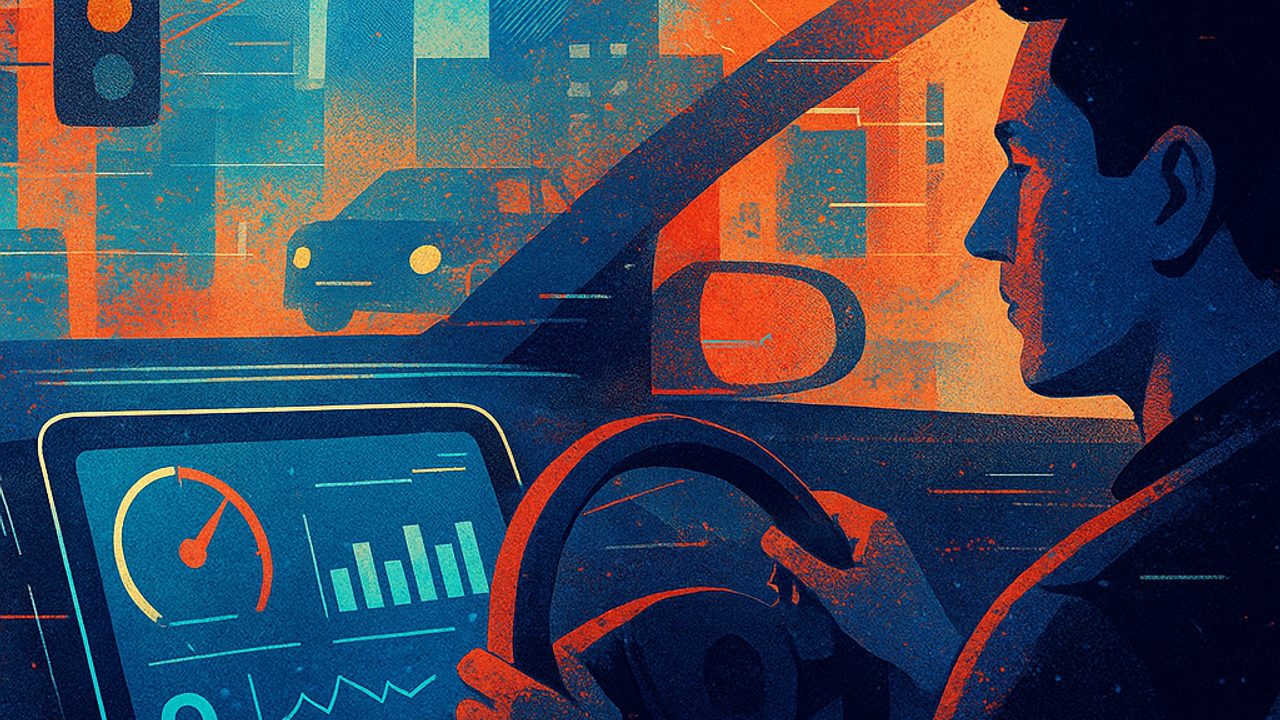
Telemetry may sound technical, but in urban use it can be very practical. At its core, it’s about observing basic driving data to understand where everyday risks lie.
In the city, where everything changes quickly — traffic lights, pedestrians, motorcycles, deliveries — measuring how you drive helps turn attention into habit, and habit into safety.
What telemetry means when we talk about urban use
In urban practice, telemetry is the recording of how the vehicle behaves and how the driver reacts. It doesn’t require a new car or complex systems. Many data points are already available in apps, onboard computers, or even simple trip reports.
The most common indicators include: - Average speed per segment - Hard braking - Rapid acceleration - Idling time with the vehicle running - Times and locations of higher tension along the route
Why measuring driving helps reduce risks in the city
In urban traffic, most incidents don’t come from major mistakes, but from the repetition of small behaviors. Telemetry helps reveal these patterns.
For example: a frequent sequence of hard braking usually indicates late approaches to traffic lights, distraction, or excessive speed for that stretch. Adjusting this reduces the risk of minor collisions, which are common in cities.
Simple indicators that matter more than they seem
Not every data point is useful for city driving. A few indicators already provide good safety signals: - **Hard braking**: shows lack of anticipation - **Strong acceleration after a stop**: indicates haste or competition for space - **Speed above traffic flow**: increases conflicts with other modes - **Time stopped in inappropriate places**: signals unsafe stopping choices
Observing these points over the course of a week already reveals where to adjust your driving.
How to interpret the data without overcomplicating
Urban telemetry isn’t about perfection, but about trends. An isolated event rarely says much. What matters is repetition.
Useful questions when looking at the data: - Does this always happen in the same stretch? - Is it more common at certain times? - Is it linked to haste, fatigue, or distraction?
These answers help decide whether the adjustment should be in the route, the schedule, or driving behavior.
Practical adjustments that improve everyday safety
Based on the measurements, adjustments are usually simple: - Slightly reduce average speed on local roads - Anticipate deceleration when approaching traffic lights and crosswalks - Keep greater distance in stretches with motorcycles and bicycles - Avoid rapid starts after short stops
These changes don’t add much travel time, but they significantly reduce risk.
Telemetry also applies to app users and shared cars
Even without owning a vehicle, you can apply telemetry logic. Navigation apps show average speed, idle time, and route patterns.
Mentally noting where more alerts, detours, or delays occur already works as a basic form of measurement. Over time, drivers begin to anticipate risky situations without relying on alerts.
Turning data into habit, not surveillance
The biggest mistake when using telemetry is treating the numbers as enforcement. In urban use, they work better as a mirror.
When measurement becomes a light routine — checking once a week, for example — it helps build more predictable, less reactive, and safer driving. In the city, predictability is one of the greatest allies of safety.
Comments
Comments are public and the sole responsibility of the author. Don’t share personal data. We may store technical signals (e.g. IP hash) to reduce spam and remove abusive, illegal, or off-topic content.