
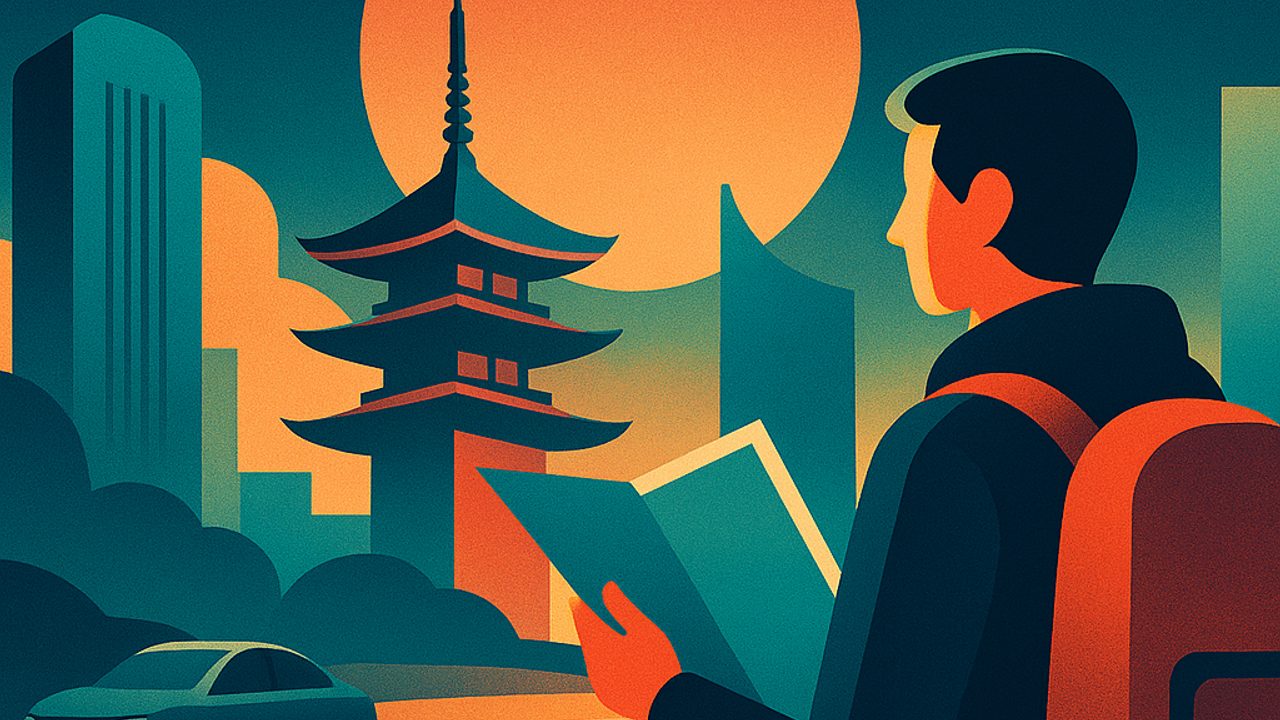
A first trip to Japan usually combines Tokyo, Kyoto, and Osaka. It works very well — as long as you prioritize what each city does best.
The secret is not to “see everything,” but to adjust the pace and choose experiences that reveal everyday life, aesthetics, and local food.
Tokyo: urban contrast and small rituals
Tokyo impresses with its size, but the experience improves when you think in terms of neighborhoods rather than isolated sights. Prioritize areas where you can walk, observe, and eat well.
- **Neighborhoods with identity**: Asakusa (temple and traditional commerce), Shibuya (crossing, shops, and cafés), Shimokitazawa (thrift stores and music), Yanaka (old residential vibe). - **Temple + street**: combine a temple with the surrounding street. Context matters as much as the monument. - **Counter dining**: ramen, donburi, and curry are quick, affordable, and show everyday local life.
When to slow down in Tokyo
Set aside some time with no rigid schedule to explore on foot, step into bookstores, observe stations, and sit in a café. This “empty” time often becomes the best moment in the city.
Kyoto: tradition, silence, and smart choices
Kyoto requires selection. There are many temples, but repeating the same type gets tiring. The ideal approach is to mix icons with less obvious areas.
- **Early mornings**: temples and shrines are quieter before 9 a.m. - **One standout temple per period**: choose a few and enjoy them calmly. - **Historic neighborhoods**: walking old streets reveals more than rushing between attractions.
Simple cultural experiences work well here: gardens, tea houses, traditional sweets, and light trails.
Osaka: food, humor, and nightlife
Osaka is added to the itinerary to relax. It is more straightforward, loud, and welcoming.
- **Food is the priority**: okonomiyaki, takoyaki, and informal izakayas. - **Lively areas**: regions with canals, neon signs, and lots of people at night. - **Short outings**: Osaka works well in smaller blocks of time.
Don’t try to over-“culturalize” Osaka. Its charm lies in everyday life and at the table.
How many days in each city?
For a first trip, a common balance works well:
- **Tokyo**: 4–5 days (for its scale and diversity) - **Kyoto**: 2–3 days (with well-planned mornings) - **Osaka**: 1–2 days (focused on food and nightlife)
If you need to cut time, reduce Osaka. If you can extend, add days in Tokyo.
Experiences that are worth more than attraction checklists
Some choices deliver more of Japan than racing through famous sights:
- Buying ready-made food at a local market - Watching the flow of a major station - Eating alone at the counter - Walking aimlessly through a residential neighborhood
These moments help you understand the country beyond photos.
Common mistakes in the classic itinerary (and how to avoid them)
- **Too many temples in Kyoto**: vary with neighborhoods and cafés. - **Tokyo packed too tightly**: group areas by day. - **Osaka as a “pass-through city”**: reserve at least one night.
With clear priorities, the classic itinerary stops being obvious and becomes a rich introduction to Japanese culture.
Comments
Comments are public and the sole responsibility of the author. Don’t share personal data. We may store technical signals (e.g. IP hash) to reduce spam and remove abusive, illegal, or off-topic content.