
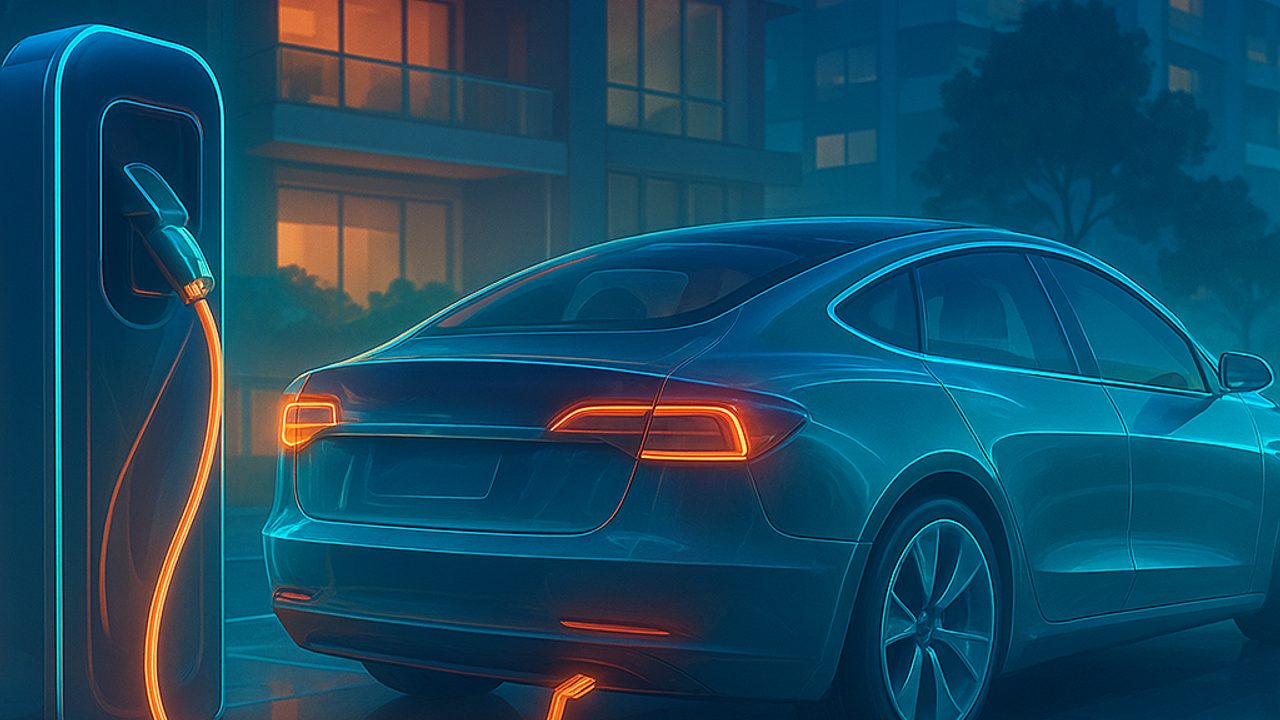
Electrification reached buildings before many of them were ready for it. In large cities, charging in condominiums has become a key part of urban mobility — and also a sensitive infrastructure point.
When implementation is improvised, conflicts among residents arise, electrical risks increase, and unnecessary costs appear. A high-level view helps anticipate problems and build solutions that scale safely.
Pitfall 1: makeshift wiring and standard outlets
The scene is familiar: a resident runs a cable from their own panel to the parking space and plugs the car into a residential outlet. It works in the short term, but it creates a chain of risks.
Standard outlets were not designed for continuous loads over hours. In older buildings, wiring can overheat, trip breakers, or degrade silently, increasing the risk of failures.
How to avoid
- **Dedicated circuit** for each charging point, with appropriate breakers and protection. - **Certified equipment**, designed for continuous use. - **Electrical inspection** of the run between the panel and the parking space before energizing.
This foundation reduces incidents and prevents a localized problem from affecting common areas of the building.
Pitfall 2: splitting the bill without measuring
In many condominiums, the initial solution is to split consumption among everyone or charge a flat fee to those who charge. In large buildings, this quickly becomes a conflict.
Without individual metering, occasional users subsidize those who charge every day. The perception of unfairness stalls decisions and delays necessary investments.
How to avoid
- **Individual metering per parking space or per user**, integrated with the condominium system. - **Clear billing rules**, approved in an assembly. - **Data transparency**, with easy access to monthly consumption.
Measuring well is not sophistication: it is basic governance for shared infrastructure.
Pitfall 3: thinking only about today
Installing one or two points "to see how it goes" seems prudent, but it usually becomes expensive. When adoption grows, there is a lack of panel space, electrical capacity, and cable routes.
In large cities, resident turnover accelerates demand. What was an exception becomes the norm in just a few years.
How to avoid
- **Scalable design**, anticipating growth in the number of points. - **Assessment of the building’s demand** and available capacity. - **Ready passive infrastructure** (cable trays, shafts, panel space), even if chargers come later.
Planning for growth reduces repeated construction and interruptions in garage use.
Best practices that unlock implementation
Some decisions simplify daily operations and help the condominium gain traction:
- **Single installation standards**, avoiding different solutions per unit. - **Centralized management**, even when chargers are individual. - **Compatibility with load control**, to avoid peaks during peak hours.
These points connect private charging to the functioning of the urban grid as a whole.
Electrical safety as part of urban mobility
Charging in condominiums is not an isolated technical detail. It influences the adoption of electric vehicles, load distribution in the city, and users’ perception of safety.
When infrastructure is well thought out, the building becomes an ally of urban mobility: it reduces improvisation, avoids risks, and paves the way for more efficient energy use. In large cities, this foundation makes a difference every day.
Comments
Comments are public and the sole responsibility of the author. Don’t share personal data. We may store technical signals (e.g. IP hash) to reduce spam and remove abusive, illegal, or off-topic content.