
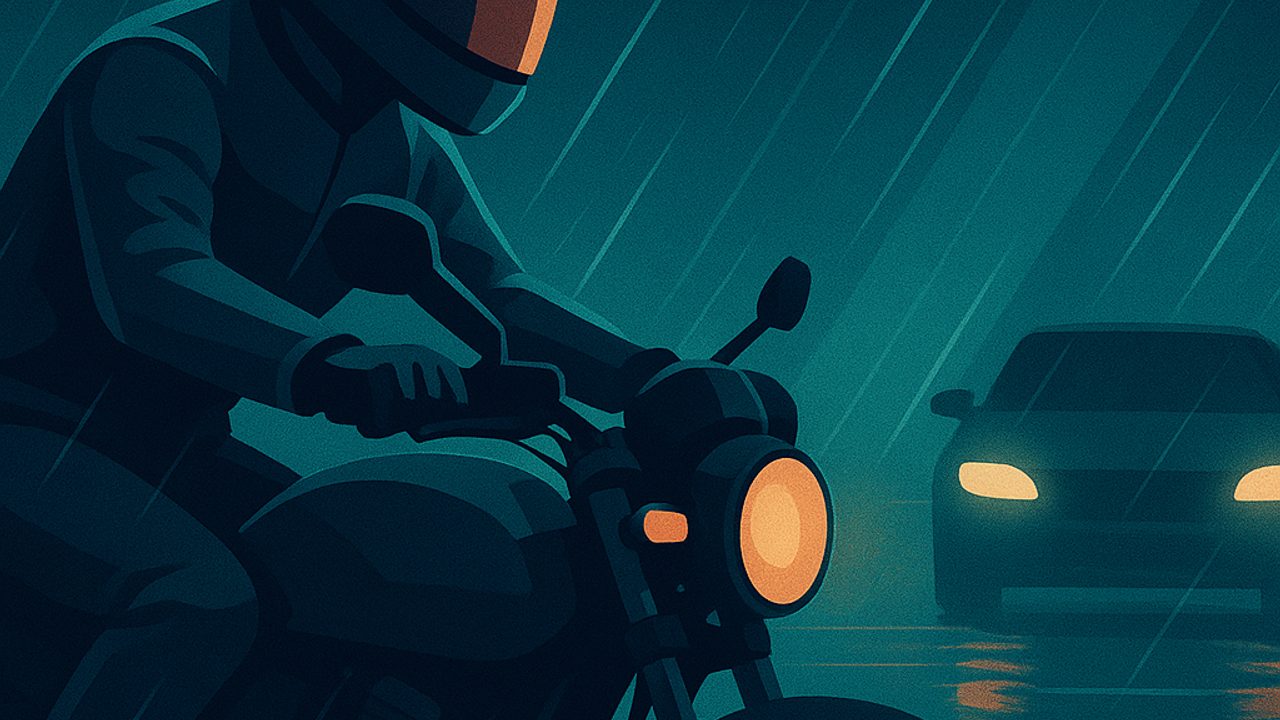
Rain is not synonymous with panic, but it demands respect. The asphalt changes, cars behave differently, and the motorcycle itself reacts in another way. For those just starting out, understanding these limits prevents scares and silly falls.
The idea here is practical: what truly improves in the rain, what gets worse, and when it’s worth reducing the pace or even postponing the ride.
Grip drops — and it doesn’t drop the same everywhere
Water alone already reduces friction, but the bigger problem is the surprises of urban asphalt. Painted lines, manhole covers, oil buildup at intersections, and patches become treacherous.
Key points for beginners: - In the first minutes of rain, the road is usually more slippery. - Leaning the bike less is a real advantage in the rain. - Smooth lines help more than any abrupt correction.
Braking in the rain: earlier, lighter, more space
Braking well in the rain is not braking hard, it’s braking earlier. Stopping distance increases, even with tires in good condition.
Good practices that make a difference: - Anticipate braking and use both brakes progressively. - Avoid sharp grabs, especially on the front brake. - If the bike has ABS, it helps, but it’s no miracle.
For beginners, the usual mistake is braking too late — not braking too softly.
Safety distance: the most common mistake in the rain
In dry conditions, many people already ride too close. In the rain, this becomes a direct risk. Visibility worsens and brake response changes.
How to adjust in practice: - Double the distance to the car ahead. - Think in terms of “time,” not just meters. - Be wary of brake lights: they come on before the car actually stops.
Visibility: seeing and being seen
Rain affects both sides. A fogged helmet, dirty visor, and spray from cars reduce your ability to read traffic.
Simple precautions: - Visor clean inside and out. - Keep the motorcycle’s lighting in proper working order. - Avoid blind spots, especially around buses and trucks.
Light-colored or reflective clothing helps more than it seems on gray days.
Real advantages of riding in the rain (yes, they exist)
It may sound strange, but rain also teaches.
Some practical gains: - Riding becomes smoother and more conscious. - Less excess speed. - More attention to surroundings.
For beginners, this helps build good habits that remain even when the weather clears.
Clear limits: when it doesn’t make sense to insist
Not all rain is the same. Heavy downpours, flooding, or strong crosswinds increase risk beyond what’s reasonable.
Consider stopping or postponing if: - Visibility drops to the point where you can’t see traffic ahead. - Water covers potholes and uneven surfaces. - You are tired or insecure — this factor weighs heavily.
Simple adjustments before heading out in the rain
No complications, no high cost: - Tires properly inflated and in good condition. - Brakes responding predictably. - Chain lubricated (helps with smoothness).
In the rain, the best safety is still the sum of attention, margin for error, and humility. Reducing the pace is not losing time — it’s gaining control.
Comments
Comments are public and the sole responsibility of the author. Don’t share personal data. We may store technical signals (e.g. IP hash) to reduce spam and remove abusive, illegal, or off-topic content.