
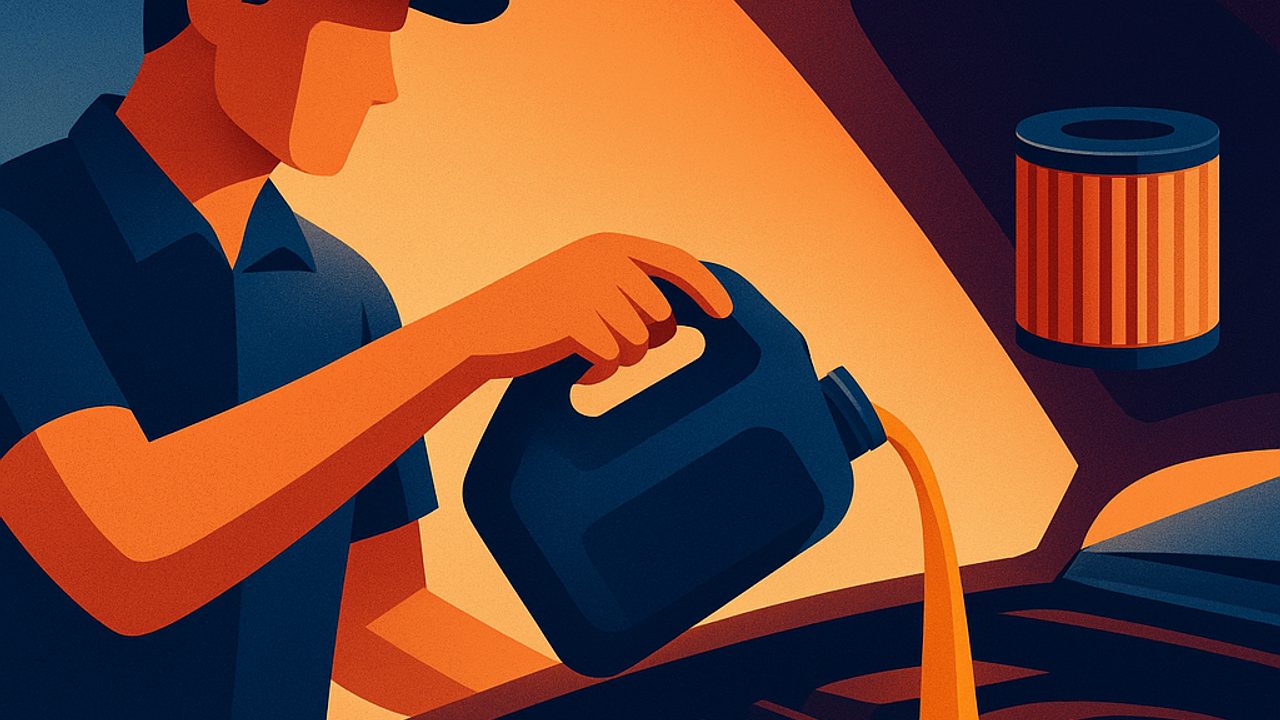
Engine oil and filters are discreet items, but decisive for safety. When neglected, they increase the risk of seizure, overheating, and breakdowns in the middle of the road.
For those just starting out — or preparing the car for sale — following a clear step-by-step avoids common mistakes and shows real care for the vehicle.
What oil does (and why this is about safety)
Oil lubricates, cools, cleans, and protects the engine’s internal parts. Without it, friction rises quickly and the engine suffers.
In practice, degraded oil or a low level can cause: - Increased temperature and metallic noises - Loss of power during acceleration - Oil warning light coming on in critical situations
All of this becomes a driving risk and a cost at sale.
Types of oil: choosing without confusion
The car’s manual is the reference. It defines viscosity (e.g., 5W-30) and specification (API/ACEA).
To avoid mistakes: - **Mineral**: shorter intervals; common in older engines - **Semi-synthetic**: balance between protection and cost - **Synthetic**: best protection and thermal stability
Mixing different specifications is not good practice. If in doubt, keep the standard used in the last recorded change.
Oil filter: small, but decisive
The filter retains impurities that circulate with the oil. When it becomes saturated, it loses efficiency — and “clean” oil no longer exists.
Change the filter **always together** with the oil. Saving money here is a classic mistake that compromises lubrication.
Attention to installation
A poorly tightened filter can leak oil while driving. Overtightening can damage the threads. The correct tightening is firm, without excessive force.
Safe step-by-step to check and change
Even if the change is done at a shop, understanding the process helps identify failures.
- Park on level ground - Engine off and cold for checking - Remove the dipstick, wipe it, reinsert it, and check the level - Top up only to the indicated mark
In a full change, the used oil must be fully drained and disposed of properly.
Filters beyond oil: air and fuel
Other filters indirectly impact safety: - **Air filter**: dirty, reduces power during overtaking - **Fuel filter**: clogged, can cause failures and hesitation
They don’t need to be changed every time, but should be checked at the recommended intervals.
Real intervals and severe use
Heavy traffic, short trips, and dust shorten the change interval. Under these conditions, following only the maximum mileage can be risky.
Warning signs: - Very dark and thick oil - Strong fuel smell - Increased consumption
How this weighs on the car’s sale
Clean oil and documented maintenance convey confidence. An attentive buyer checks the engine’s condition and asks simple questions.
Presenting change receipts and keeping filters up to date helps avoid suspicion, discount requests, and technical discussions during negotiation.
Taking care of the basics is a direct way to protect the person driving today — and the car’s value tomorrow.
Comments
Comments are public and the sole responsibility of the author. Don’t share personal data. We may store technical signals (e.g. IP hash) to reduce spam and remove abusive, illegal, or off-topic content.