
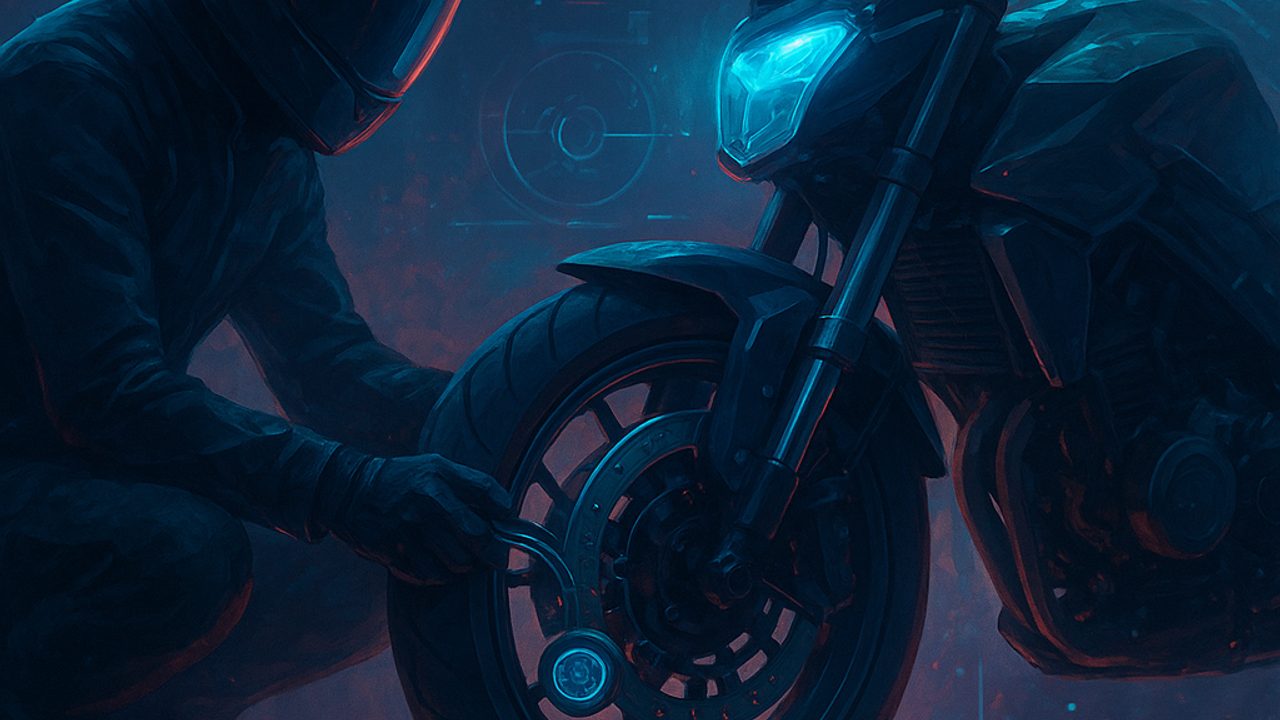
Tires are the motorcycle’s only point of contact with the ground. Small decisions about inflation, maintenance, and model choice directly influence stability, braking, and comfort.
With clear information, it becomes easier to take care of tires day to day and avoid behaviors that increase risk, such as loss of grip or uneven wear.
Proper inflation: when and how to do it
Inflating is not just “filling until it’s hard.” The ideal pressure depends on the motorcycle, the tire, and the load. The safest reference is usually found in the owner’s manual or on a sticker on the frame/swingarm.
Good inflation practices: - Measure with cold tires, before riding. - Use the recommended value for solo riding and adjust if riding with a passenger or luggage. - Check at least once a week or before trips.
Pressure that is too low increases heat buildup and wear on the edges. Pressure that is too high reduces the contact patch and harms grip, especially on uneven surfaces.
What changes between front and rear tires
Tires have different roles. The front tire is more stressed during braking and steering; the rear handles traction and load.
Because of this: - Recommended pressures are usually different. - Wear appears in different ways. - Replacement does not always happen at the same time.
Ignoring this difference can create a feeling of a “light” front end or an unstable rear, even with seemingly new tires.
Alignment and balancing: when they really matter
On motorcycles, alignment is related to the correct adjustment of the rear wheel relative to the front, usually after chain maintenance or tire replacement.
Signs that something may be off: - The bike pulls slightly to one side. - The chain shows uneven wear. - Unstable steering in a straight line.
Balancing, on the other hand, is essential whenever a tire is replaced. It prevents vibrations at certain speeds and reduces rider fatigue.
How to read tire wear
Learning to “read” the tire helps correct habits and settings.
Common patterns: - Center worn too much: high pressure or prolonged straight-line riding. - Worn edges: low pressure or intense cornering. - Stepped or cupped wear: irregular suspension or balancing.
Also pay attention to the wear indicators (TWI). When the tread reaches this level, the ability to disperse water drops significantly.
Bald tires don’t warn you: real risks
Even before reaching the legal limit, a tire loses efficiency. In the rain, the difference is even more noticeable.
Common risks: - Increased braking distance. - Loss of grip in corners. - Less predictability in emergency maneuvers.
Replacing at the right time is a safety decision, not just a maintenance one.
How to choose the right tire for your use
There is no “best tire,” only the most suitable for your routine.
Consider: - Daily urban use: focus on durability and quick warm-up. - Highway riding: high-speed stability and good water dispersion. - Frequent rain: tread design with efficient grooves. - Mixed use (asphalt and dirt): on/off-road tires compatible with the motorcycle.
Always respect the approved sizes and specifications. Changes can alter the bike’s behavior and require additional adjustments.
Simple care that extends tire life
Some habits make a difference over time: - Avoid unnecessary hard acceleration and braking. - Keep suspension and brakes in good condition. - Check pressure regularly. - Observe the tire while cleaning the motorcycle.
Taking care of tires is taking care of the foundation of riding. With constant attention, the motorcycle responds better and riding becomes safer in any scenario.
Comments
Comments are public and the sole responsibility of the author. Don’t share personal data. We may store technical signals (e.g. IP hash) to reduce spam and remove abusive, illegal, or off-topic content.