
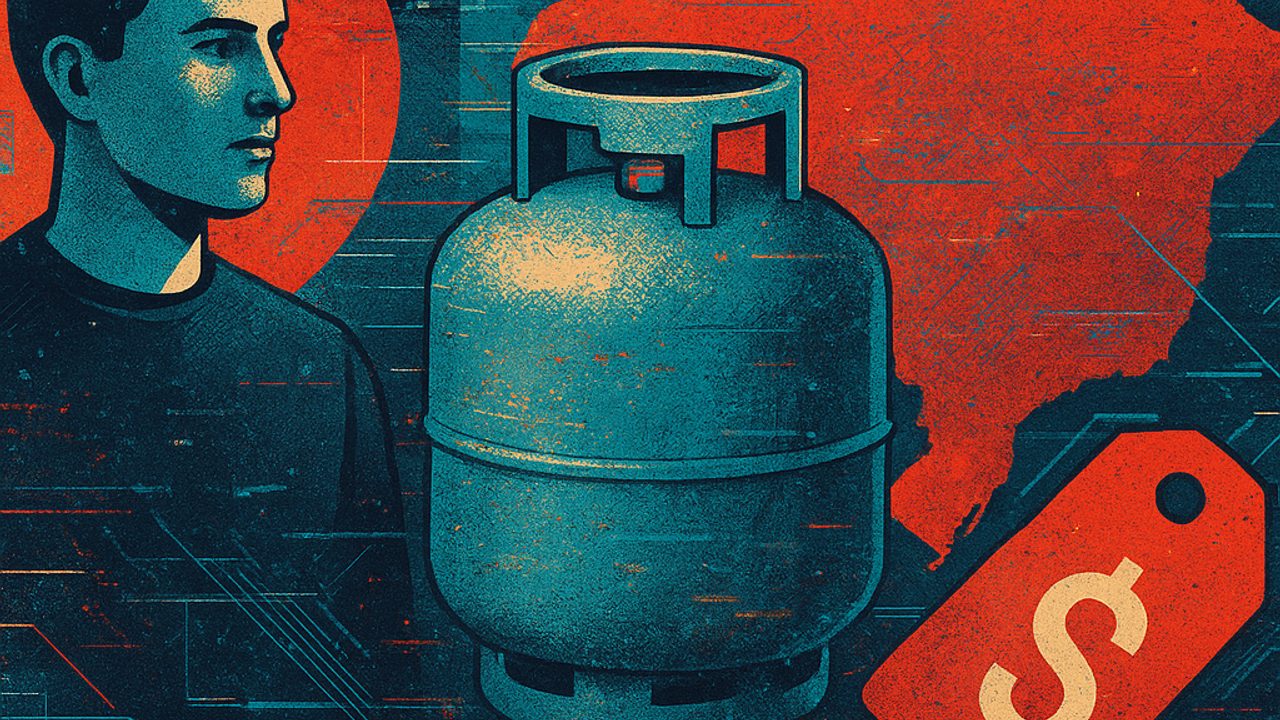
Liquefied petroleum gas (LPG) is part of everyday domestic life in Brazil, but it still raises questions. Scattered news and old stories help spread myths, especially about safety and prices.
In this guide, we bring together straightforward explanations, without technical terms, to separate facts from exaggerations and show why the price of the gas cylinder varies so much from one place to another in the country.
Myth: LPG is intrinsically dangerous
LPG is flammable, but that does not automatically make it dangerous. The risk lies in improper use, not in the product itself. When manufacturing, filling, and storage standards are respected, LPG is considered safe for household use.
Some important points:
- Cylinders undergo periodic strength tests. - Valves are designed to prevent accidental leaks. - The gas is given a characteristic odor to make leaks easier to detect.
Truth: most accidents involve incorrect installation or use
Studies and incident records indicate that accidents are usually linked to makeshift solutions, non-standard hoses, or damaged cylinders. Enclosed spaces without ventilation also increase risk.
That is why simple practices make a difference in everyday life:
- Keep the cylinder in a ventilated area. - Avoid laying it on its side or placing it upside down. - Replace hoses and regulators within the recommended timeframe.
Myth: every LPG cylinder is the same, regardless of brand
Although the contents are the same, not all cylinders circulate under the same logistical conditions. The brand influences aspects such as quality control, distribution network, and associated services.
This does not mean that one brand is “strong” and another “weak,” but rather that there are operational differences that can affect availability and final price.
Truth: LPG prices vary because of regional logistics
Contrary to what many imagine, the price of LPG does not depend only on the price of oil. In Brazil, the distance between production or import bases and points of sale weighs heavily.
Factors that influence regional variation:
- Distance and transport cost to local distributors. - Road conditions and access to urban centers. - Scale of consumption in each region.
Regions farther from logistical hubs tend to have higher prices, even when the product is the same.
Myth: all LPG is imported
Although Brazil imports part of the LPG it consumes, a significant portion comes from domestic production, associated with oil refining and natural gas processing.
The proportion between domestic production and imports can change over time, which helps explain price adjustments in certain periods, but does not eliminate the importance of local production.
Truth: taxes and margins are also part of the price
In addition to the cost of the product and transportation, the final price includes state taxes and the remuneration of distribution and resale stages. These components vary by state and municipality.
In general terms, the amount paid by the consumer reflects:
- Cost of LPG at the source. - Transportation and storage. - Local taxes. - Retailer operating costs.
Myth: a more expensive cylinder is always safer
A higher price does not, by itself, guarantee greater safety. What really matters is the origin of the cylinder and compliance with technical standards throughout the supply chain.
A cylinder within specifications, even if cheaper, can be just as safe as a more expensive one, as long as it comes from a licensed retailer.
Truth: information reduces risks and frustration
Understanding how LPG works helps avoid scares, both in use and in cost. Knowing that prices vary due to regional factors and that safety depends more on proper use than fear of the product leads to a calmer relationship with cooking gas.
In the end, LPG remains a widely used energy source in Brazil because it combines practicality, broad distribution, and well-established safety standards when used properly.
Comments
Comments are public and the sole responsibility of the author. Don’t share personal data. We may store technical signals (e.g. IP hash) to reduce spam and remove abusive, illegal, or off-topic content.