
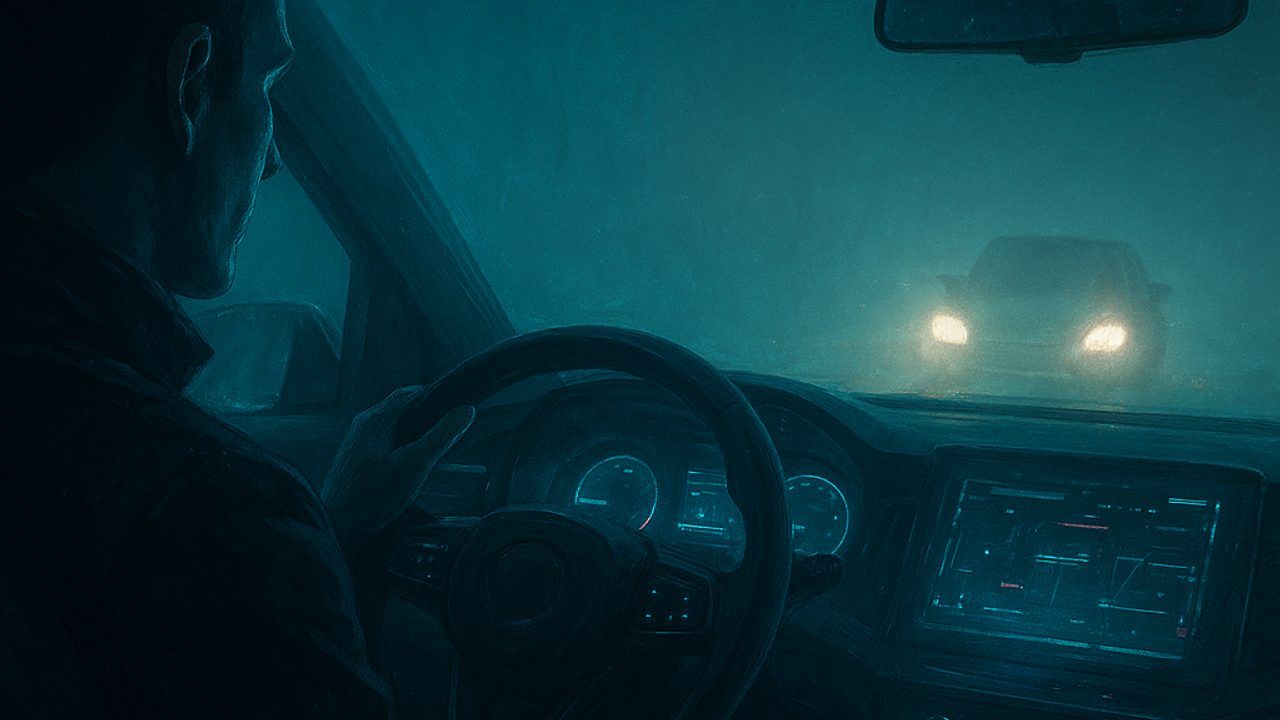
Fog, mist, smoke, or heavy rain drastically reduce the field of vision and increase reaction time. In these scenarios, basic choices — such as the correct headlights and distance between vehicles — make a real difference in preventing collisions.
This guide provides a step-by-step approach from essential to advanced for daily use, with practical guidance to maintain predictability, see better, and be seen when visibility is compromised.
1) Assess visibility before acting
Before making any adjustment, observe the actual range of what you can see ahead. If details disappear within a few meters, the risk is high.
- Notice the contrast of the pavement, signage, and taillights ahead. - Observe whether there is excessive glare on the windshield. - Gradually reduce speed until you feel in control of what you can see.
This initial assessment avoids abrupt decisions and prepares you for the next step.
2) Correct headlights: the basics that prevent common mistakes
In low visibility, the goal of headlights is to **see and be seen** without causing glare.
- **Low beams**: the standard choice. They provide sufficient illumination without reflecting fog back into your eyes. - **Parking lights**: they do not replace low beams; on their own, they make the vehicle poorly visible. - **High beams**: avoid them. The strong light reflects off droplets and worsens visibility.
If the vehicle has **fog lights**, use them only when visibility is truly low and together with low beams.
3) Safe distance: a simple rule to see and react
With reduced visibility, distance must increase — even at low speed.
- Aim for more space than you would use in normal conditions. - Use visual references: only proceed as far as you can safely stop. - Avoid closely “following the taillights” of the car ahead; this reduces your reaction margin.
The lower the visibility, the greater the space should be. This buffer compensates for delays in perception and braking.
4) Speed compatible with what your eyes can reach
There is no magic number: safe speed is the one that allows you to stop within the visible distance.
- Slow down progressively, without hard braking. - Maintain a steady pace so as not to surprise drivers behind you. - If you need to reduce speed significantly, signal in advance.
Speed consistent with available visibility is one of the most effective measures to prevent chain collisions.
5) Advanced techniques for everyday driving
Smart use of road references
When the fog “closes in,” references help maintain alignment:
- Prioritize the **lane edge lines**, which are often more visible. - Avoid fixing your gaze on flashing or very close lights. - Keep your eyes moving, alternating between short and medium range.
Communication and predictability
- Use turn signals earlier. - Avoid sudden lane changes. - Keep taillights clean to be seen clearly.
These behaviors reduce misinterpretation by other drivers.
6) When stopping is the safest decision
If visibility drops to a point where you cannot identify the road ahead, consider interrupting your drive.
- Look for a location off the travel lane. - Turn on hazard lights only when stopped. - Wait for conditions to improve before resuming.
Recognizing the limits of the situation is part of defensive driving and contributes to everyone’s safety.
7) Quick checklist to remember before and during fog
- Low beams on and properly adjusted - Speed compatible with visible range - Greater distance from the vehicle ahead - Clear, early signaling - Constant attention to road references
Applying these steps, from basic to advanced, helps turn driving in low visibility into a more predictable and safer everyday practice.
Comments
Comments are public and the sole responsibility of the author. Don’t share personal data. We may store technical signals (e.g. IP hash) to reduce spam and remove abusive, illegal, or off-topic content.