
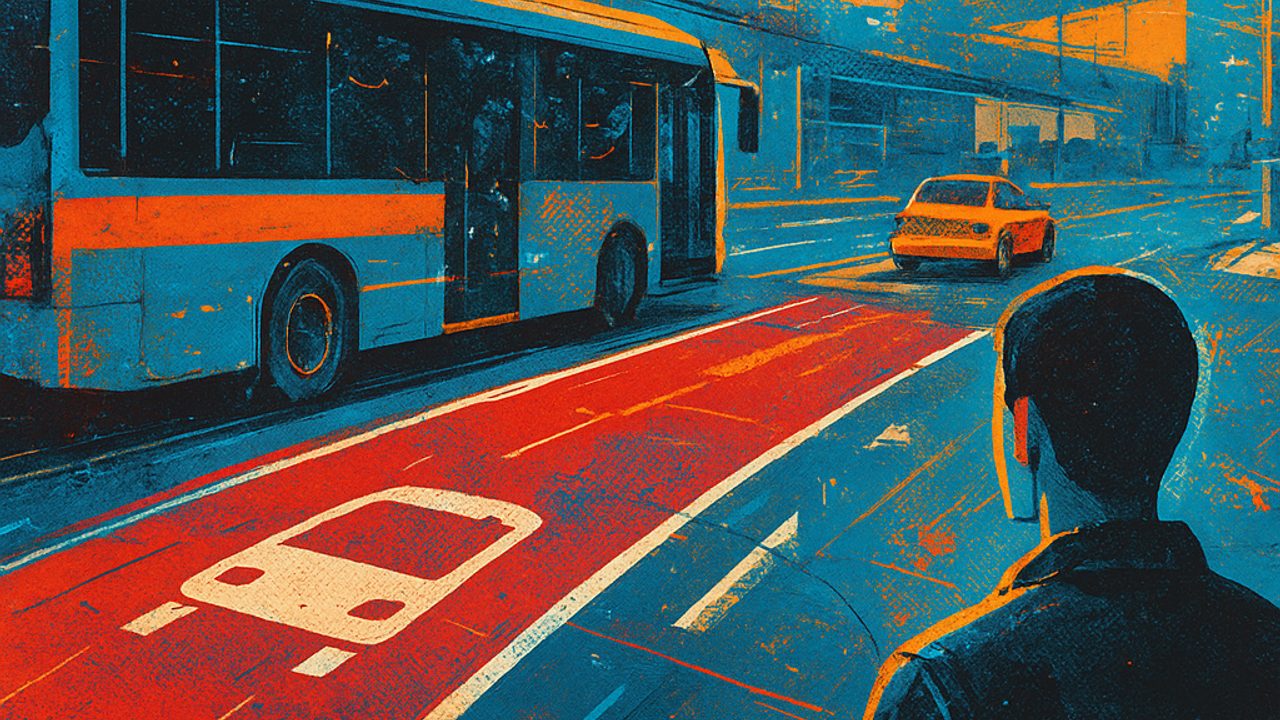
Exclusive bus lanes and corridors are powerful tools to reduce travel time and organize traffic. In large cities, they also directly influence the safety of pedestrians, cyclists, and drivers.
The problem is that small design and operational errors turn into daily traps. The result shows up in confusing intersections, sudden braking, and predictable conflicts. Below are three common traps — and practical ways to avoid them.
Trap 1: poorly designed entry and exit points
The transition between the exclusive lane and the general traffic lane is one of the most critical points. When the bus has to “dive” into traffic without space or warning, risk rises for everyone.
Typical signs of the problem:
- The lane ends abruptly before the intersection. - There is no accommodation area for the bus to change lanes. - Drivers realize the change too late, with turn arrows at the last second.
Direct impacts:
- Sudden braking and rear-end collisions. - Buses losing priority and time. - Motorcyclists squeezed between lanes.
How to avoid
- Create visible and continuous transition areas, with pavement markings and raised markers that guide a gradual lane change. - Anticipate information with clear horizontal signage before the critical point. - Avoid lane endings right before traffic lights or busy crossings.
Trap 2: intersections without clear priority for buses
Corridors work well mid-block, but fail at intersections. Without explicit priority, the bus becomes just “one more” vehicle competing for space.
What usually goes wrong:
- Right turns crossing the corridor without protection. - Traffic signals that do not account for the bus’s acceleration time. - Faded or generic pavement markings.
Frequent consequences:
- Conflicts with cars turning at the last moment. - Insecure pedestrians, unsure who has the right of way. - Loss of reliability in public transport service.
How to avoid
- Define signal priority for buses where there is high flow. - Use well-positioned channelization islands and zebra markings to organize movements. - Reinforce spatial legibility with consistent colors and symbols along the corridor.
Trap 3: poorly located bus stops
The location of a stop matters more than it seems. A poorly placed stop creates a bottleneck, increases boarding time, and generates conflicts around it.
Common mistakes:
- Stops placed right before the intersection, blocking sight lines. - Narrow shelters, with pedestrians spilling into the roadway. - Lack of an escape area for the bus to pull out without pressure.
Everyday effects:
- Buses stopped at an angle, occupying more than one lane. - Cyclists diverting into risky areas. - Pedestrians crossing outside the crosswalk due to lack of space.
How to avoid
- Prioritize stops after the intersection, when possible, with better visibility. - Size the stop area according to the actual volume of users. - Ensure straight alignment of the bus with the platform, reducing time and maneuvers.
Details that amplify or reduce risks
Even when the overall design is good, operational details make a difference.
Pay attention to:
- **Maintenance of markings**: faded lanes lose authority and increase encroachment. - **Adequate lighting**: dark corridors raise nighttime risk, especially for pedestrians. - **Predictable enforcement**: consistent presence reduces conflicts without needing to be punitive.
Road safety as a central criterion
Bus lanes and corridors are not just about speed. When well designed, they:
- Reduce conflicts by organizing movements. - Provide predictability for all road users. - Reduce last-second decisions, which are the most dangerous.
Time savings come as a consequence of a legible and safe space. In large cities, getting these details right is what separates an efficient corridor from a daily source of risk.
Comments
Comments are public and the sole responsibility of the author. Don’t share personal data. We may store technical signals (e.g. IP hash) to reduce spam and remove abusive, illegal, or off-topic content.