
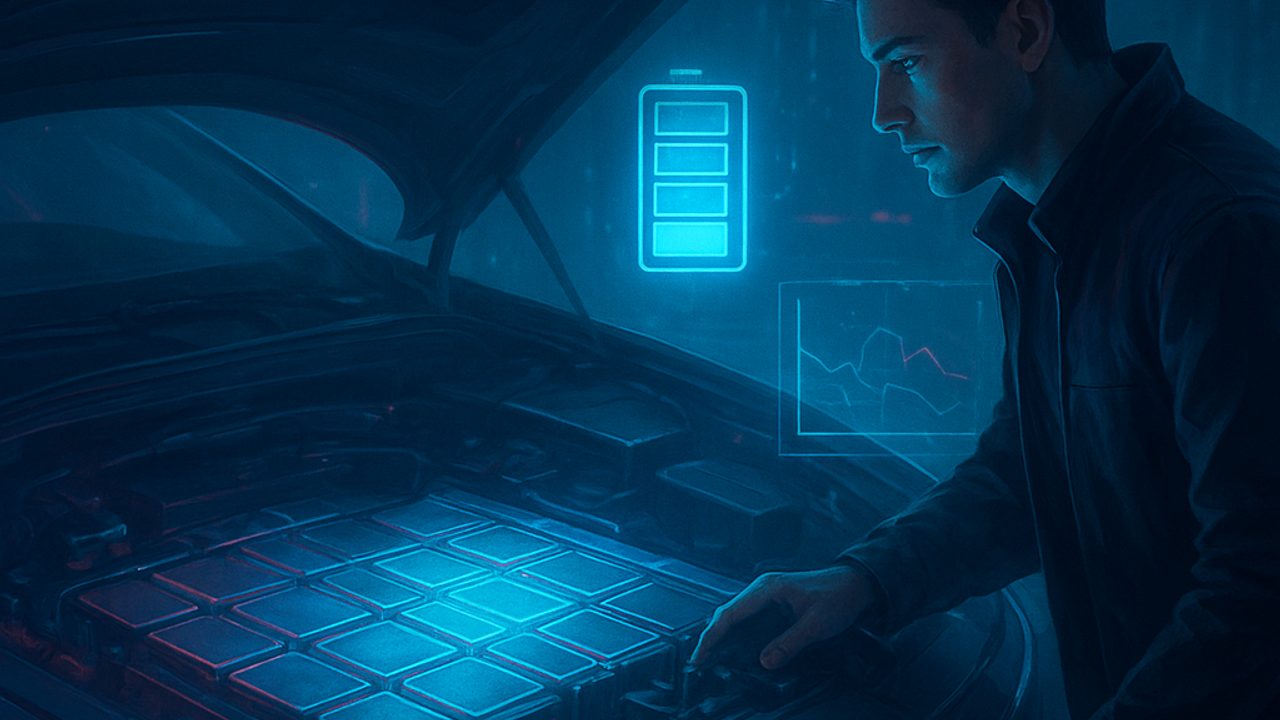
The battery is the heart of the electric car — and also the topic that generates the most doubts, exaggerations, and scary stories. When information is lacking, fear fills the gap. And fear usually costs money.
Understanding what is myth and what is truth helps you make simple decisions, use the car better, and avoid unnecessary expenses, without giving up safety.
Step 1: fires — the risk exists, but not the way you imagine
**Myth:** electric cars catch fire easily.
**Truth:** the risk exists, as with any vehicle, but it is not higher by default. Modern batteries have multiple layers of protection: temperature sensors, module-level isolation, and systems that shut down the pack when faults are detected.
Where savings come in: - Avoiding improvised electrical modifications reduces risk and cost. - Using proper chargers prevents expensive battery damage. - Keeping maintenance up to date helps identify warnings before they become problems.
Step 2: does charging every day damage the battery?
**Myth:** charging daily “wears out” the battery.
**Truth:** lithium-ion batteries do not have a memory effect. What matters most is **how** you charge, not how often.
Good practices that also save money: - Prefer partial charges (e.g., from 30% to 80%) for daily use. - Reserve 100% for long trips. - Avoid leaving the car parked for days at 0% or 100%.
These habits help preserve the battery and reduce the chance of premature replacement — the biggest cost of an EV outside warranty.
Step 3: rain, flooding, and washing — where the real limit is
**Myth:** water and electric cars do not mix.
**Truth:** the high-voltage system is sealed and designed for rain and washing. The problem starts with **deep flooding**, which is also dangerous for combustion cars.
Practical precautions: - Avoid driving through water above half the wheel height. - Do not charge the car if there is visible damage to the connector. - After flooding, do not try to “see if it works” — cheap can become expensive.
Savings here are about prevention: a damaged connector costs far less than a module compromised by water.
Step 4: heat and cold — silent villains for your wallet
**Myth:** temperature only affects range.
**Truth:** excessive heat accelerates chemical wear; intense cold temporarily reduces efficiency. Both impact lifespan.
What helps without spending more: - Use preconditioning when available (with the car plugged in). - Do not park for long periods under strong sun with a full battery. - Respect cooling system warnings.
Ignoring temperature alerts can be costly in the medium term.
Step 5: fast charging — villain or tool?
**Myth:** fast charging quickly ruins the battery.
**Truth:** it causes more wear than slow charging, but it was designed for occasional use. The problem is abuse.
Smart use that saves money: - Prioritize slow charging in daily use. - Use fast charging on trips or emergencies. - Avoid back-to-back fast charging sessions with a hot battery.
Less thermal stress means less capacity loss over the years.
Step 6: impacts and accidents — what changes in safety
**Myth:** a minor crash can cause an explosion.
**Truth:** in collisions, the system automatically cuts high voltage. The battery is protected by reinforced structures in the floor.
After any impact: - Check messages on the dashboard. - Do not ignore smells, noises, or unusual heating. - Seek a technical inspection before returning to heavy use.
Driving “to see if it goes away” can turn a simple repair into the replacement of expensive components.
Step 7: lifespan and battery replacement — the real scenario
**Myth:** the battery wears out in a few years and costs as much as the car.
**Truth:** most retain good capacity for many years. And replacing the entire pack is not always the solution.
Points that ease the wallet: - Module replacement, when available. - Reuse for stationary applications. - Long warranties focused on the battery.
Taking good care from the start increases options in the future.
Step 8: safety also means understanding the car’s warnings
**Myth:** alerts are manufacturer exaggeration.
**Truth:** system messages are the main defense against major failures.
Pay attention to: - Sudden power limitation. - Temperature or isolation warnings. - Abrupt changes in charging time.
Responding early costs less than fixing later.
A safe battery does not depend on luck, but on information and simple habits. When the driver understands how it really works, fear decreases, use becomes more relaxed, and the total cost of the EV starts working in your favor — without dangerous shortcuts.
Comments
Comments are public and the sole responsibility of the author. Don’t share personal data. We may store technical signals (e.g. IP hash) to reduce spam and remove abusive, illegal, or off-topic content.