
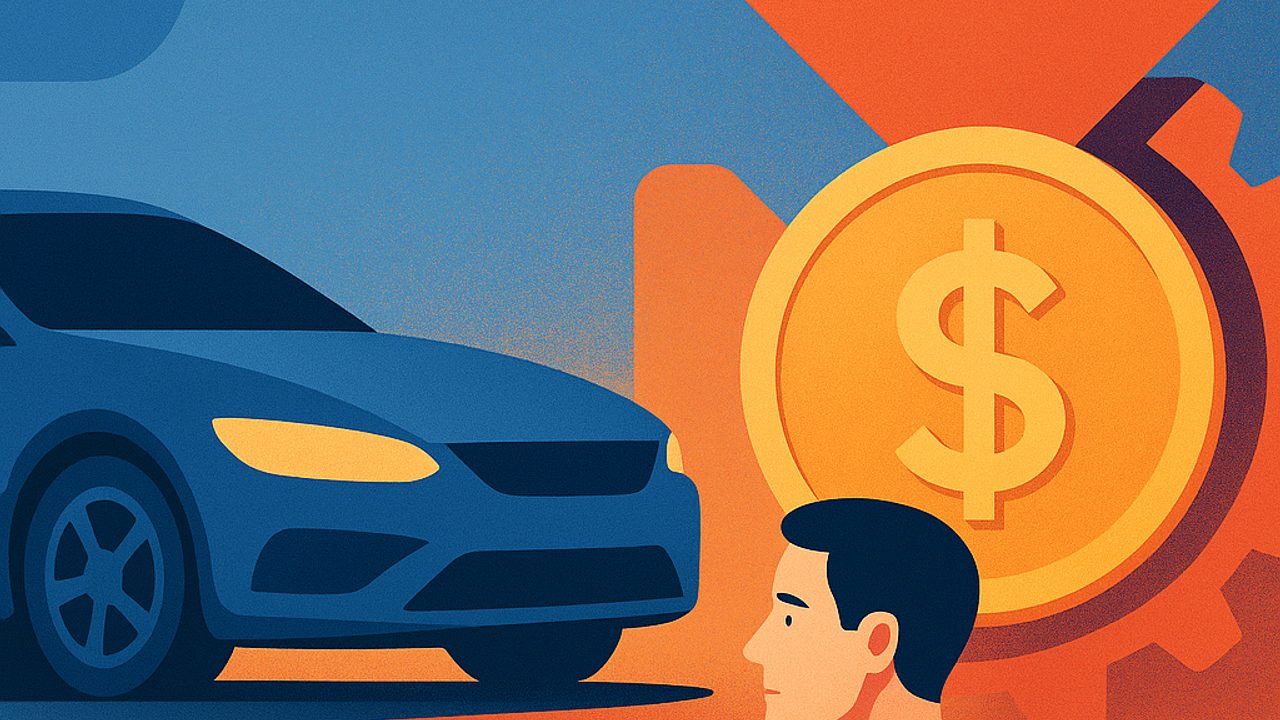
Depreciation is one of the biggest costs of owning a car — and also one of the least noticed in daily life. It happens even when the vehicle is parked in the garage and usually weighs more heavily in the first few years.
For those just starting out, understanding what most drives down resale value helps compare options with a focus on your wallet and avoid surprises when it’s time to sell.
What is depreciation (without complicating it)
Depreciation is the loss of a car’s value over time. It reflects age, use, market perception, and expected future costs. In practice, it’s the difference between the price paid and the amount obtained at sale.
Key points for beginners: - It’s a “silent” cost: it doesn’t show up as a monthly bill. - It tends to be more intense in the first years. - It varies greatly between models and usage profiles.
Factors that weigh most on resale value
Some factors have a consistent impact on resale price, regardless of the economic scenario: - **Model year and generation**: generational changes tend to make the previous version age quickly. - **Mileage**: usage above the market average reduces liquidity. - **Maintenance history**: documented services help hold value. - **Model reputation**: perceived fuel consumption, maintenance, and reliability. - **Supply and demand**: heavily supplied models may face more pressure.
Use and owner profile: how daily life accelerates the loss
The way a car is used influences depreciation as much as time does: - Intense urban use tends to increase wear. - Professional use increases mileage and exposure. - Non-standard customizations can limit the pool of buyers.
Here, the point isn’t to avoid using the car, but to align resale expectations with the real usage profile.
Advantages of understanding depreciation before buying
Knowing about depreciation helps to: - Compare **purchase price vs. expected loss**. - Choose versions with better liquidity. - Decide between new, nearly new, or older used cars.
In wallet terms, this allows you to prioritize models that lose less value over the time you plan to keep the car.
Limits: what depreciation alone doesn’t explain
Depreciation isn’t everything. It doesn’t replace the analysis of: - Maintenance and insurance. - Fuel consumption. - Taxes and fees.
A car with low depreciation may have higher ongoing costs. Balance matters more than a single indicator.
When it makes sense to pay less now (and accept more depreciation)
In some scenarios, accepting higher depreciation can make sense: - Purchasing with a significant discount. - Short-term use, when the entry price is decisive. - Specific needs that limit options.
Practical rule for beginners
Always compare the **total cost over the period** (purchase price minus expected resale), not just the percentage value lost.
How to compare options with a focus on your wallet
For a simple, practical comparison: - Define how long you plan to keep the car. - Estimate a conservative resale value. - Observe the model’s liquidity in the market. - Place the estimated loss alongside day-to-day costs.
This way, depreciation stops being a shock and becomes an objective criterion in the economic decision.
Comments
Comments are public and the sole responsibility of the author. Don’t share personal data. We may store technical signals (e.g. IP hash) to reduce spam and remove abusive, illegal, or off-topic content.