
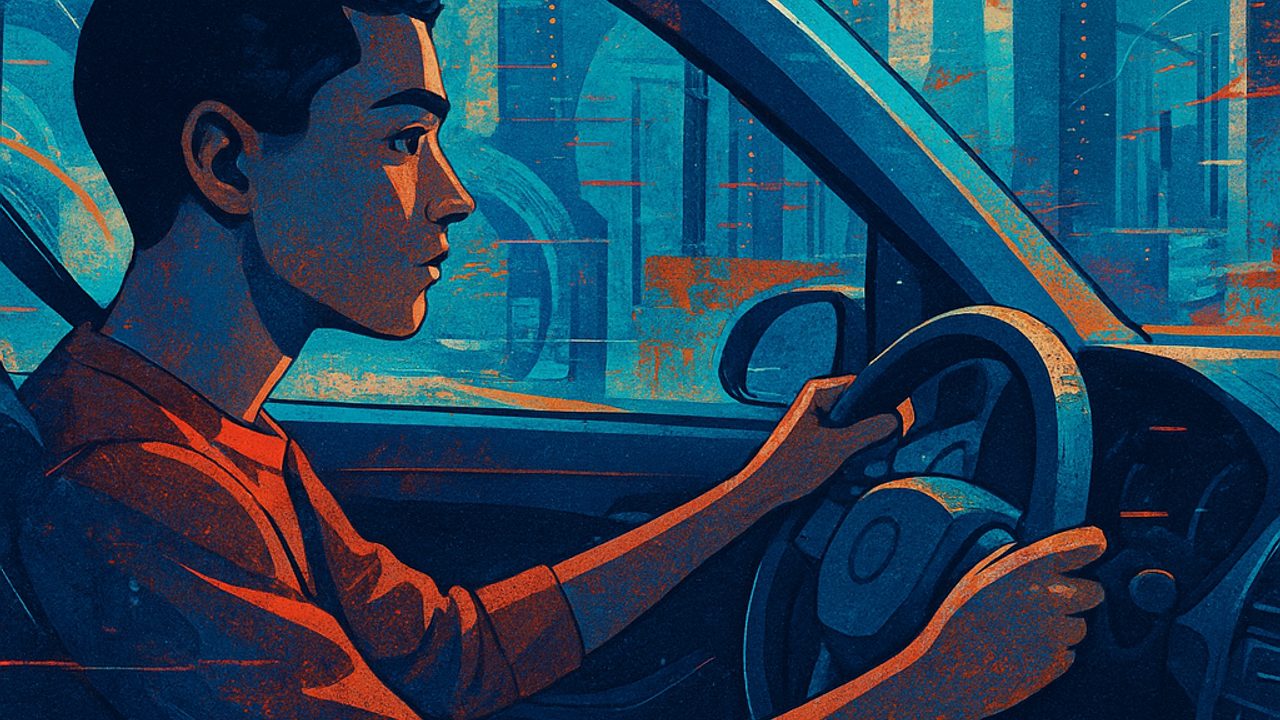
City traffic brings together pedestrians, motorcycles, bicycles, buses, and cars competing for the same space. For those who are just starting to drive, this mix can seem unpredictable.
The good news is that defensive driving does not depend on complex maneuvers. With a few consistent habits, it is possible to reduce risks and gain confidence behind the wheel.
1) Look beyond the car in front
A common beginner mistake is to fix attention only on the vehicle immediately ahead. In the city, this limits reaction capacity.
Adopting a broader view helps anticipate situations such as sudden braking, traffic lights changing, or pedestrians about to cross.
- Observe two or three cars ahead whenever possible - Pay attention to side traffic, especially at intersections - Use mirrors frequently, not only when changing lanes
Extra attention in urban corridors
On roads with motorcycles traveling between lanes or nearby bike lanes, widening the field of vision reduces scares and last-minute defensive maneuvers.
2) Maintain appropriate distance and speed
In urban traffic, haste is often the enemy of safety. The distance from the vehicle ahead is one of the main factors in avoiding minor collisions, which are very common in cities.
Even at low speeds, reaction space is essential.
- Avoid tailgating at traffic lights and in congestion - Adjust speed to the flow, not just to the road limit - Take extra care on wet or uneven pavement
3) Communicate intentions in advance
A large part of traffic conflicts happens due to a lack of clear communication between drivers. Turn signals and brake lights are safety tools, not formalities.
Signaling in advance allows other road users to react predictably.
- Use the turn signal before changing lanes or turning - Avoid unnecessary sudden braking - Use hazard lights only in justified situations, such as vehicle immobilization
Urban situations that deserve extra care
Some city scenarios require an even more defensive posture, especially for beginners:
- Intersections with partial visibility - School areas and regions with heavy pedestrian traffic - Bus stops, where people cross outside crosswalks
Defensive driving as a habit, not an exception
In the city, driving safely is the result of repetition. The more these habits become part of the routine, the more natural it becomes to anticipate risks and act calmly.
For those who are just starting out, focusing on these three points already creates a solid foundation for more predictable and safer driving in everyday urban life.
Comments
Comments are public and the sole responsibility of the author. Don’t share personal data. We may store technical signals (e.g. IP hash) to reduce spam and remove abusive, illegal, or off-topic content.