
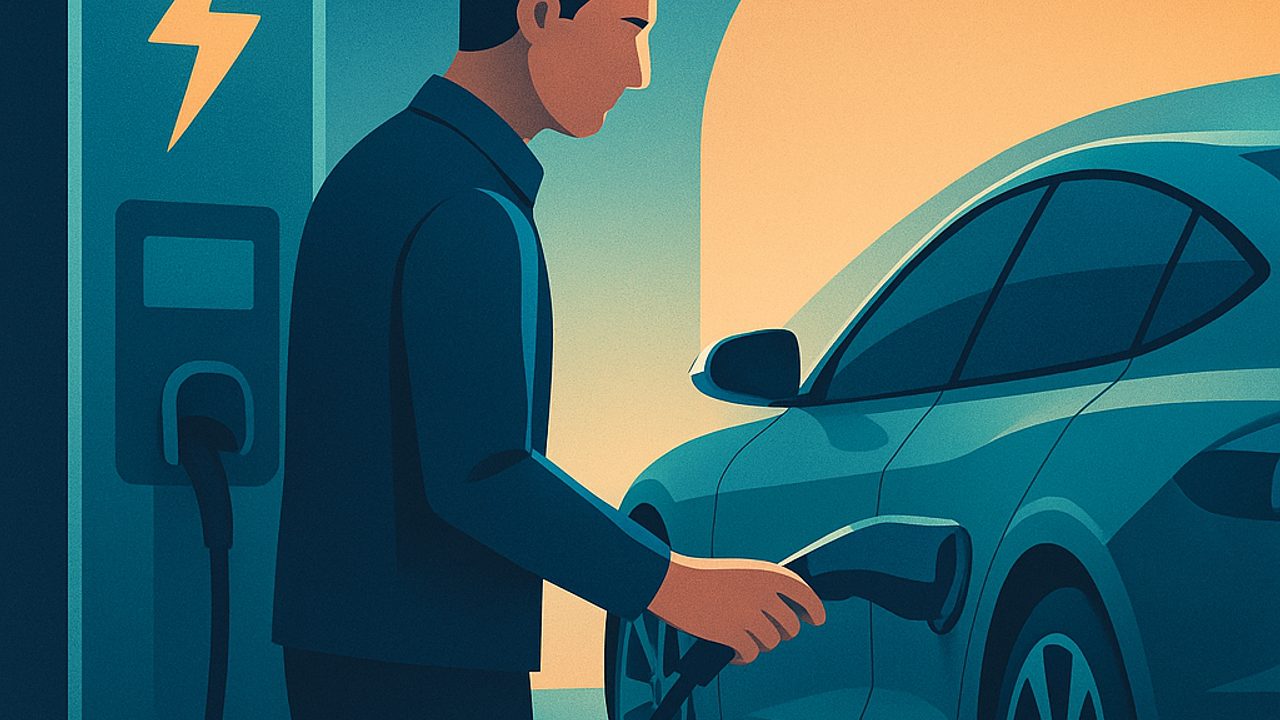
The first contact with a public charger usually mixes curiosity and insecurity. Where to park, how to connect, when to move the car. Everything seems simple, but some details make a real difference for safety.
Etiquette at chargers is not just about being "polite." It is about avoiding electrical risks, on-site confusion, and situations that can turn into a headache for you and other drivers.
Before parking: observe the surroundings
Even before opening the app or grabbing the cable, it’s worth looking around. Many problems start with rushing.
- Check if the space is exclusive for charging and whether there is signage indicating a maximum time. - Observe the condition of the equipment: heavily twisted cables, connectors on the ground, or broken screens deserve extra attention. - Avoid places with flooding, large puddles, or excessive dirt near the charger.
If something seems out of the ordinary, looking for another station is usually the safest option.
Cable and connector are not extension cords
It sounds obvious, but it’s a common mistake among beginners.
- Never force the connector if it doesn’t go in easily. - Do not pull the cable by the wire; always hold it by the handle. - Avoid placing the connector on the ground while preparing to charge.
Besides reducing shock risk, these precautions prevent damage that can make the charger unusable for everyone.
Plugged in? Check the car and the charger
After connecting, confirm that charging actually started.
- Check the car’s dashboard for a charging indication. - Check the charger display or the app to see if the session is active. - Wait a few seconds before walking away.
This avoids the common situation of occupying the spot without charging, which leads to conflict and wasted time.
Usage time: safety also means knowing when to leave
Staying longer than necessary is not just poor etiquette. In some places, it becomes a risk.
- Respect time limits indicated on site or in the app. - With fast charging, monitor the battery level and free the spot as soon as it makes sense. - Avoid leaving the car charging to 100% unnecessarily, especially at busy stations.
Public chargers are shared infrastructure. The more predictable the usage, the safer the environment.
No improvisation with adapters and extensions
Using non-approved accessories is one of the main causes of problems.
- Do not use extension cords, splitters, or improvised adapters. - Use only connectors compatible with your vehicle’s standard. - If the charger is not suitable for your car, look for another station.
Improvisation can cause excessive heating and charging failures.
Finishing the charge: pay attention to the details
Ending correctly is just as important as starting.
- End the session via the app or on the charger itself before disconnecting. - Wait for the connector release indicated by the car. - Store the cable on the proper holder, without leaving it stretched or on the ground.
These simple steps help keep the equipment safe and functional.
Coexistence prevents conflicts and increases safety
Small gestures make a difference in daily use.
- If someone is waiting, inform them how much longer you plan to stay. - Do not block chargers if you are not going to charge. - If in doubt, ask for help from the app’s support or the person responsible for the location.
Over time, the charging routine becomes natural. And when everyone follows basic rules of coexistence, public chargers stop being a source of stress and become a smooth part of the journey.
Comments
Comments are public and the sole responsibility of the author. Don’t share personal data. We may store technical signals (e.g. IP hash) to reduce spam and remove abusive, illegal, or off-topic content.