
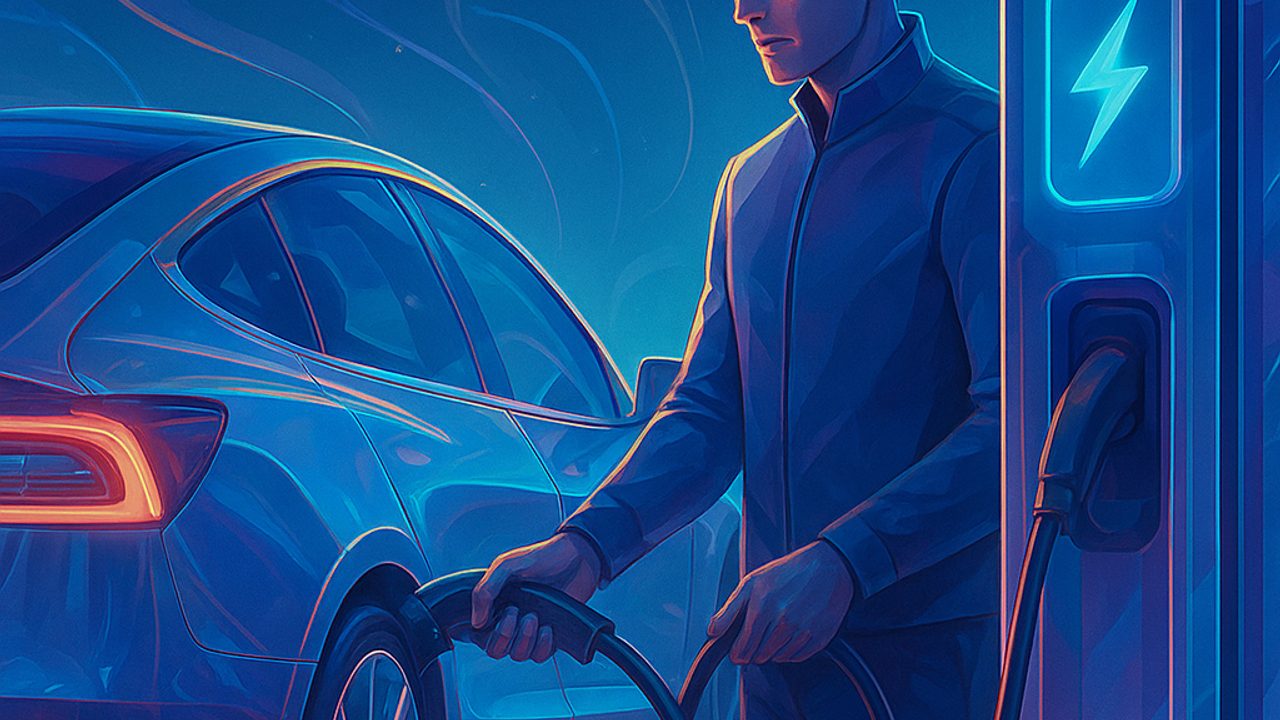
For those just starting with an electric car, charging often creates anxiety. Time, price, range: everything seems to revolve around where and how to plug in the car. In this scenario, fast charging becomes tempting — and also a source of mistakes.
Slow charging and fast charging have different roles. The problem arises when one tries to replace the other in everyday use. This affects the wallet, the routine, and even the perception that electric cars are "expensive".
The basics many people confuse
Slow charging is done using standard outlets or a residential wallbox, usually with alternating current (AC). It takes more time, but it is usually cheaper and more predictable.
Fast charging uses direct current (DC), is available at public stations, and delivers energy in just a few minutes. Convenient, yes. Economical, not always.
The simple logic helps:
- Slow charging = routine, planning, and lower cost per kWh - Fast charging = exception, travel, or specific needs
When this is reversed, the pitfalls appear.
Pitfall 1: treating fast charging as the daily standard
It’s common for beginners to think: "if it charges fast, why not use it all the time?" The impact shows up on the bill — or in the app statement.
In general, fast-charging kWh costs more. Not only because of the energy itself, but also due to infrastructure, demand, and billing models. In some cases, the cost per km approaches that of a combustion car.
Practical example: using fast charging several times a week for city driving, when it would be possible to charge at home overnight, often doubles or even triples the monthly energy cost.
How to avoid it:
- Prioritize slow charging for daily use - Leave fast charging for trips, unexpected situations, or non-standard days - Compare the cost per kWh, not just charging time
When fast charging really makes sense
It’s not the villain. It just needs to be well positioned in the routine.
Situations where it’s usually worth it:
- Long trips, to reduce stops - Atypical days with lots of driving - Temporary lack of access to slow charging
In these cases, paying more per kWh buys time and flexibility — not routine.
Pitfall 2: ignoring losses and tariffs in slow charging
Slow charging is cheaper, but it’s not "free energy." Beginners often underestimate small costs that, added together, make a difference.
Some often-forgotten points:
- Natural losses in energy conversion - Higher electricity tariffs during peak hours - Use of extensions or inadequate outlets, which increase losses
Always charging during the most expensive residential tariff period can make the month more expensive without the driver noticing.
How to avoid it:
- Prefer charging outside peak hours, when possible - Use appropriate outlets and cables - Monitor monthly consumption, not just battery percentage
Well-used slow charging is an ally of savings
When integrated into the routine, slow charging works almost like refueling while you sleep. The car wakes up full and the cost is spread over the month.
For those who drive predictable distances, this habit usually results in the lowest possible cost per km in an electric car.
Pitfall 3: choosing power without thinking about real use
Another common mistake is investing — or paying — for more power than necessary. This applies to both fast-charging stations and residential solutions.
In practice:
- Not every car can take advantage of all available power - Not every routine requires such fast recharging - More power almost always means higher cost
Paying for ultra-fast charging when the car limits the power or when a 1–2 hour recharge would be enough is silent waste.
How to avoid it:
- Know your car’s charging limits - Match power to available time, not anxiety - Evaluate whether the rush is the exception or the rule
Savings are more about habits than the charger
The difference between spending little or a lot on charging is rarely in the technology itself. It’s in repeated use.
Those who charge slowly, regularly, tend to:
- Plan trips better - Use fast charging less - Have a more stable monthly cost
Those who always rely on fast charging pay for convenience every month.
Adjusting the routine without complicating things
For beginners, a good balance point is usually:
- Slow charging as the daily foundation - Fast charging as a tool, not a crutch - Attention to cost per kWh and cost per km
Over time, range anxiety decreases. And the choice between fast and slow charging stops being a technical doubt and becomes a simple — and economical — decision.
Comments
Comments are public and the sole responsibility of the author. Don’t share personal data. We may store technical signals (e.g. IP hash) to reduce spam and remove abusive, illegal, or off-topic content.