
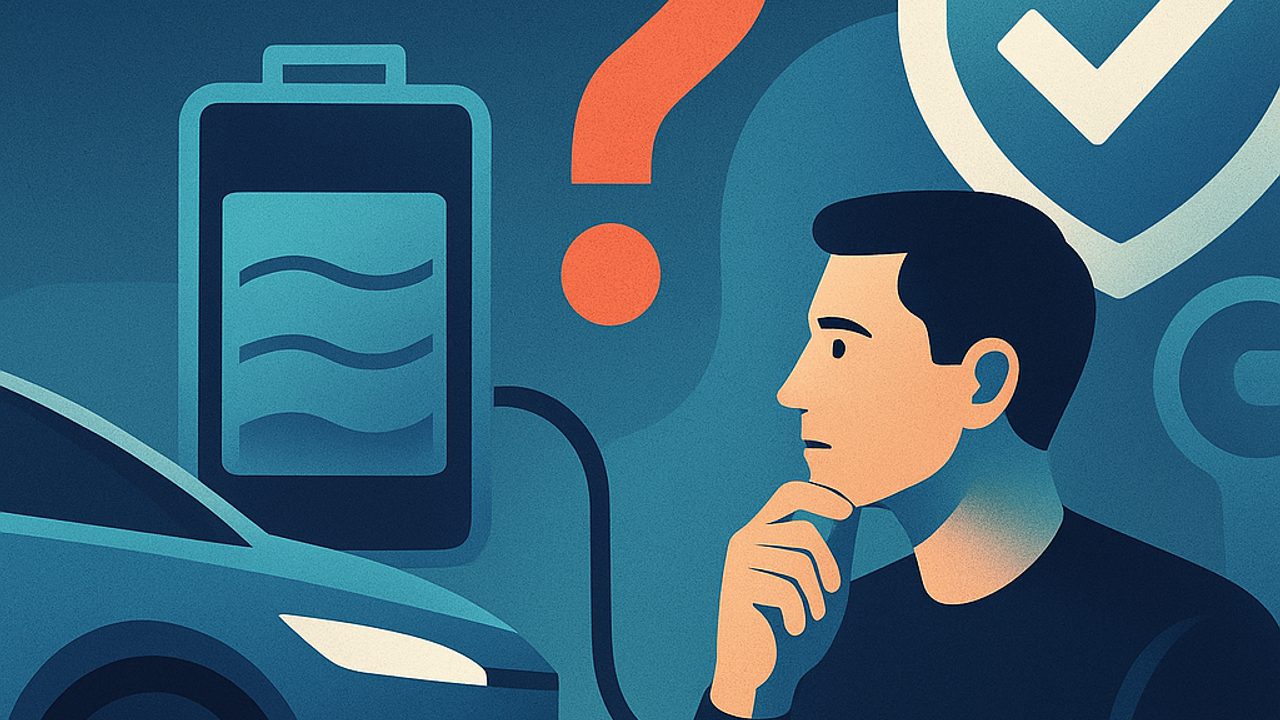
Those who are just starting with electric vehicles often hear scary stories about batteries: inevitable fires, dangerous charging, very expensive replacements in just a few years. Fear pushes conservative — and costly — choices that do not always increase safety.
The good news is that it is possible to separate fact from rumor and, by doing so, avoid unnecessary expenses. Safety and savings go hand in hand when decisions are simple and well informed.
Myth: an electric car battery easily catches fire
Cases draw attention, but they do not represent the rule. Modern systems have layers of protection: temperature monitoring, automatic shutdown, and reinforced housings. Fires exist, as in any energy technology, but the incidence is not higher than in combustion vehicles.
Where does savings come in? Avoiding improvised modifications and keeping inspections up to date costs less than dealing with damage caused by inadequate electrical installations.
Truth: makeshift charging is the biggest risk (and the most expensive)
Old outlets, common extension cords, missing grounding. This combo appears in many problem reports. It is not the battery that fails; it is the surroundings.
Practical points to spend better: - Use cables and outlets compatible with the current specified by the manufacturer. - Prefer slower, more stable charging at home, even if it takes more time. - Avoid “jury-rigged” solutions to save now and pay dearly later.
Myth: always charging to 100% is safer
For daily use, keeping the battery constantly full does not increase safety and can even accelerate wear over time. Most cars allow you to limit the charge for everyday use.
Savings here are quiet: less chemical stress means longer service life and less loss of range — which preserves resale value.
Truth: temperature matters more than many people imagine
Excessive heat is a known enemy of batteries. That is why cooling systems exist and need to be working well.
Simple habits help: - Avoid leaving the car charging under strong sun when it is not necessary. - Do not ignore temperature alerts on the dashboard. - Preventive maintenance of the cooling system is cheaper than corrective repairs.
Myth: fast charging always compromises safety
Fast charging is not a villain by itself. The problem is frequent use without criteria. On trips, it makes sense and is accounted for in the car’s design.
For your wallet, the logic is clear: - Use slow charging day to day. - Save fast charging for when time is tight. - Less thermal stress, less degradation, and less expense in the long run.
Truth: following the manual saves more than it seems
It may sound basic, but many costs arise precisely from ignoring simple manufacturer recommendations: charge limits, outlet types, inspection intervals.
Safety does not require paranoia or excessive investments. It requires consistency. Those who understand real risks avoid impulsive spending and enjoy the best of the technology — with peace of mind and budget control.
Comments
Comments are public and the sole responsibility of the author. Don’t share personal data. We may store technical signals (e.g. IP hash) to reduce spam and remove abusive, illegal, or off-topic content.