
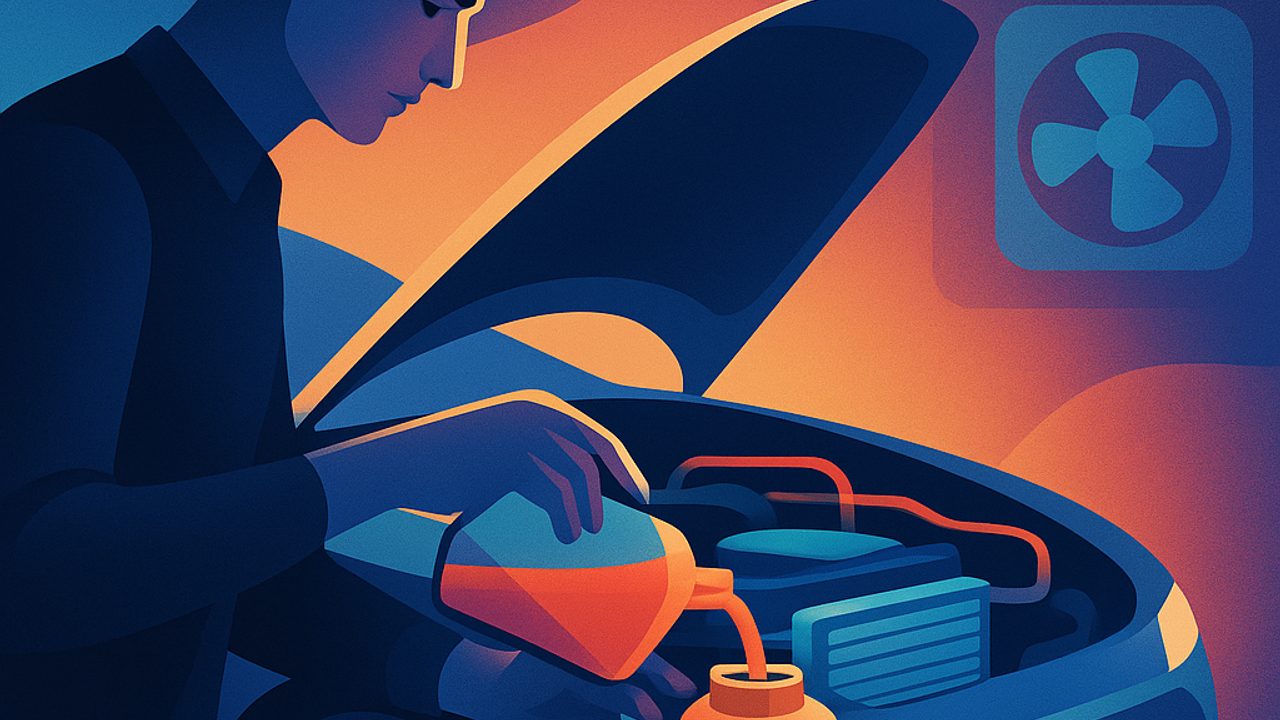
The silence of an electric car gives the impression that everything operates at an ideal temperature. That’s not quite the case. Electric motors, inverters, onboard chargers, and batteries also generate heat — and depend on an efficient cooling system.
In hybrids, the scenario becomes even more demanding: an internal combustion engine, power electronics, and a battery coexist. An apparently simple detail, such as the wrong fluid in the reservoir, can turn into an expensive headache.
What the additive does in the cooling system
The additive isn’t there just to “cool.” It performs several functions at the same time:
- Raises the boiling point and reduces the risk of boiling under heavy use. - Lowers the freezing point, protecting components in cold regions. - Inhibits corrosion in hoses, radiators, pumps, and metal plates. - Prevents the formation of sludge and internal deposits.
In electric and hybrid vehicles, many systems use separate circuits: one for the battery, another for electronics, and, in hybrids, another for the thermal engine. Each circuit may require a specific type of fluid, with controlled composition and conductivity.
Tap water: why it seems harmless, but isn’t
Topping up the reservoir with tap water is still a common habit — and a frequent mistake. Plain water brings dissolved minerals that cause silent problems:
- Formation of limescale on the system’s internal walls. - Accelerated corrosion of metal components. - Reduction of thermal efficiency over time. - Risk of failures in sensors and valves.
In systems that run close to sensitive electrical components, non-specified water can also change the fluid’s conductivity, something critical in some electric vehicle designs.
“Just a little bit of water” also counts
Even small, frequent top-ups dilute the additive. The result appears months later: dried-out hoses, noisy cooling pumps, or temperature warnings on the dashboard.
Signs of overheating that should not be ignored
Not all overheating comes with steam coming out from under the hood. In modern cars, warnings tend to be more subtle:
- Warning light or message for high temperature. - Sudden reduction in power (protection mode). - Fans running at maximum for long periods. - Sweet or chemical smell near the car. - Higher energy consumption without a change in driving style.
In electric vehicles, it’s common for the system to limit acceleration or fast charging to protect the battery when something isn’t right with cooling.
What changes in the cooling of electric vehicles
Without a giant traditional radiator and without hot engine oil, the system seems simpler — but it’s more precise. The battery performs best within a narrow temperature range. Outside it:
- Range drops. - Charging becomes slower. - Internal wear increases.
That’s why following exactly the fluid specified by the manufacturer isn’t pedantry. It’s part of the car’s thermal design.
Practical care to avoid losses
Some habits greatly reduce the risk of problems:
- Check the fluid level periodically, with the car cold. - Never mix additives of different colors or specifications. - Use only pre-mixed fluid or concentrate diluted with demineralized water, when indicated. - Watch for stains on the garage floor and unusual smells. - Respect replacement intervals by time, not just mileage.
When to investigate before it turns into an expensive repair
If the level drops frequently, don’t normalize it. Small leaks usually appear first at connections, plastic reservoirs, or auxiliary electric pumps. In hybrids and electric vehicles, these parts aren’t cheap — and driving without proper fluid accelerates the problem.
Taking care of cooling is one of those details that don’t show up on the dashboard every day, but make a direct difference in the vehicle’s service life. With new technologies, paying attention to the basics remains one of the most effective ways to avoid losses.
Comments
Comments are public and the sole responsibility of the author. Don’t share personal data. We may store technical signals (e.g. IP hash) to reduce spam and remove abusive, illegal, or off-topic content.