
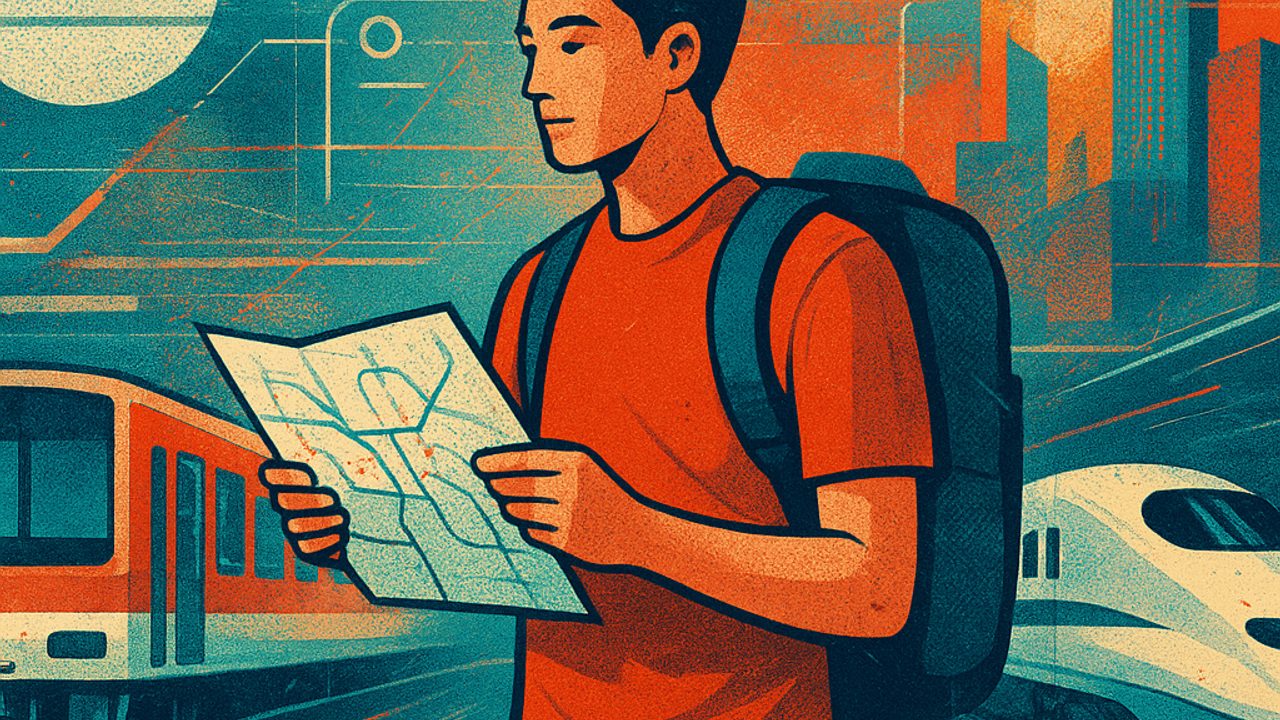
Traveling around Japan becomes much easier when transportation stops being a mystery. Punctual subways, integrated regional trains, and the famous Shinkansen form an efficient network, but one that can be confusing on a first trip.
This 3-day itinerary was designed for those who want to learn by doing: use the subway without fear, understand connections between cities, and enjoy fast travel without stress, always focusing on practicality.
Before you start: cards, tickets, and useful apps
In Japan, most trips can be handled with a rechargeable transport card. It works on the subway, urban trains, and even for some small purchases.
- Buy the card at the airport or major stations - Recharge at vending machines, available in English - Always keep a small extra balance to avoid lines
Map apps with public transport routes help you choose platforms and schedules, but station signage is also clear and well organized.
Day 1: subway and urban trains in a large city
The first day is ideal for getting familiar with the subway and urban trains. Start in a central area, where several lines intersect.
- Pay attention to the line color and number, which are more important than the train name - Follow the signs to the correct platform, always well marked - Enter and exit the car in an orderly way, respecting the floor lines
Prioritize short and direct routes on this day to build confidence in the system.
Day 2: connections between neighborhoods and regional trains
On the second day, expand your range using regional trains, which connect more distant neighborhoods or neighboring cities.
- Check whether the train is local, rapid, or express before boarding - Some lines have non-reserved and reserved cars - Avoid rush hours in the morning and late afternoon
This is a good time to understand how different companies operate integrated lines without complicating payment.
Day 3: first experience with the Shinkansen
The Shinkansen is fast, comfortable, and simpler than it seems. Even on short trips, the experience helps ease any apprehension.
How to board the Shinkansen with peace of mind
- Arrive at the station early to locate the platform - Check the car number indicated on the ticket or display board - Store large luggage in designated spaces or behind the seats
Shinkansen stations usually have exclusive areas, making orientation easier.
Etiquette and basic rules on Japanese transportation
Small habits make a difference and help avoid discomfort.
- Speak quietly or avoid talking on the phone - Wear backpacks on the front of your body in crowded cars - Give priority to the elderly and pregnant women
Respecting these rules makes the experience more pleasant for everyone.
Common mistakes and how to avoid them while getting around
Some slip-ups are common among first-time travelers, but easy to avoid.
- Boarding the wrong train by not checking the final destination - Using the wrong car during rush hours - Underestimating the size of stations and connection times
With attention to signs and a bit of planning, transportation in Japan becomes one of the highlights of the trip.
Comments
Comments are public and the sole responsibility of the author. Don’t share personal data. We may store technical signals (e.g. IP hash) to reduce spam and remove abusive, illegal, or off-topic content.