
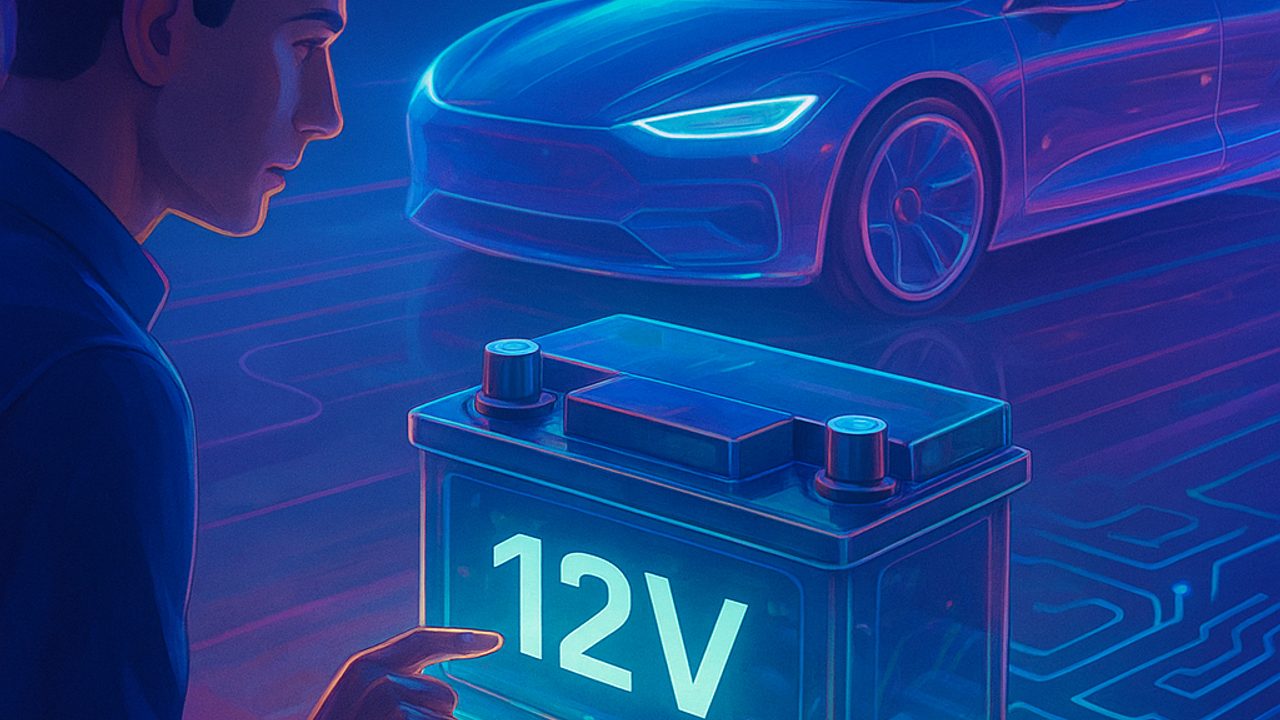
Those who switch to an electric car are often surprised to discover that it still has a 12V battery, similar to those in internal combustion cars. This surprise turns into concern when “no-warning” breakdowns occur, even with the main battery charged.
Understanding the role of the 12V is essential for safety and to avoid unexpected issues. Below, see why it still exists, what the most common pitfalls are for beginners, and how to reduce risks with simple habits.
Why electric cars still use a 12V battery
The high-voltage battery moves the car, but it doesn’t power everything. The 12V is responsible for starting and maintaining essential systems before high voltage comes into action.
In practice, it powers: - Electronic control modules - Locks, alarms, and keyless entry - Exterior and interior lighting - Active and passive safety systems
Without a functioning 12V, the car may not “wake up,” even with plenty of range left in the main battery.
Pitfall 1: thinking the traction battery replaces the 12V
A common mistake is assuming the large battery automatically takes care of everything. In reality, there is a converter that recharges the 12V from the high-voltage system — and it only works when the system is active.
Risk involved: - A vehicle parked for long periods can discharge the 12V - Total failure when trying to unlock or start the car
How to avoid it: - Use the car regularly, even for short trips - Avoid leaving the vehicle turned off for weeks without checking - Watch for alerts on the dashboard or the manufacturer’s app
Pitfall 2: ignoring signs of 12V battery wear
Unlike the traction battery, the 12V wears out over time, not just with use. Many beginners do not associate small symptoms with a safety issue.
Common warning signs: - Intermittent electrical messages on the dashboard - Systems restarting on their own - Locks or infotainment behaving irregularly
How to avoid it: - Include the 12V in periodic maintenance checks - Do not ignore seemingly “minor” warnings - In case of strange behavior, prioritize inspection before driving
Pitfall 3: using accessories without considering 12V consumption
Extra cameras, trackers, portable coolers, and other accessories usually draw power from the 12V. In EVs, this requires even more attention.
Associated risks: - Silent discharge during long stops - Failure to start the system
How to avoid it: - Prefer accessories approved for continuous use - Avoid leaving devices on with the car turned off - Check whether the model has automatic standby power management
What to do if the 12V battery discharges
In case of a breakdown, safety is the priority: - Stop in a safe, well-signaled location - Consult the manual for correct procedures - Avoid improvisation or jump-starts without proper guidance
Some EVs allow assisted recharging or have specific points for safe access to the 12V. Knowing this before you need it makes a difference.
Good practices for living well with the 12V battery
For beginners, a few habits help reduce daily risks: - Read the electrical section of the vehicle manual - Keep the car’s software up to date - Observe alerts and changes in behavior - Treat the 12V as a safety item, not a detail
The 12V battery may seem like an old component in such a modern car, but it remains fundamental. Understanding its limits is an important part of more predictable and safer electric driving.
Comments
Comments are public and the sole responsibility of the author. Don’t share personal data. We may store technical signals (e.g. IP hash) to reduce spam and remove abusive, illegal, or off-topic content.