
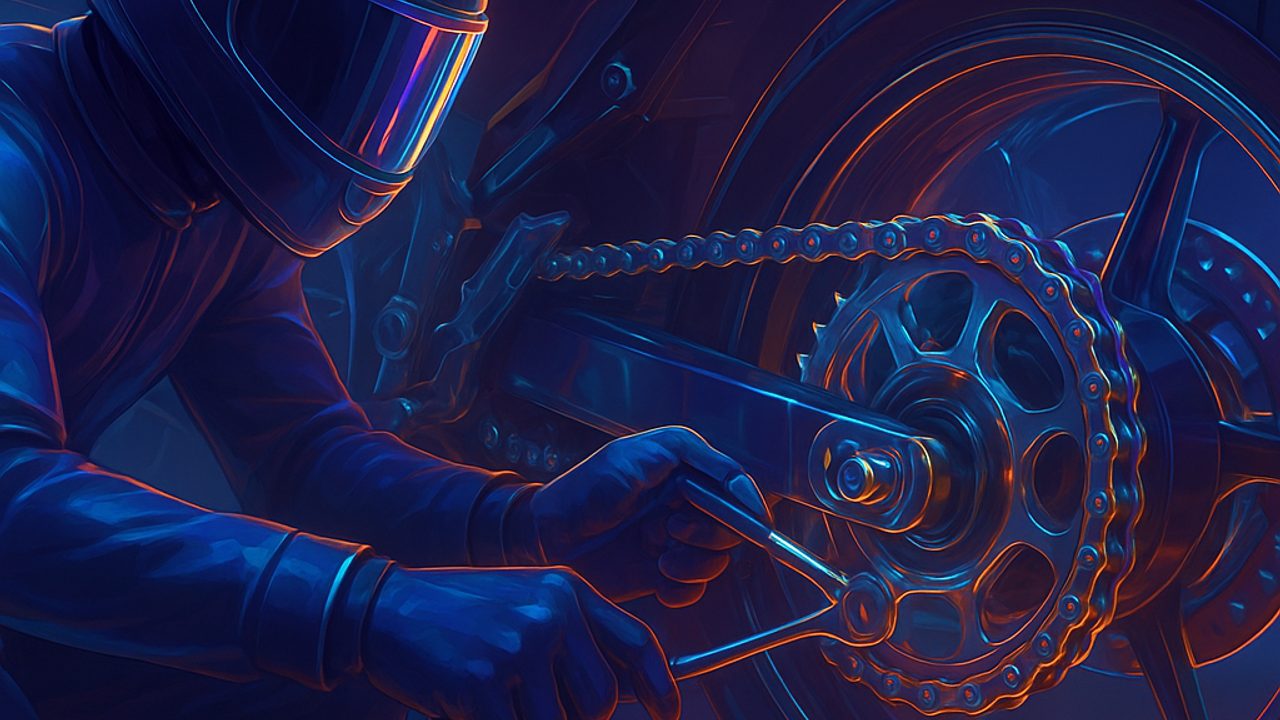
Chain, sprocket, and pinion work together all the time. When something is out of spec, the motorcycle responds with jerks, noises, and loss of control — exactly what a beginner doesn’t need.
Taking care of this set isn’t just about making it last longer. It’s about keeping predictable responses when accelerating and reducing risks in simple everyday maneuvers.
Why the drivetrain impacts safety
The final drive transfers engine power to the rear wheel. If the chain is dry, dirty, or poorly adjusted, power delivery becomes irregular.
This shows up as: - Jerks when pulling away or shifting gears - Metallic noises that confuse the rider - Difficulty modulating the throttle at low speeds
On wet pavement or in corners, these unexpected reactions increase the risk of slipping.
Cleaning: when and how to do it without hassle
Cleaning isn’t about scrubbing with any product. The goal is to remove dust, sand, and old grease without damaging the chain seals.
Best practices: - Clean every 500–700 km, or sooner if you ride in rain or on dirt roads - Use kerosene or a chain-specific product - A soft brush or paintbrush helps without causing damage - Avoid high-pressure jets directly on the chain
After cleaning, dry it well before lubricating.
Proper lubrication: less noise, more control
A lubricated chain runs smoothly and predictably. Too much lubricant, on the other hand, only attracts dirt.
Tips that work: - Lubricate with the chain warm (right after riding) - Apply on the inner side while slowly turning the wheel - A thin layer is enough - Wipe off the excess with a cloth
If the noise decreases and the bike responds without jerks, the adjustment is right.
Slack adjustment: neither too tight nor too loose
Correct slack prevents the suspension from “pulling” the chain over bumps and speed humps. A chain that’s too tight stresses bearings; too loose and it can skip teeth.
Basics to check: - Refer to the slack specified in the motorcycle manual - Measure at the tightest point of the chain - Adjust both sides of the rear axle equally
If the wheel becomes misaligned, the bike may pull to one side — an immediate warning sign.
Wear signs that need attention
Some indicators appear before anything more serious: - Thin or “hook-shaped” sprocket teeth - Chain with stiff links - Adjustment that doesn’t last more than a few days
When these signs show up together, replacing the complete kit is usually safer than changing individual parts.
Simple habits that prevent scares day to day
Small routines make a real difference: - Take a quick look at the chain when checking tire pressure - Listen for new noises after heavy rain - Avoid hard acceleration with a dry chain - Choose preventive maintenance over emergency adjustments
These practices keep the drivetrain predictable — and predictability is one of the greatest allies of safety for those just starting out.
Comments
Comments are public and the sole responsibility of the author. Don’t share personal data. We may store technical signals (e.g. IP hash) to reduce spam and remove abusive, illegal, or off-topic content.