
Engine overheating is frightening — and for good reason. Ignoring the signs can cause costly damage and, worse, put you at risk in traffic.
For those who are just starting to drive or are not yet familiar with their car, identifying the problem early and knowing how to act makes all the difference. Below are the three most common signs and the safest actions to take.
Sign 1: Temperature warning light on or gauge in the red
This is the most direct alert. When the temperature light turns on on the dashboard or the gauge rises above normal, the engine is operating beyond its safe limit.
What to do immediately
- Take your foot off the accelerator and look for a safe place to pull over. - Turn off the air conditioning to reduce the load on the engine. - If possible, stop the car and turn off the engine.
Avoid continuing to drive “just a little longer.” Extra minutes can turn a simple overheating issue into a serious problem.
Sign 2: Steam or smoke coming from the hood
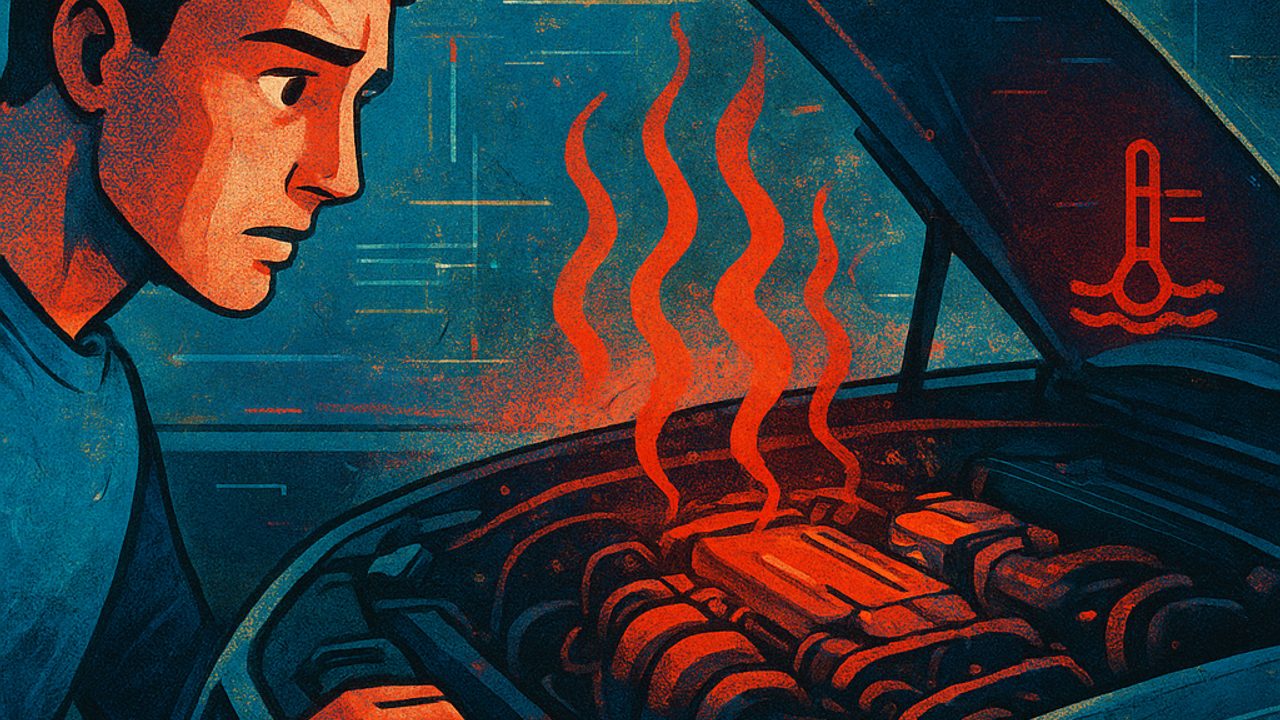
White steam, especially after stopping the car, usually indicates hot coolant escaping. Do not confuse it with dark smoke from the exhaust — here the sign comes from the front of the car.
What to do safely
- Stop immediately in a safe place. - Turn off the engine and keep your distance from the hood. - Do not try to open the hood right away.
The system is pressurized when hot. Opening the hood or the reservoir can cause serious burns.
Sign 3: Strong hot or burning smell
A metallic, rubber, or hot-liquid odor may appear even before the dashboard light turns on. It is a subtle but important sign.
How to act when you notice the smell
- Reduce speed and watch the dashboard. - If the smell persists, pull over safely. - Turn off the engine and wait for it to cool down.
Trust your sense of smell. A strange odor is rarely “normal.”
How long to wait before checking the engine
After stopping, the ideal is to wait at least 20 to 30 minutes before any visual inspection.
- The engine needs to cool down completely. - Coolant should only be checked when the system is cold. - If you are not sure, do not touch anything.
Patience here is a safety item.
What to never do in case of overheating
Some common reactions increase the risk:
- Opening the coolant reservoir with the engine hot. - Pouring cold water directly onto the engine. - Continuing to drive with the warning light on.
These actions can cause mechanical damage and injuries.
Connected cars and mobile alerts
In newer models, vehicle connectivity systems use eSIM to send alerts to the dashboard or to a mobile app. Warnings about high temperature, cooling system failures, and event history help you act faster — and with more information.
Even so, technology does not replace attention. Dashboard lights and physical signs remain the priority.
When it’s time to call for help
If the car overheats and does not return to normal after cooling down, the safest choice is not to continue the trip.
- Call roadside assistance or a tow truck. - Inform them that there was engine overheating. - Avoid “testing” the car on the road.
Taking care of safety now prevents bigger problems later — for you and for the car.
Comments
Comments are public and the sole responsibility of the author. Don’t share personal data. We may store technical signals (e.g. IP hash) to reduce spam and remove abusive, illegal, or off-topic content.