
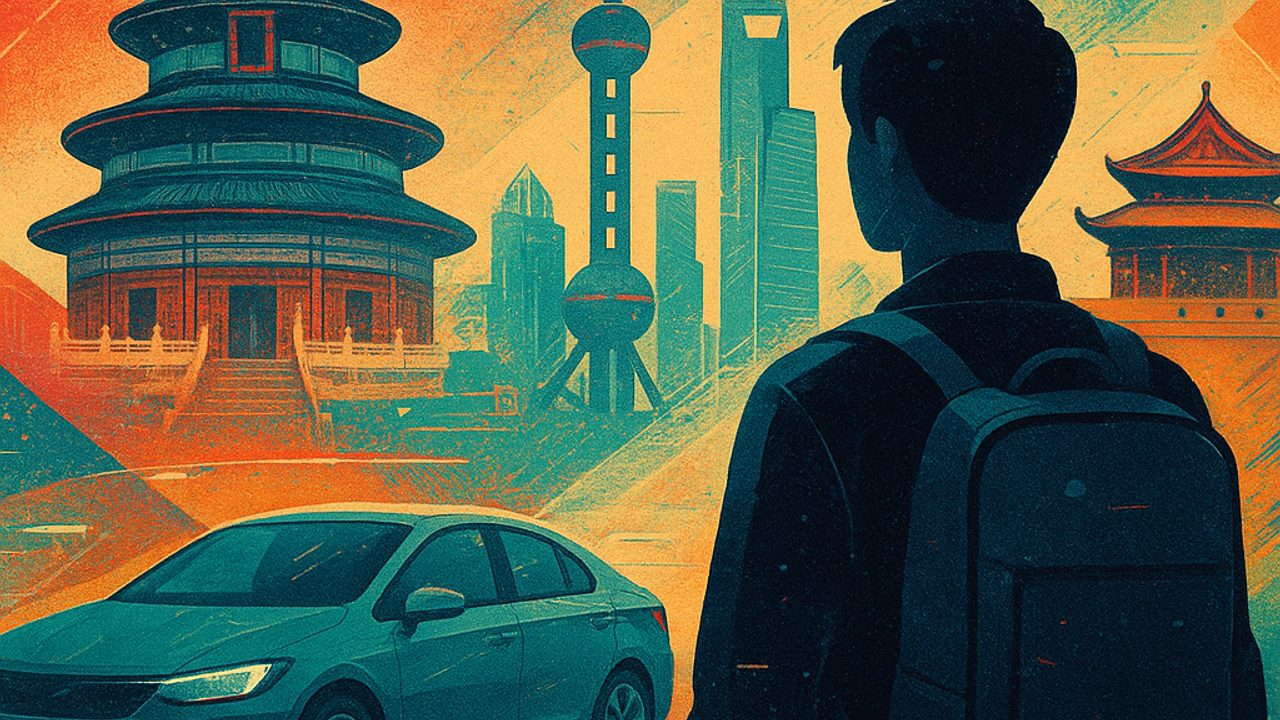
Beijing, Xi’an, and Shanghai form a balanced itinerary between imperial history, millennia-old heritage, and contemporary China. The order of the cities, the time spent in each, and small logistical decisions directly impact the pace of the trip.
Below, see what to prioritize on this classic route and three practical habits that help avoid common wear and tear on a first visit to the country.
Define the order of cities with transportation in mind
To optimize time and energy, the most common sequence is Beijing → Xi’an → Shanghai. It aligns well with the high-speed rail network and reduces unnecessary flights.
- **Beijing → Xi’an**: daytime bullet train, comfortable and efficient. - **Xi’an → Shanghai**: overnight train or short flight, depending on the trip’s pace. - **Arrival in Beijing and departure from Shanghai**: simplifies international connections.
This planning avoids backtracking and helps maintain a logical narrative for the journey, from the imperial past to the urban present.
What to prioritize in Beijing (without overloading the day)
Beijing requires organization because attractions are extensive and distances are large. Less is more.
- The Forbidden City and Tiananmen Square on the same day, starting early. - A section of the Great Wall outside the city center, setting aside almost a full day. - A walk through the hutongs to experience local life.
Habit 1: group attractions by region
Planning the day by city zones reduces hours in traffic and accumulated lines. In Beijing, this makes a huge difference in end-of-day fatigue.
Xi’an: concentrated history and a calmer pace
Xi’an often pleasantly surprises due to its more compact scale. With two well-planned days, it’s possible to see the main highlights.
- The Terracotta Army with transportation arranged in advance. - The city walls, ideal for walking or cycling. - The Muslim Quarter to explore at night.
Habit 2: book tickets and transport in advance
In Xi’an, very popular attractions sell out on holidays and weekends. Having set times avoids wasted time and last-minute adjustments.
Shanghai: modern contrast and efficient transportation
Shanghai is dynamic and relatively easy to get around, but its size is impressive.
- The Bund and Lujiazui for architectural contrast. - A restored historic neighborhood to balance the modern side. - Free time to explore cafés, markets, and creative areas.
Here, prioritize urban experiences and walk whenever possible to absorb the city’s atmosphere.
High-speed trains: how to use them to your advantage
Trains are punctual, comfortable, and well signposted, but they require logistical attention.
- Arrive at stations earlier than you would for regional airports. - Keep the city names saved on your phone in Chinese characters. - Avoid very tight same-day connections.
Habit 3: plan transportation as part of the itinerary
In China, transportation is not just a means, but part of the experience. Treating transfers as “travel time” — not as gaps — helps build more realistic days.
Final tip: leave room for adjustments
Even with everything planned, unexpected things happen. Leave buffer time in the itinerary for rest, weather changes, or unexpected discoveries. This space is what turns an efficient itinerary into a memorable trip.
Comments
Comments are public and the sole responsibility of the author. Don’t share personal data. We may store technical signals (e.g. IP hash) to reduce spam and remove abusive, illegal, or off-topic content.