
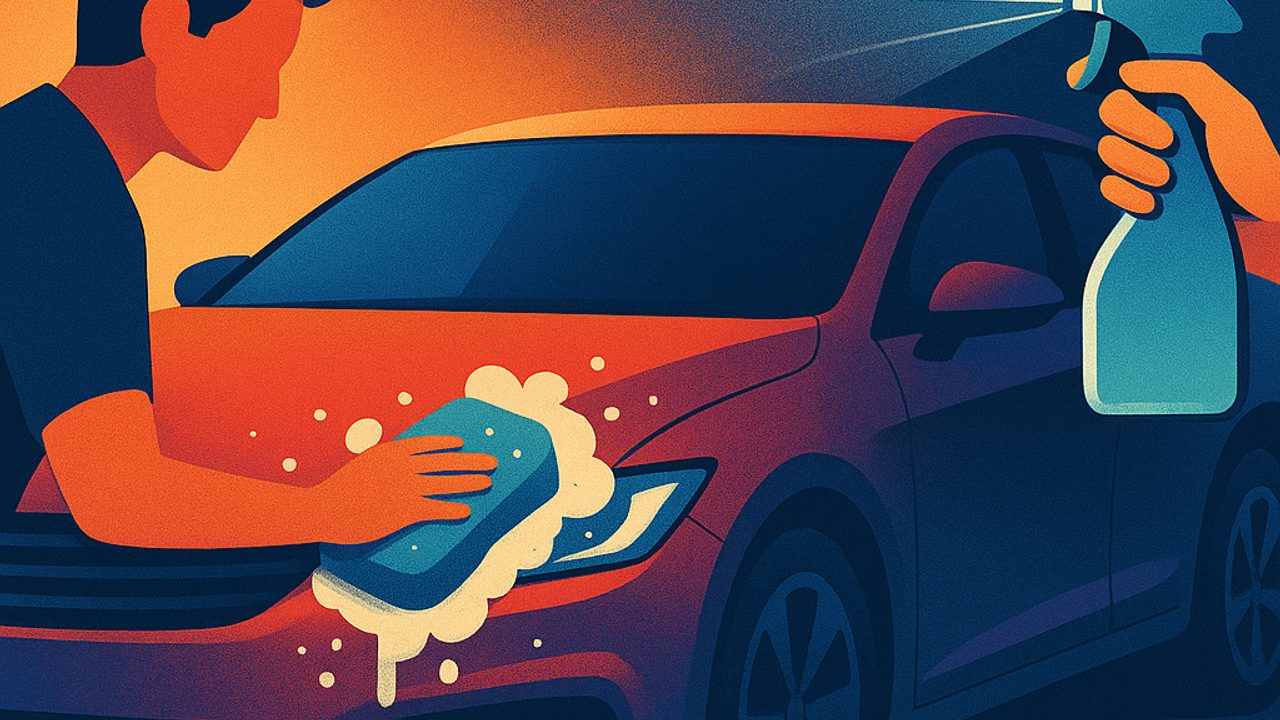
Keeping the paint clean goes beyond aesthetics: it reduces wear, improves visibility, and prevents damage caused by abrasive dirt. For beginners, the good news is that a simple routine already brings benefits — as long as it’s done carefully.
Below is a practical step-by-step guide, from basic to advanced, with a focus on safety for you, the car, and the environment.
Before you start: location, time, and personal safety
Choose a shaded area and make sure the car is cool. Hot surfaces cause products to dry too quickly, increasing the risk of stains. Set aside enough time so you don’t rush any steps.
Safety tips: - Wear gloves when handling chemical products. - Avoid climbing on seats or improvised ladders to reach the roof; adjust your body position and walk around the car. - Keep hoses organized on the ground to prevent tripping.
Step 1: initial contactless rinse
The first rinse removes loose dust and sand, which are the main causes of scratches on the paint. Do this before touching the car with any mitt or cloth.
Important precautions: - Start from the top and work your way down. - If using a pressure washer, keep a safe distance from the paint and avoid directing the jet at rubber seals and emblems.
Step 2: proper washing with a simple technique
The two-bucket method is easy and effective: one bucket with diluted automotive shampoo and another with just water to rinse the mitt.
Order and movements that reduce risks
- Wash in sections (roof, glass, sides, front, and rear). - Use straight motions, without scrubbing in circles. - Leave wheels and wheel wells for last, using a separate mitt or brush.
Step 3: final rinse and safe drying
After washing, remove all shampoo to avoid residue. Drying is just as important as washing.
Best practices: - Use a clean microfiber towel made specifically for drying. - Lay it on the surface and gently drag it, without pressing. - Do not let the car air-dry in the sun, as this encourages water spots.
Basic day-to-day paint care
Even outside of wash days, some habits help preserve the clear coat: - Remove bird droppings and tree sap as soon as possible with a damp cloth. - Avoid dirty or poorly fitted car covers. - Do not use household detergent; it strips paint protection.
Intermediate level: protection with wax or sealant
Applying a light protective layer helps repel dirt and makes future washes easier. For beginners, liquid waxes or synthetic sealants are simpler options.
Attention to application
- Follow the product instructions and apply to small areas. - Use a foam applicator or clean microfiber. - Always work with the car in the shade and the paint cool.
Common mistakes that compromise paint and safety
Some missteps are frequent and easy to avoid: - Using the same cloth for wheels and bodywork. - Washing the car under strong sunlight. - Scrubbing heavy dirt without a prior rinse. - Mixing products without the manufacturer’s guidance.
Creating a mindful routine, with simple steps and attention to safety, is the most effective way to keep your car’s paint looking good and well cared for over time.
Comments
Comments are public and the sole responsibility of the author. Don’t share personal data. We may store technical signals (e.g. IP hash) to reduce spam and remove abusive, illegal, or off-topic content.