
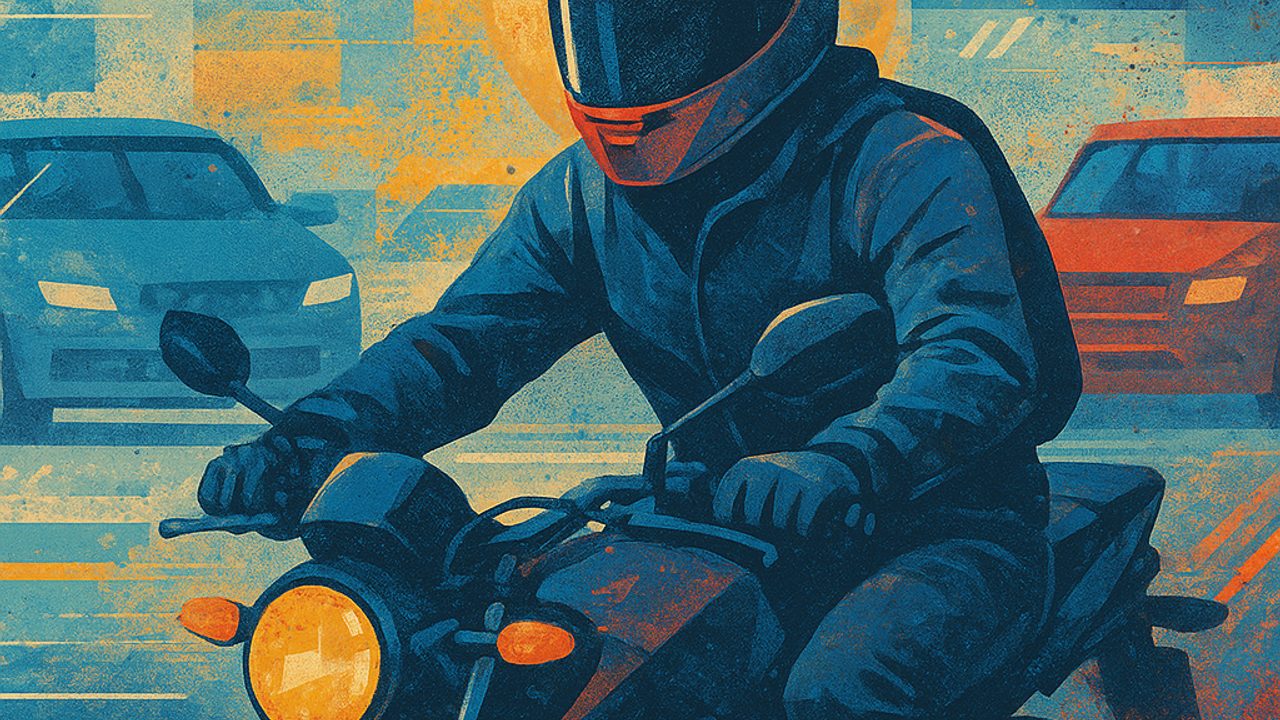
Lane splitting saves time, but it demands discipline. For those just starting out, the difference between arriving safely or getting a scare usually lies in the details: relative speed, bike position, and patience.
When behavior is predictable, risk drops — and so do costs. Fewer hard brakes, fewer silly falls, less corrective maintenance.
Relative speed: the limit no one sees
In lane splitting, the reference isn’t the speedometer, but the speed difference compared to the cars beside you. The greater the difference, the less reaction time you have.
- In slow traffic, move ahead gently. Saving seconds isn’t worth a mirror on the handlebar. - If cars speed up, reduce your advantage. Let traffic “breathe.” - Steady speed saves brake pads, tires, and fuel.
Width and bike position between cars
Over-centering increases the risk of contact; hugging one side reduces your margin.
- Look for the “clean line” between lanes, making micro-corrections. - Avoid narrow corridors when there are trucks or buses: turbulence and blind spots are costly. - Aligned handlebars and tucked elbows help you pass without touching.
Reading signals: anticipate so you don’t have to brake
A safe corridor is read before it’s ridden.
- Front wheels turning indicate an imminent lane change. - Gaps opening ahead often close quickly: be prepared. - Late turn signals are common; trust the car’s movement more than the light.
Avoid the “surprise brake”
Hard braking in the corridor wears pads and can lock the wheel on uneven surfaces. Anticipation costs nothing and pays off.
Times and scenarios that call for extra calm
Not every corridor is worth it.
- Rush hour with inexperienced riders around calls for double patience. - Rain, oil on the asphalt, and shadows hide traps. - Garage exits and U-turns concentrate unexpected turns.
Behavior that protects your wallet
Savings start with riding style.
- No zig-zagging: getting back on the throttle uses more fuel and wears tires. - Keep two fingers on the front brake for smooth responses. - Progressive acceleration preserves the drivetrain and avoids jerks.
Equipment and adjustments that help in the corridor
Small precautions reduce cost and stress.
- Well-adjusted mirrors reduce contact and constant readjustments. - Levers set at the correct height prevent fatigue and late reactions. - Proper tire pressure improves stability at low speeds.
When not to lane split
Knowing when to back off is also a skill.
- Free-flowing traffic: stay in the lane and save energy. - Corridors closed by roadworks or police vehicles: respect the blockage. - Fatigue or irritation: stop, breathe, and return when you’re fully there.
Lane splitting safely is less about haste and more about reading the road. Those who start with good habits spend less, preserve the bike, and arrive in one piece — every day.
Comments
Comments are public and the sole responsibility of the author. Don’t share personal data. We may store technical signals (e.g. IP hash) to reduce spam and remove abusive, illegal, or off-topic content.