
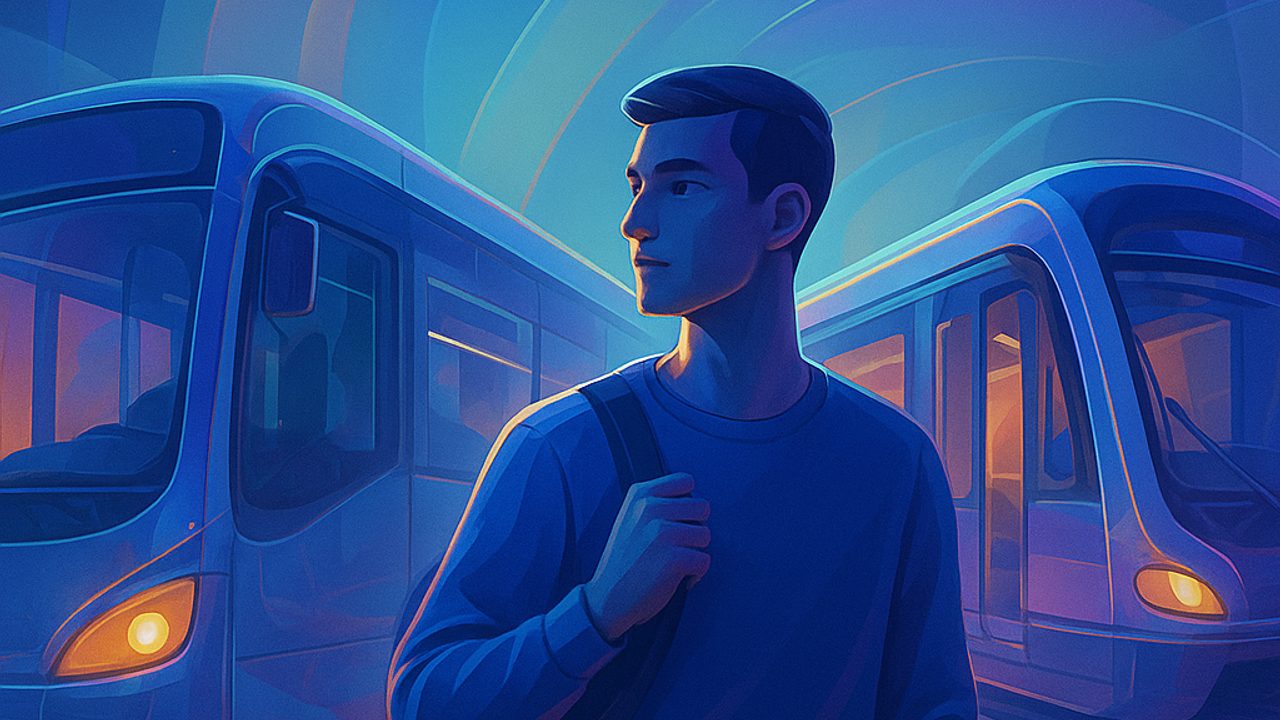
Reducing waiting time on public transport is a recurring urban challenge. Small decisions before and during the trip make a difference both for the clock and for safety.
This FAQ brings together straightforward answers to common situations in the daily use of buses, subways, and trains, with a focus on avoiding time loss and reducing exposure to risks.
How to choose a stop or station to wait less?
Prefer locations with higher vehicle frequency and good visibility. Line terminals or transfer stations usually offer more boarding options.
Best practices: - Check whether more than one line serves the same destination - Avoid isolated or poorly lit stops, even if they seem to “shortcut” the route - Give preference to places with a constant flow of people
Is it worth arriving well before the scheduled time?
Arriving too early can increase exposure time without real gain. The ideal is to monitor the average interval of the lines and synchronize your arrival at the stop.
How to adjust the time you leave home?
- Use tolerance windows (e.g., 5 to 10 minutes) - Consider common peak and off-peak variations - Avoid waiting for long periods in the same place
Where to wait more safely while the vehicle does not arrive?
Positioning yourself correctly reduces risks and helps with quick boarding.
Practical tips: - Stay in well-lit areas visible to traffic - Avoid continuous use of your phone - Keep backpacks and bags in front of your body
Does boarding the first vehicle that appears always save time?
Not always. An overcrowded vehicle can delay boarding and alighting and increase the risk of conflicts.
Quickly assess: - Level of crowding - Time until the next vehicle - Possibility of comfortable and safe boarding
How to reduce time losses during transfers?
Poorly planned transfers are often major culprits of urban delay.
Good choices include: - Same-level or same-platform connections - Stations with clear signage - Avoid very tight connections during peak hours
What to observe when getting off the vehicle?
- Passenger exit flow - Visual indications of platforms and accesses - Places to stop without blocking circulation
Do alternative schedules really make a difference?
Yes. Small schedule changes can reduce waiting, overcrowding, and associated risks.
Whenever possible: - Leave 10–15 minutes earlier or later - Avoid the first and last minutes of peak hours - Observe weekly patterns (Mondays and Fridays often vary)
How does individual behavior influence time and safety?
Simple attitudes help the system flow better.
Practical examples: - Have your payment method ready before boarding - Respect lines and alighting areas - Avoid pushing and arguments, which cause delays and risks
Saving time on urban public transport comes less from shortcuts and more from consistent decisions, made with attention to the surroundings and to personal safety.
Comments
Comments are public and the sole responsibility of the author. Don’t share personal data. We may store technical signals (e.g. IP hash) to reduce spam and remove abusive, illegal, or off-topic content.