
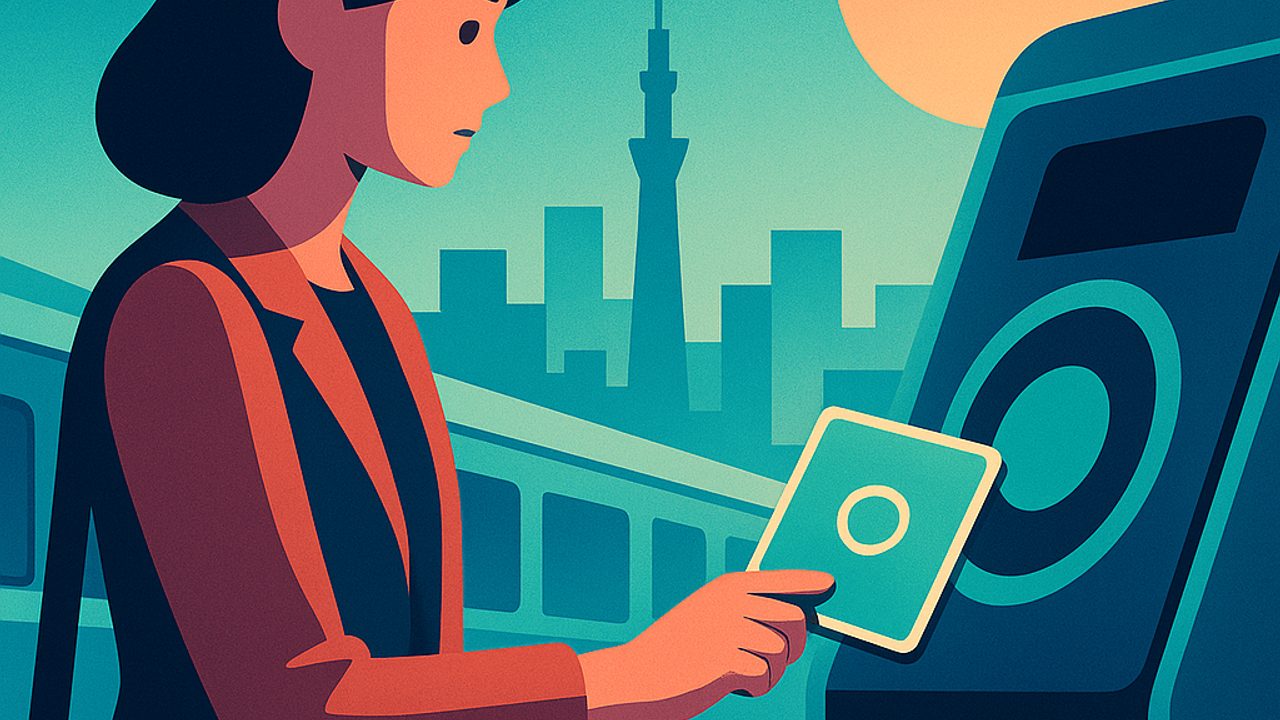
On your first trip to Japan, understanding urban transportation makes all the difference. Subways, trains, and connections work very well, but they can seem complex at first. That’s where IC cards like Suica and PASMO come in.
These rechargeable cards simplify daily life: you enter and exit stations without calculating fares and can even pay for small purchases along the way. For those just arriving, they are one of the most practical shortcuts to getting around with confidence.
What IC cards are and why they help so much
IC cards are contactless electronic cards used mainly on public transportation. You just tap at the gate when entering and exiting; the system calculates the fare automatically.
For a first trip, the benefit is clear: less time at machines, fewer decisions in Japanese, and less chance of buying the wrong ticket. You move at your own pace and sort it out later, simply by recharging the balance.
Suica or PASMO: which one to choose in practice
For visitors to Tokyo and nearby regions, Suica and PASMO work almost identically. Both:
- Are valid on subways, urban trains, and buses - Are accepted in many cities across Japan - Work for small purchases
The choice is usually simple: get whichever is available first at the station or airport. In daily use, there is no real advantage of one over the other for tourists.
Where to buy and how to recharge the card
IC cards are sold at vending machines in major stations and airports. The process usually follows this pattern:
- Choose the language (there is an English option) - Pay an initial amount with credit already included - Receive the card ready to use
To recharge, use the same machines or specific recharge counters. Cash is the most common method and works without difficulty.
How to use urban transportation without thinking about fares
Using it on transportation is straightforward:
- Tap the card at the gate when entering - Do the same when exiting the station
You don’t need to know how much each segment costs. The system calculates it automatically based on distance. For those navigating maps and lines for the first time, this greatly reduces stress.
What if you get the wrong station or line?
No problem. If you exit at a different station than planned, the fare is adjusted at the exit. In specific cases, there are fare adjustment machines, but this is rare in normal use.
Small purchases along the way: when it’s worth using the card
In addition to transportation, IC cards work as electronic wallets in many everyday places:
- Convenience stores - Beverage vending machines - Bakeries and simple cafés inside stations
For travelers, this avoids dealing with change, speeds up payments, and keeps the day flowing more smoothly, especially on long travel days.
Limits, precautions, and best practices
A few points help avoid confusion:
- The card does not replace long-distance tickets, such as the Shinkansen - Always keep a small extra balance - Take good care of the card; it is personal
In the end, the IC card becomes almost invisible in your routine. You tap, you move, you arrive. For those visiting Japan for the first time, this simplicity makes getting around flow smoothly from day one.
Comments
Comments are public and the sole responsibility of the author. Don’t share personal data. We may store technical signals (e.g. IP hash) to reduce spam and remove abusive, illegal, or off-topic content.