
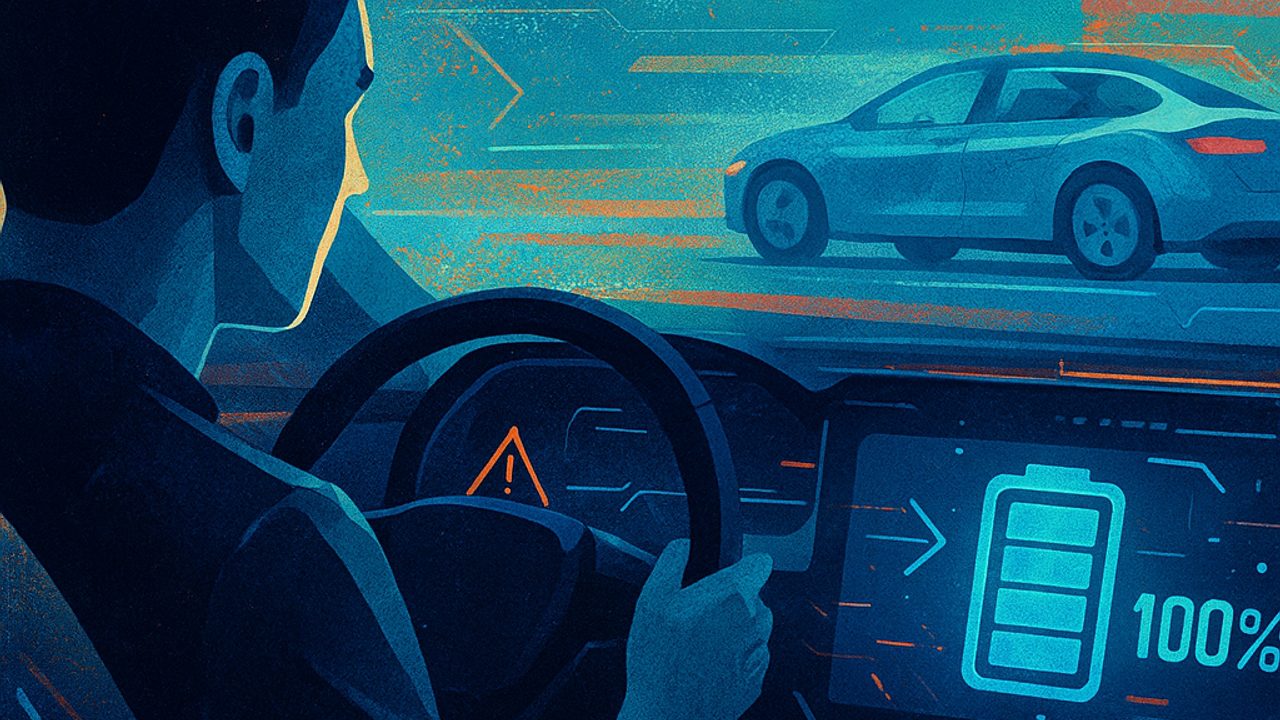
Those who switch to an electric car usually look first at the promised number of kilometers. In practice, real range comes from daily use: how you accelerate, when you charge, and how you plan your routes.
For beginners, some basic habits reduce unpleasant surprises, increase predictability, and also contribute to safety — yours, your passengers’, and those around you.
Habit 1: driving predictably saves energy and reduces risks
Range doesn’t drop only because of high speed. It suffers when the car is demanded abruptly. Hard acceleration, late braking, and sudden changes of pace consume more energy and increase wear on systems.
In an EV, instant torque invites hard acceleration. Resisting that temptation brings a double benefit:
- Lower consumption per km, especially in urban traffic - Better use of regenerative braking - More stable driving, with less risk of loss of grip on wet roads
Anticipating traffic, easing off the accelerator in advance, and maintaining a steady pace often yield extra kilometers with no effort.
Pay attention to driving mode
More economical modes soften accelerator response and limit power peaks. For everyday use, they help keep driving more progressive — something that directly impacts both range and safety.
Habit 2: plan charging around use, not “100% all the time”
Charging to 100% every day is not synonymous with more usable range. For most routines, leaving with something between 70% and 90% already covers urban travel and reduces the need for emergency recharging.
From a practical and safety standpoint:
- It avoids rushing to charge in unfamiliar locations - It reduces the chance of using improvised chargers or questionable installations - It keeps a margin for unforeseen events, such as detours or traffic jams
Parking the car with some battery buffer also helps avoid stressful situations, which often lead to less safe decisions.
Reserve is not waste
Treating the last kilometers as a reserve, not as a goal, changes the relationship with range. The car stops being a countdown of anxiety and becomes more predictable in everyday use.
Habit 3: respect temperature, weight, and route context
Real range varies with factors that don’t always appear on the dashboard. Ignoring this is one of the main causes of surprises for beginners.
Some common examples:
- Running the air conditioning at maximum for long periods increases consumption - A constantly full trunk or extra passengers weighs more than it seems - Long climbs and slow traffic drain more energy than flat routes
On very hot or very cold days, range tends to drop. Adjusting expectations and driving with extra margin in these scenarios is a safety decision.
Range is predictability, not a km record
In real use, the goal is not to reach the highest possible number on the dashboard, but to know how far you can go with peace of mind. Well-managed range reduces improvisation, avoids rushed stops, and contributes to calmer driving.
With predictable driving, planned charging, and attention to context, the electric car delivers exactly what it promises in daily life: quiet, efficient trips with fewer unpleasant surprises.
Comments
Comments are public and the sole responsibility of the author. Don’t share personal data. We may store technical signals (e.g. IP hash) to reduce spam and remove abusive, illegal, or off-topic content.