
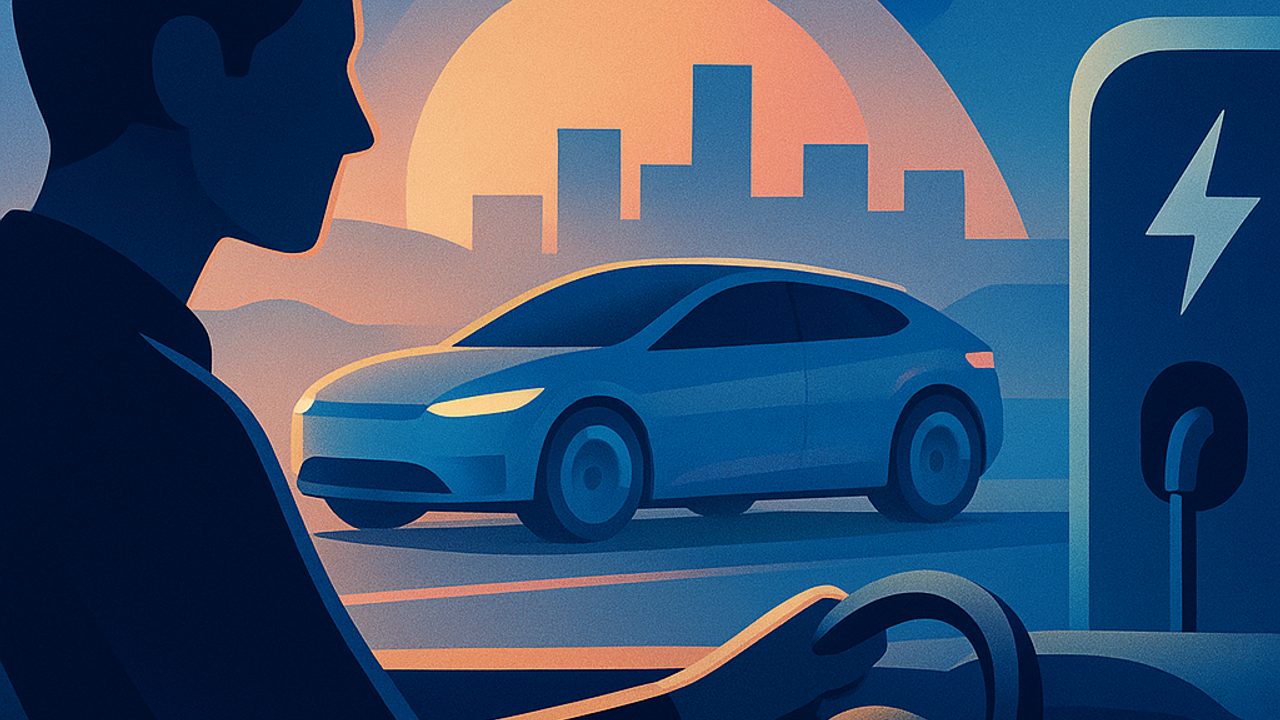
The reality sets in when the electric car becomes part of the routine. Range stops being a catalog number and becomes the sum of habits, routes, and simple everyday decisions.
For those just starting out, the challenge is not to “stretch” the battery at any cost, but to drive with predictability and safety — no scares, no improvisation.
Advertised range vs. real-world range: why they are different
The published value is measured under controlled conditions. On the street, variables come into play that change everything: average speed, terrain, weather, load in the car, and use of comfort features.
In practice, real-world range tends to be: - Lower on highways and long trips. - More stable in urban traffic, with stops and starts. - Sensitive to variations in temperature and wind.
Understanding this difference avoids hasty decisions, such as setting out on a route at the limit or ignoring charging points due to overconfidence.
What weighs in daily urban use
In everyday use — home, work, school — the electric car usually performs better than it seems on paper. Stop-and-go traffic favors regeneration and consumption is predictable.
Helpful points: - Lower average speeds. - Familiar routines, with room to plan. - The possibility of frequent charging (even if partial).
Here, safety means knowing you can get there and back without relying on a “miracle” at the end of the route.
Regeneration is not magic
It helps, but it does not replace planning. Going down long hills recovers energy; going up consumes more than what was recovered. Anticipating braking is safer than counting on the pedal at the last second.
Highways change the game — and the margin for error
On highways, real-world range drops faster. Sustained high speeds, continuous air conditioning, and fewer opportunities for regeneration take their toll.
Good safety practices: - Plan stops with buffer. - Avoid driving below 15–20% without a clear plan. - Prefer to arrive at the charging point with reserve, not at the limit.
Driving “at zero” increases the risk of unsafe stops and rushed decisions.
Weather, load, and comfort: the adjustments that matter
Intense heat, cold, rain, and headwinds influence consumption. Extra passengers and luggage do too.
In everyday life, it makes a difference to: - Adjust climate control gradually. - Precondition the car when possible, while still plugged in. - Distribute load without excess.
These precautions are not about saving pennies, but about maintaining predictable range.
When range makes sense for you
For beginners, the “ideal” range is the one that covers the routine with margin, not the biggest on the market.
It makes sense when: - Daily use consumes less than 50–60% of the charge. - There is at least one known charging alternative. - The driver does not need to change habits in a risky way.
If the routine requires always driving at the limit, the problem is not the car — it is the fit.
Safety starts with planning, not the dashboard
The battery indicator is a tool, not a personal challenge. Planning routes, knowing typical consumption, and respecting margins reduce stress and risk.
Well-understood real-world range brings peace of mind. And peace of mind, in traffic, is one of the greatest gains of the electric car.
Comments
Comments are public and the sole responsibility of the author. Don’t share personal data. We may store technical signals (e.g. IP hash) to reduce spam and remove abusive, illegal, or off-topic content.